Every other week has been in two-week blocks, but I thought it fitting or slightly dramatic for the last week before submission to be on its own.
Now I will probably continue documenting the rest of my 4th year for either my own sanity or portfolio prep.
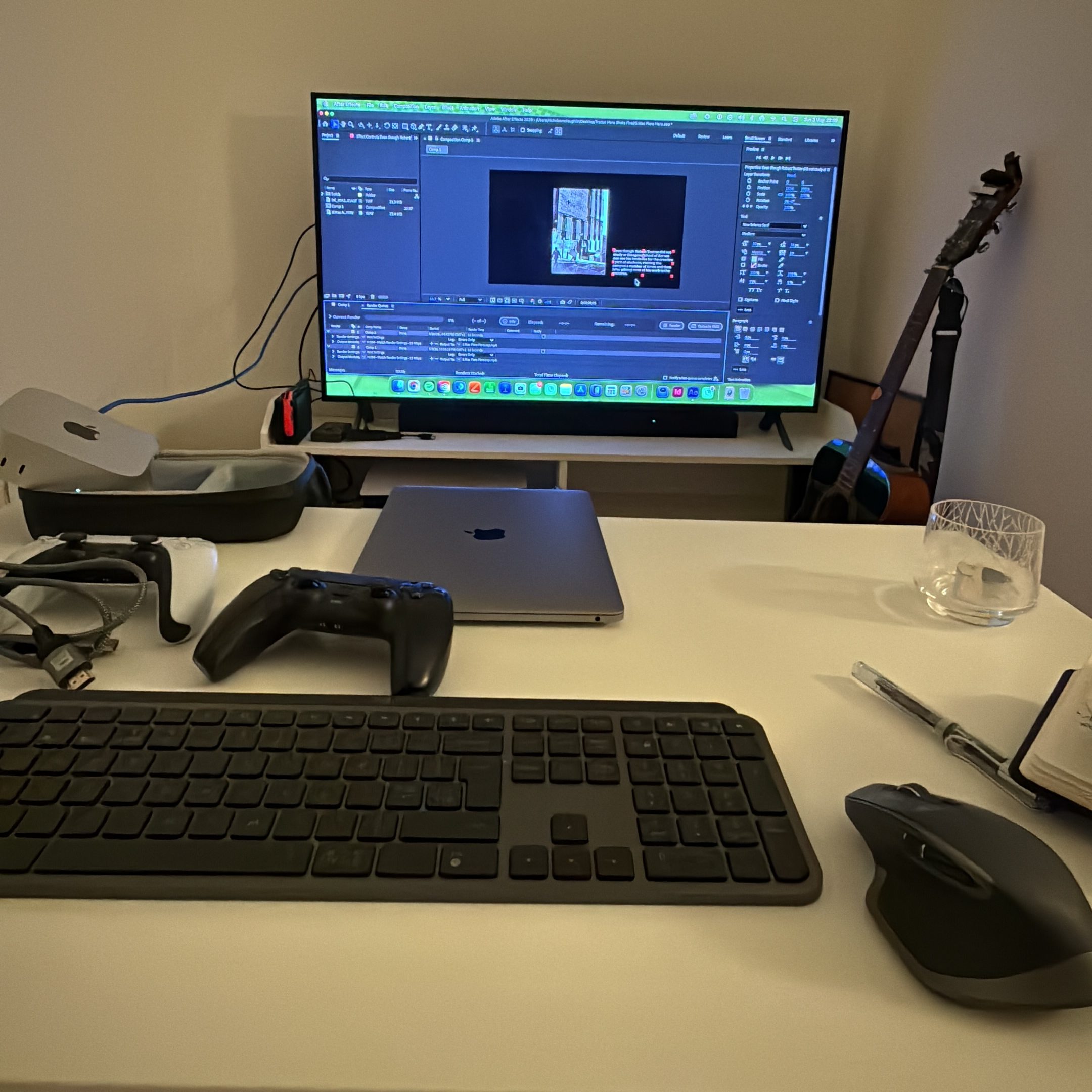
Late night:
On Sunday, it was another day of productivity, sorting out the extending design and double-checking the media and audio for the media projection, which will all be put into the Nuc running the prototype on Tuesday.
Streamlining the Prototype:
With everything in place and implemented, I spent most of today crossing the ‘T’s and dotting the ‘I’s, making sure everything was as clean as it could be and up to date as possible.
With Pav’s framework and showing me how to use it over the past couple of weeks, I can implement everything I need and adjust it as needed. and feels less stressed going into the Degree Show than I did with the WIP.
The job for tomorrow, after the Reid space walk around, is to submit and make sure the prototype at my desk is perfect, so that on Monday, I can walk in, turn it on, and that’s me sorted.
I can’t shake the feeling that I’ve forgotten something or that I’m missing something. Mikhail and Kieron have described similar feelings.
Reid Spaces:
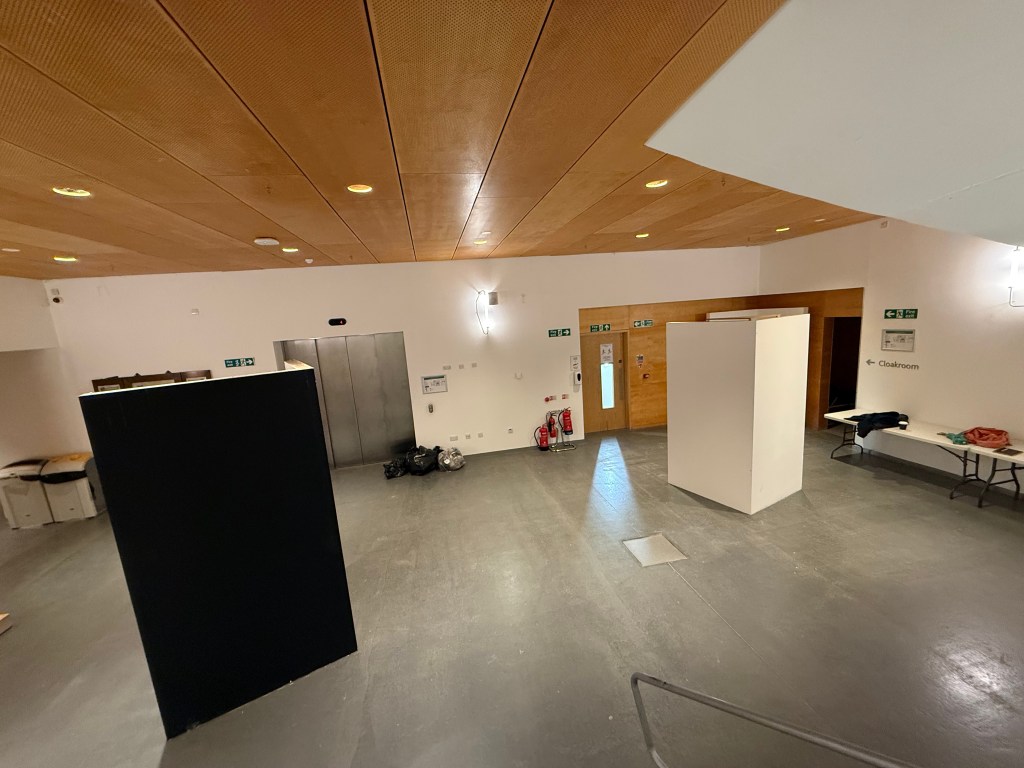
Today was the first time in the empty Reid gallery. It’s exciting and also intimidating. I’ve been to so many exhibitions in this space, so many that I’ve loved, and now it’s my turn. I just want to do a good job.
Finalising the Prototype:
With everything else practically finished and things always taking longer than you’d expect, I wanted to give some time to finalising the prototype for Monday, as I’ve booked the workshop to finish the plinth on Monday, which means it’ll be one step closer to being ready for the degree show.
Prototype Documentation:
I did this very quickly, just as a convenient way to show the prototype documentation, but the audio is horrible, and for some reason, all the footage is overexposed, so I’ll do it again when I get the chance.
Reflection:
I’ve handed in, and to be honest, I don’t know what I want to do; this reflection feels the most productive.
Looking back at my project now that I have reached this stage, I can see a clear line from start to finish and how I have followed some paths and then diverged from others. I started with the idea of object-oriented storytelling, and through winding roads, research and development, and trial and error, I’ve ended up with the interactive display of Robert Trotter’s photography.
I went into this project struggling for an idea and a direction, but by trusting the process and learning to trust myself and my abilities, I feel I have found a direction in this project and in my professional life as well. I have had the great opportunity to organise a few exhibitions outside of GSA, as well as to be part of the fourth-year team and organise everything alongside them.
I have a feeling that I could do more, but there is nothing else to do and no time to do anything meaningful.
For the support, I had a finished version of the Video Doc, but I just wanted Gillian’s feedback and expertise. I think I could read a thousand books on video editing and visual design, but just doing it and learning is the best way. Trusting your eye can get you to a decent point in editing, applying what I’ve seen in other works and expert feedback, and then just taking that forward in the more visual work and editing I do is the only way I can get better.
Gillian pointed out some fixes, like the tone of the captions, and just polishing everything up, and will give further feedback after sending her the rough cut for marking/correction.
Fimga Board Continued:
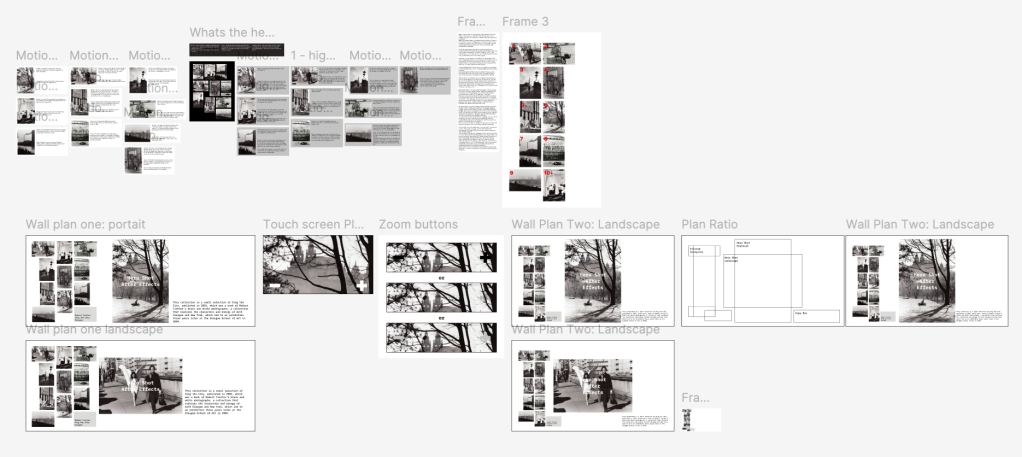
Throughout the progress after the WIP, I’ve been working on and updating the same Figma board to work with images and aspect ratios in a digital space, as well as exploring layouts.
I think the digital space of a Figma board has been useful in several ways. Firstly, my ongoing problem of trying to keep everything clean and perfect all the time, which is easier in Figma but still allows me to experiment quickly.
After letting everything run away from me a bit, getting a bit frozen, and then realising that the first draft of the extending design PDF was due the next day, I spent another day just putting on my headphones and bashing it out. Now, I am not condoning my actions, but it was important for me to note that I can now sit down and produce something in one day, be truly productive.
And after doing the same with the DeSimulate poster and social media, it wasn’t just a fluke.
Extending Design Review:
I’ll discuss this more in my Extending Design post, but that project really helped me solidify that this is what I can do and what I want to do after my course, this being client-facing design work.
At the end of this week, my main focus was sticking to the landing with the side project I’ve been working on, DeSimulate. Friday night was the first proper opening of the exhibition, so most of the day was coordinating with people involved, Pav at work and sponsors.
Prototype @ ISO:
After the madness of Friday and then a day of rest on Saturday, sitting in the sun against a tree with the music on was what was needed, but then to ISO on Sunday to get more done.
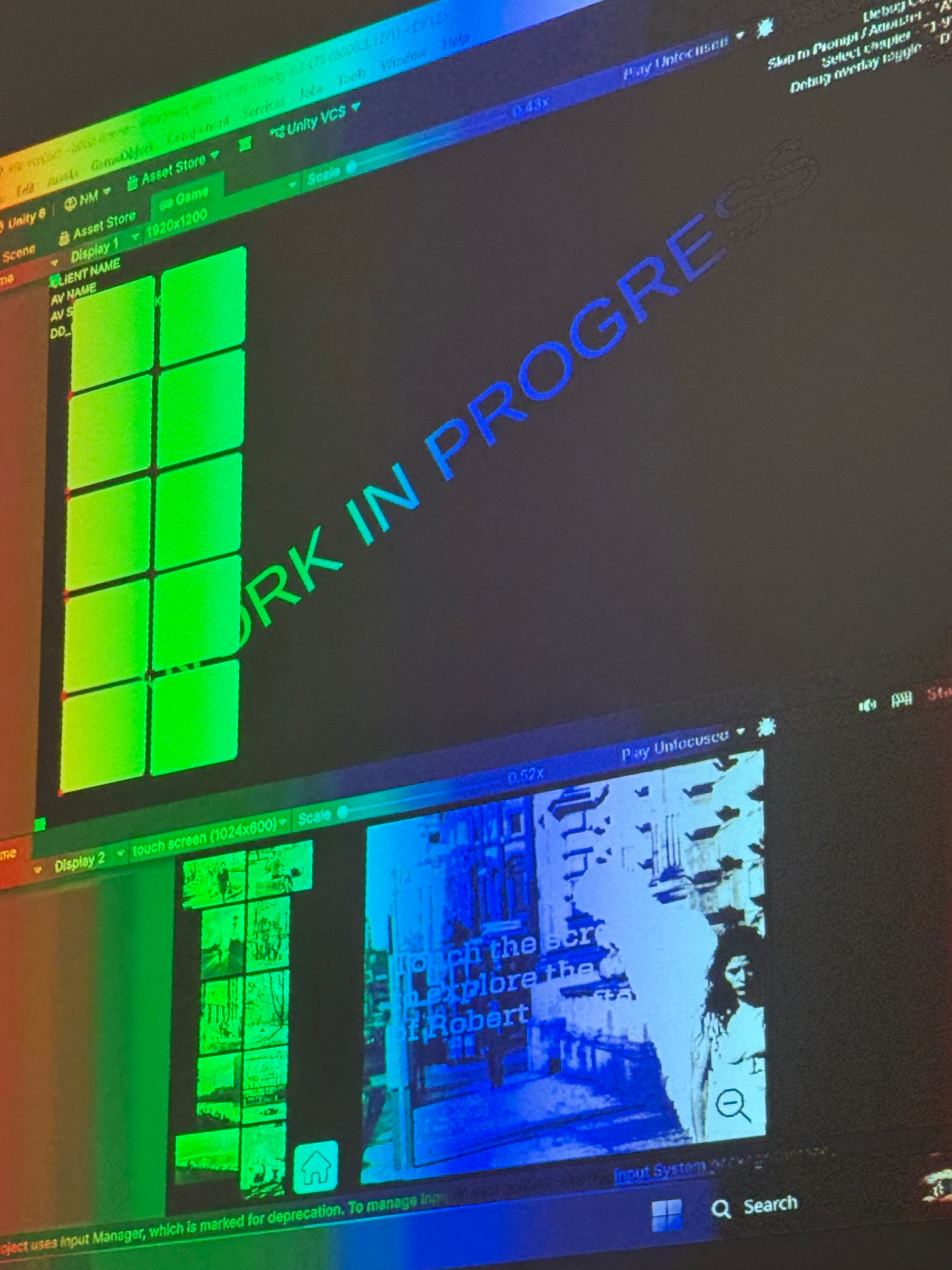
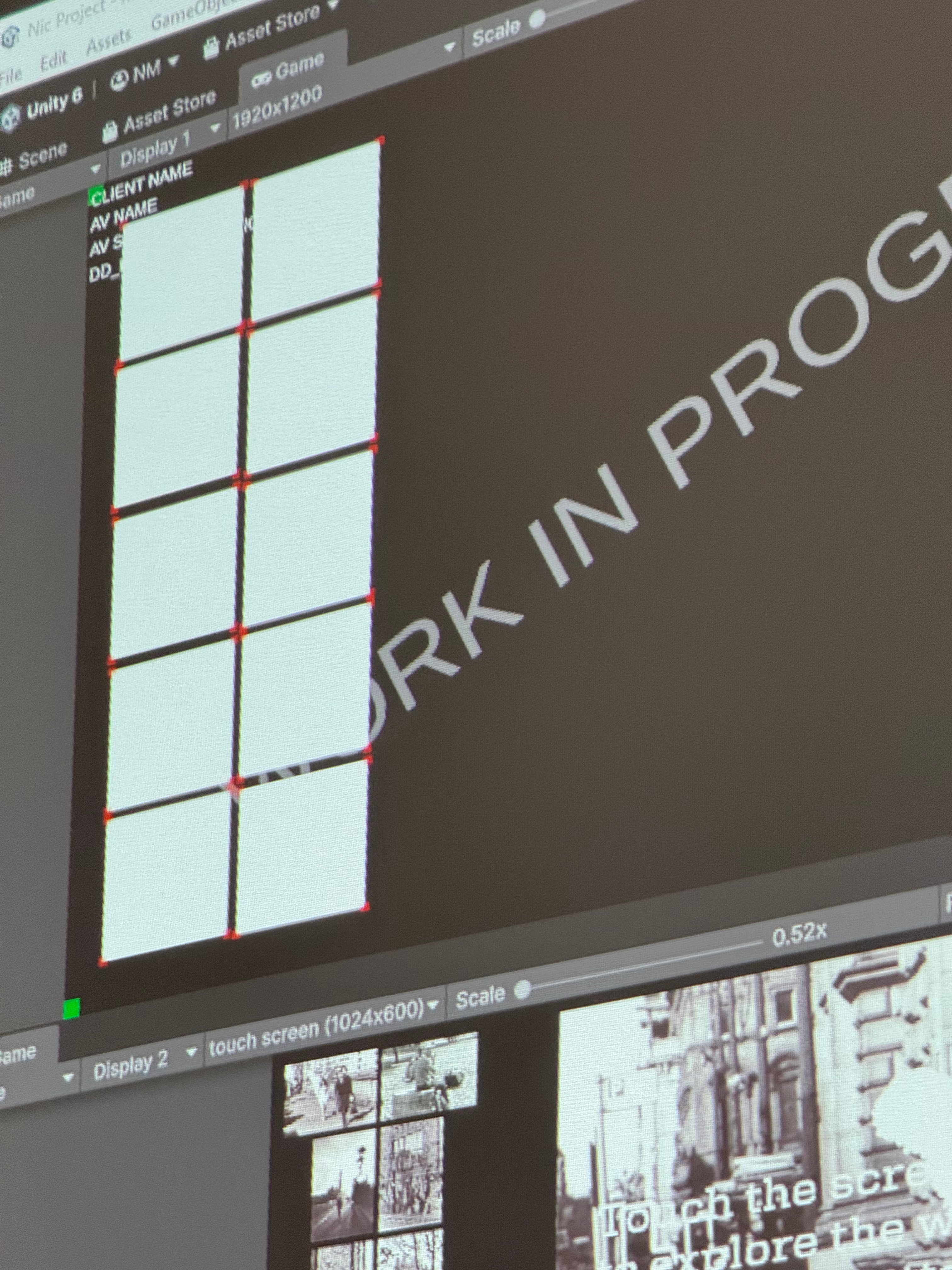
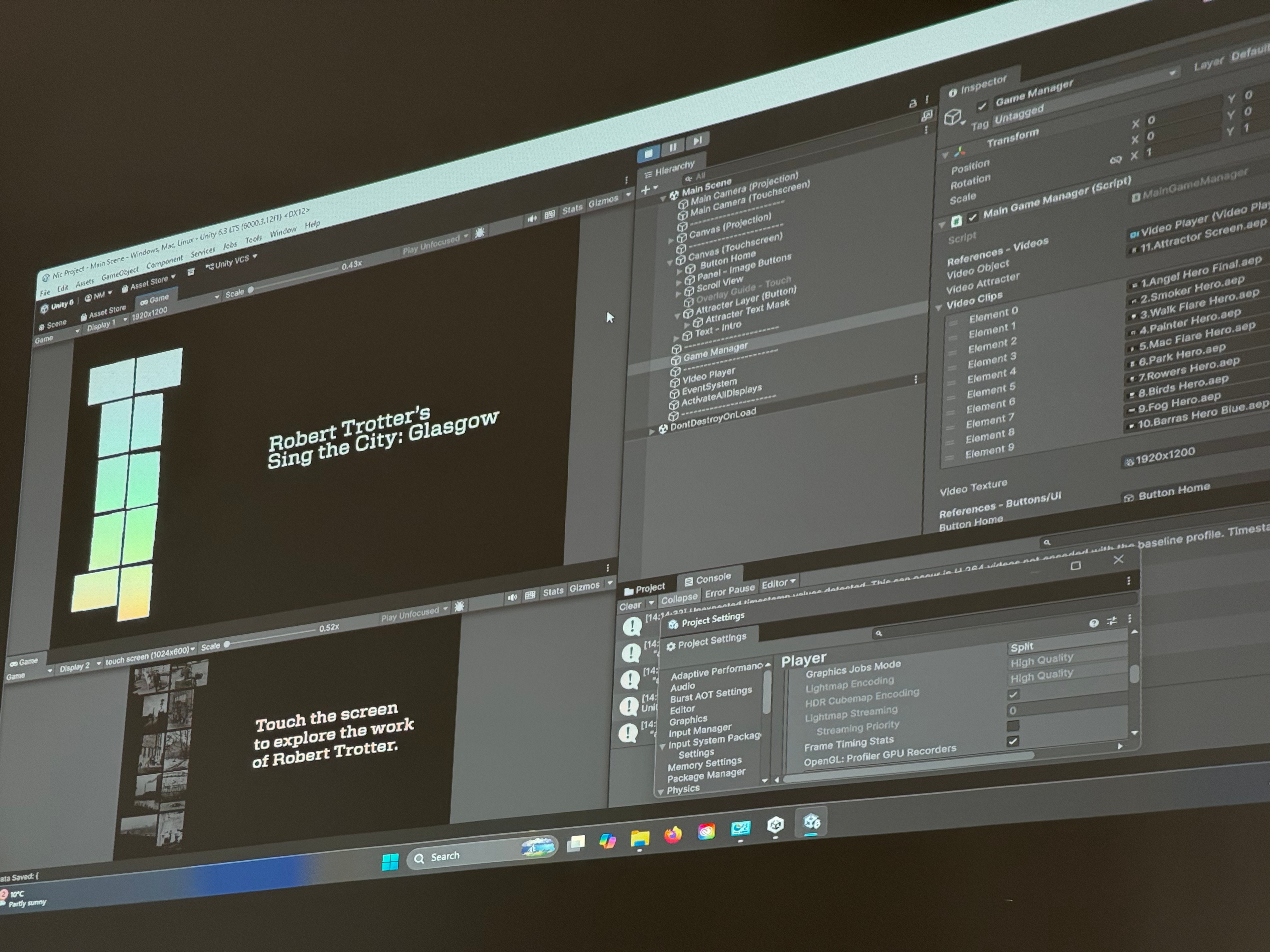
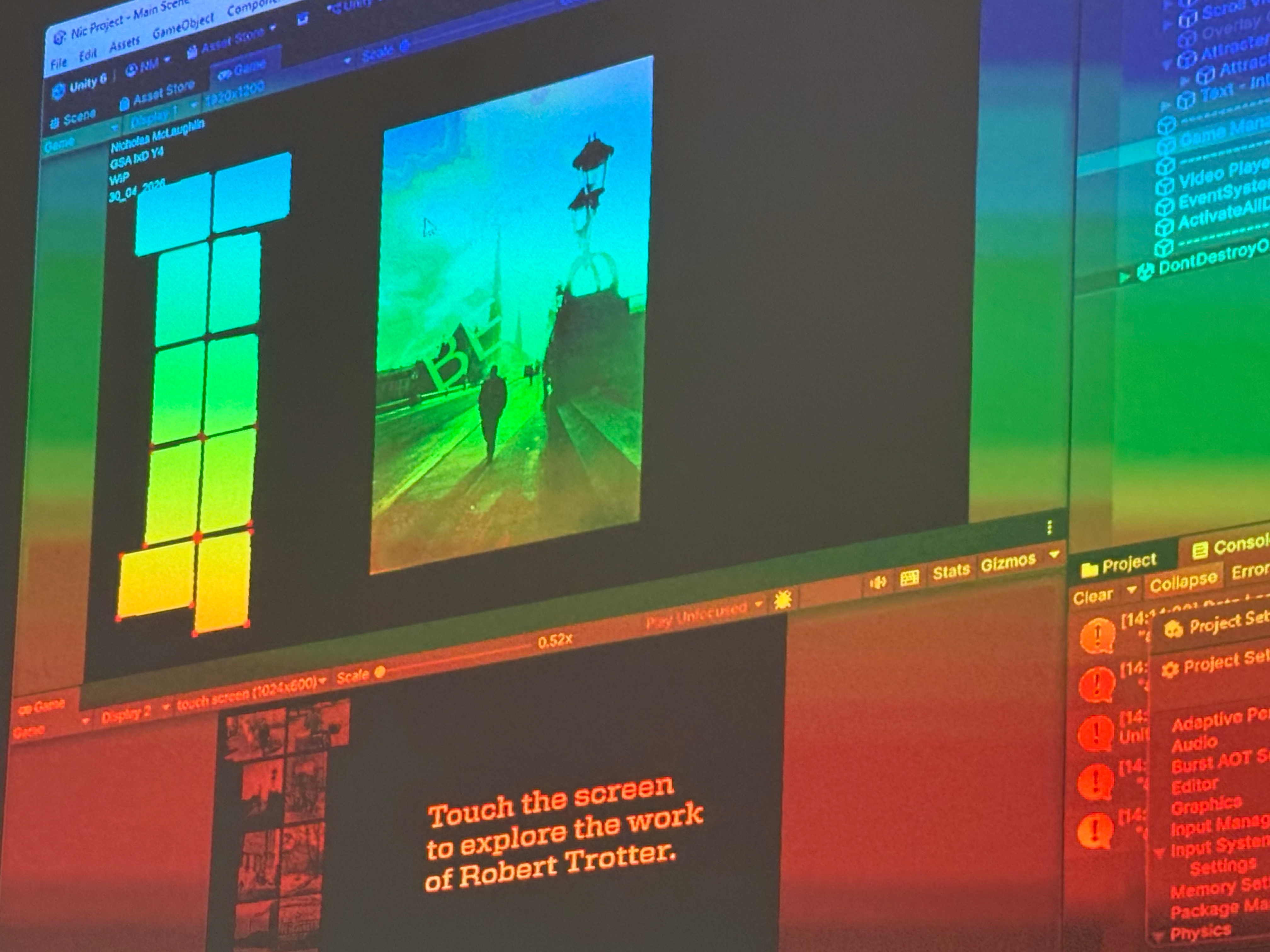
With lots of help from Pav, we were able to get the project framework up and running and responsive on the touchscreen, and make some changes to the style and movements. I felt it should adhere to the style I’ve already established with the research and the design language developed for the WIP.
Attractor Screen Writing:
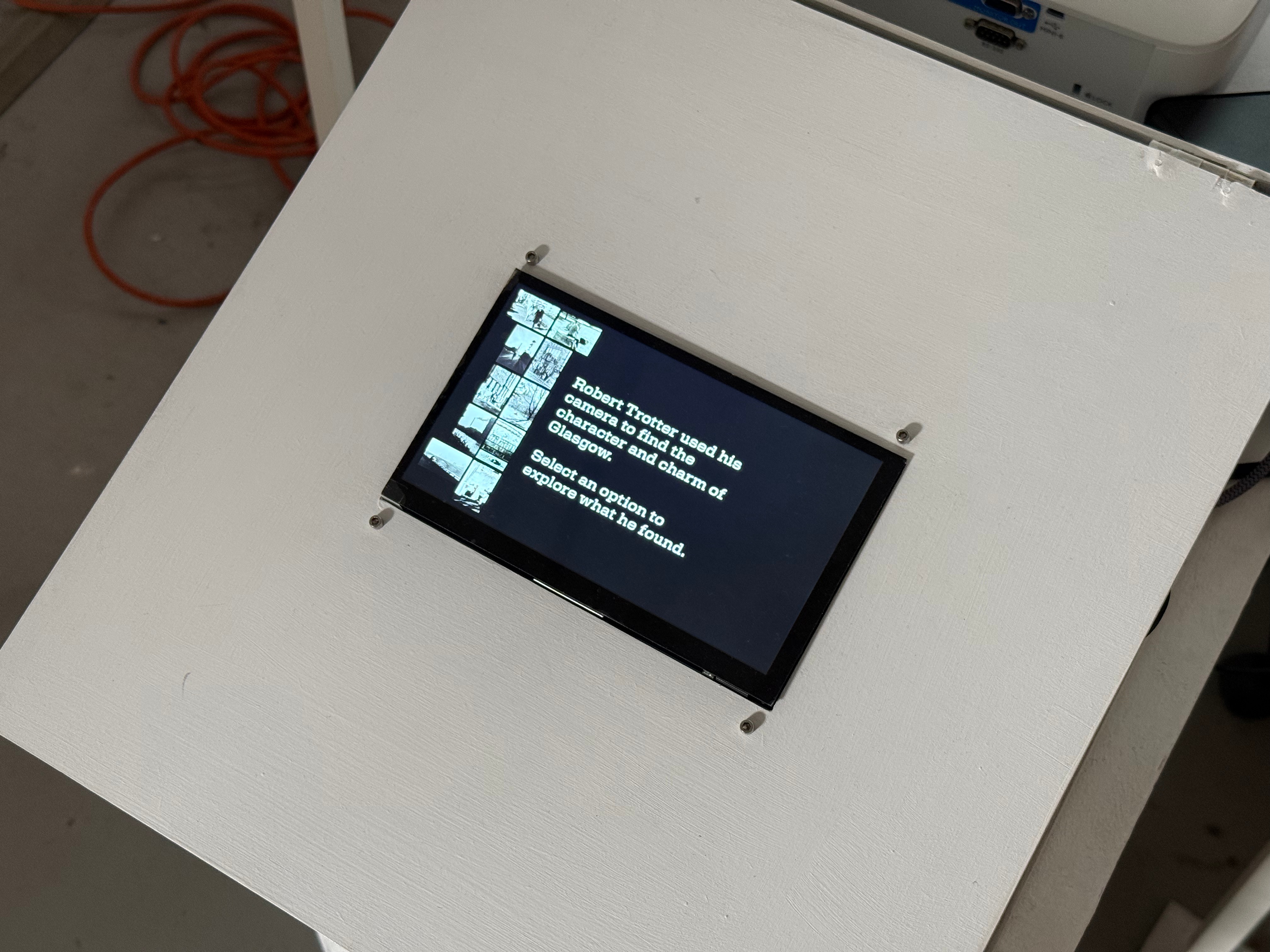
Initial Call to Action
Info on Robert Trotter with second call to action
Initial Call to Action:
Touch the screen to explore the work of Robert Trotter
Info on Robert Trotter with second call to action:
Robert Trotter used his camera to find the character and charm of Glasgow.
Select an option to explore what he found.
Woodworking:
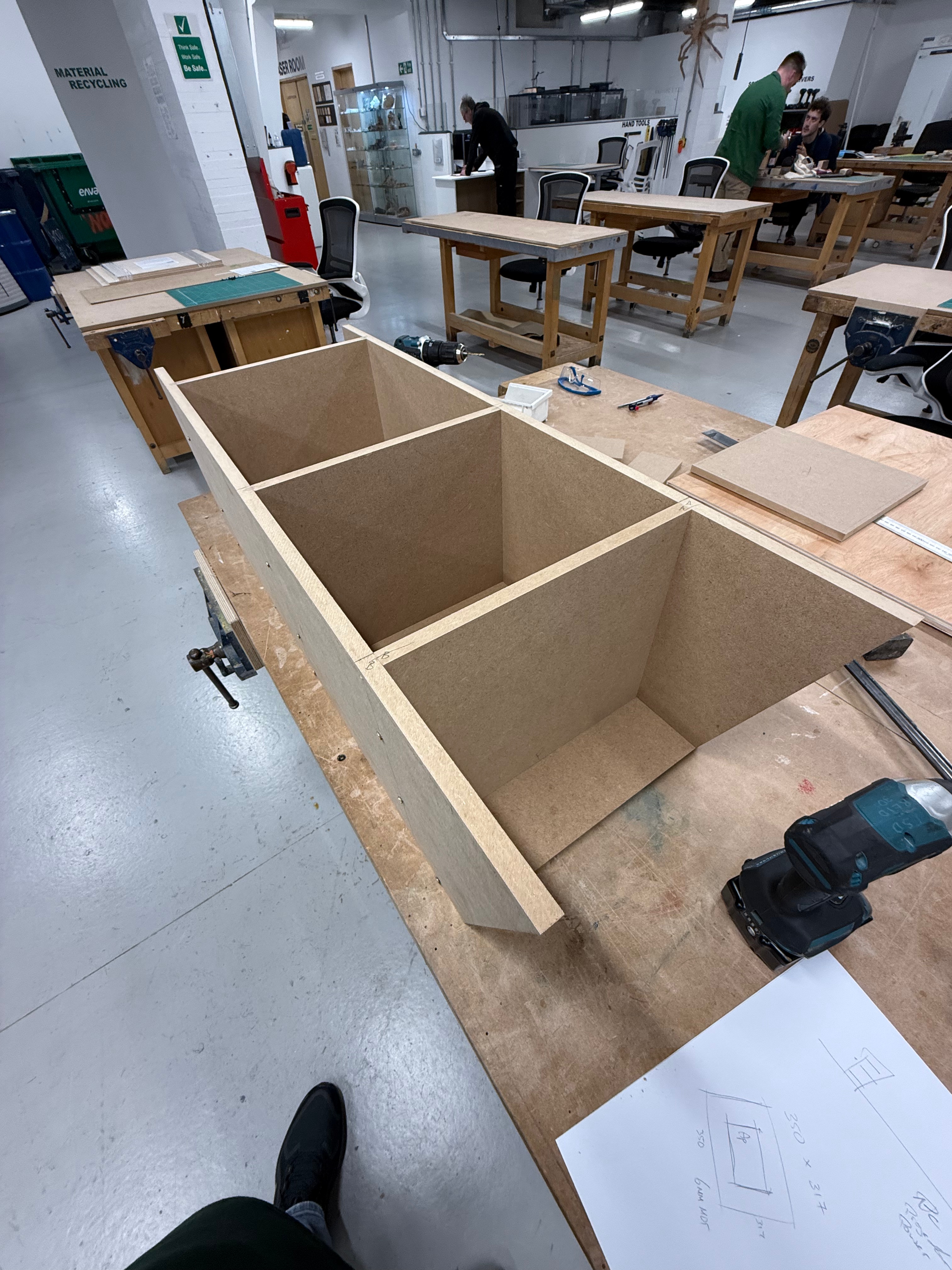
With the plinth designed way back at the start of spring break, which feels like months ago, I got an email saying it was finally ready, so with the next available time booked for Monday, I was in to at least get it assembled.
I used to be confident with woodworking, actually making a physical thing, but I found myself again, frozen, worried I was going to mess it up. Andy was helpful and kind, given that I had said I knew what I was doing, but for some reason didn’t start.
After a helping hand, talking it through, and spending way too much time measuring, I fianlly got into it and it all came back to me, I stopped trying to think about what I was doing and just doing it, what was logical and obvious and maybe some times overly cautious when thinking about security but I just didnt want to get this down to London and open the van to scrap wood.
Show & Tell:
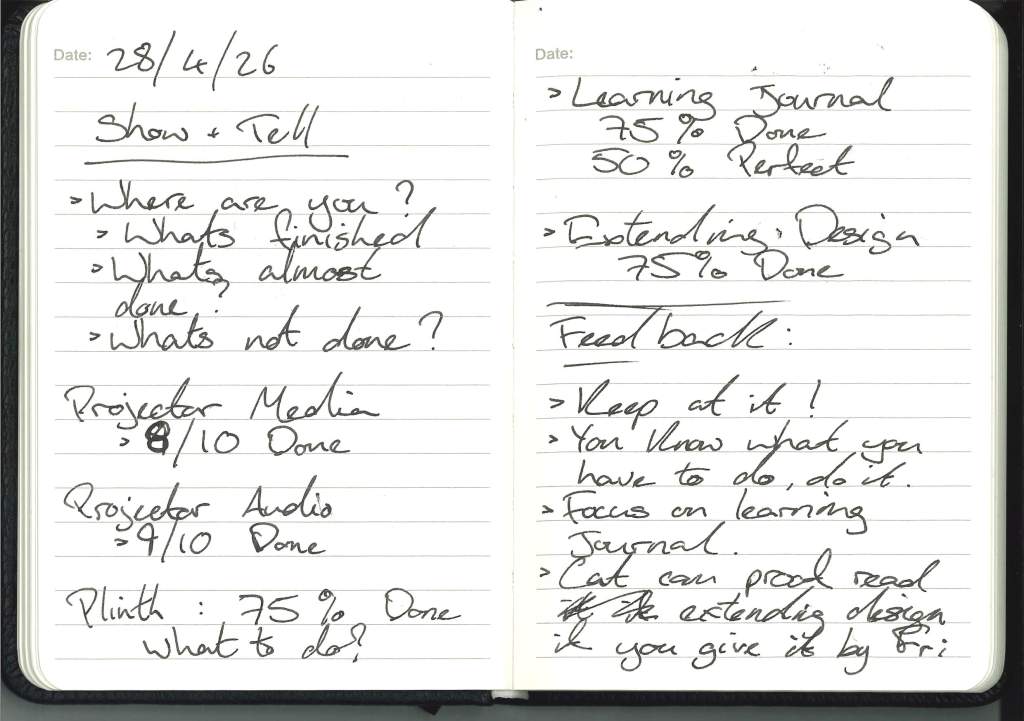
With Show and Tell today, it was just a progress report that came so much easier to me now that I actually felt I had something to report and show.
There was some good feedback on the button icons, and again, just making them as obvious as possible, so it’s clear which one does what.
At this point, everything seems almost ready for the hand-in. I think everything has one more 3rd, just to stick the landing.
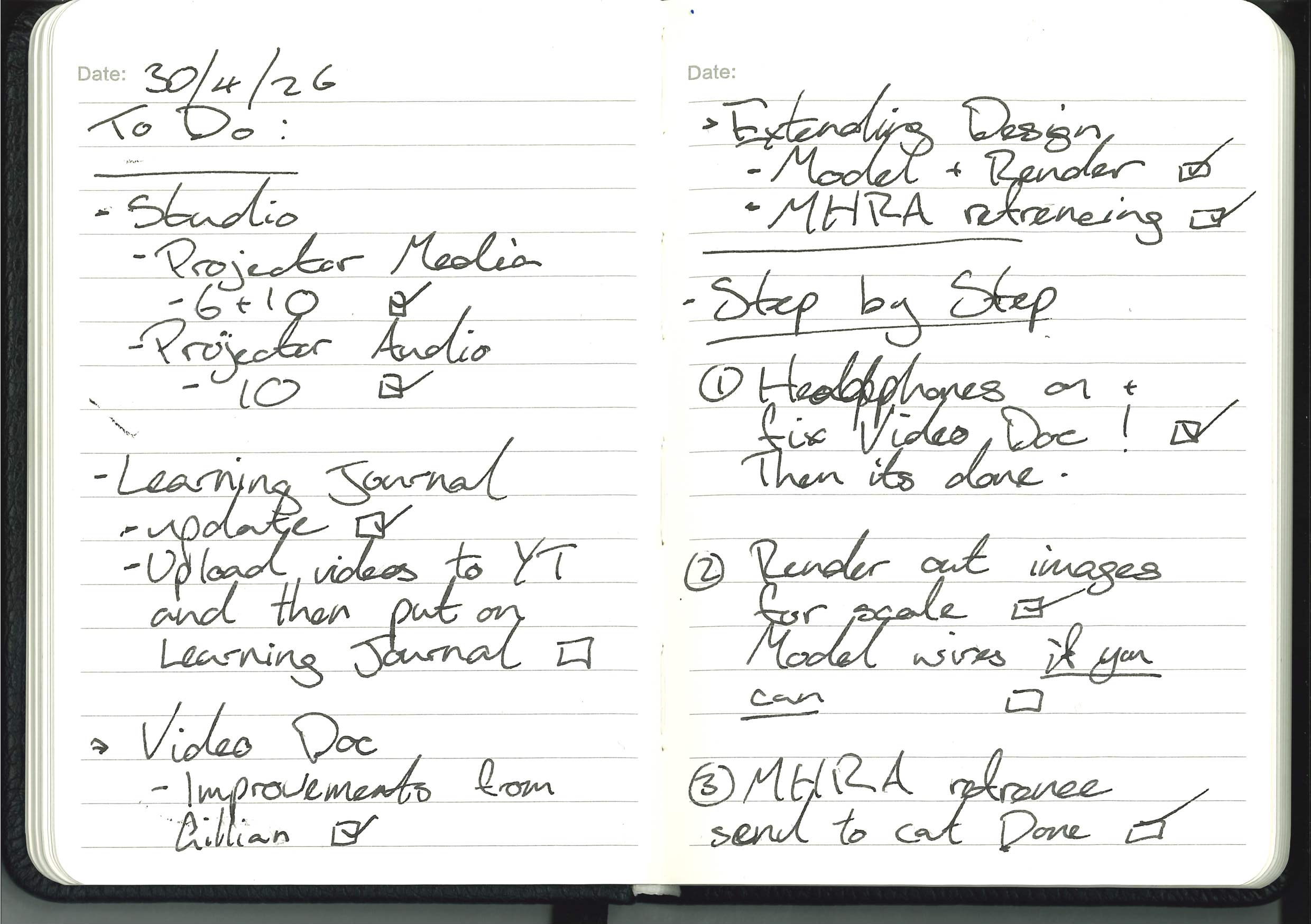
If I have a few more days of how productive I’ve been recently, then I’ll be fine, one day to finish extending design, one to fix the Video Documentation and then the rest of the time is finishing the studio project as well as getting into the habit of chipping away at the learning journal and improving the existing things on it as I am now.
Finishing the Video Doc:
With the detailed and appreciated feedback from Gillian, I was ready to finish it off, and with Pav in and ready to help me, I was again ready to get my head down and sort it out. I feel like my abilities of the last couple of weeks have just clicked into place after the last three and a half years. I know I can do it now, so I did.
As I have the framework for the video documentation now, I can swap out the WIP footage for the footage I record at the Degree Show, and when I do, clear documentation after the degree show, and then, if need be, I can work in any footage I get at New Designers for my portfolio.
Assembling the media:
The Visuals:
Then, after a morning of assembling physical parts, the assembling of the digital parts came easily. I don’t know why I kept putting it off, and it feels like I’ve wasted so much time now. I don’t know why I wasted so much time instead of just doing it.
So, armed with all the parts and a checklist, I assembled the media for my project, just like the wood in the workshop.
I think sometimes I just need a hand to start, and then I have no problems at all.
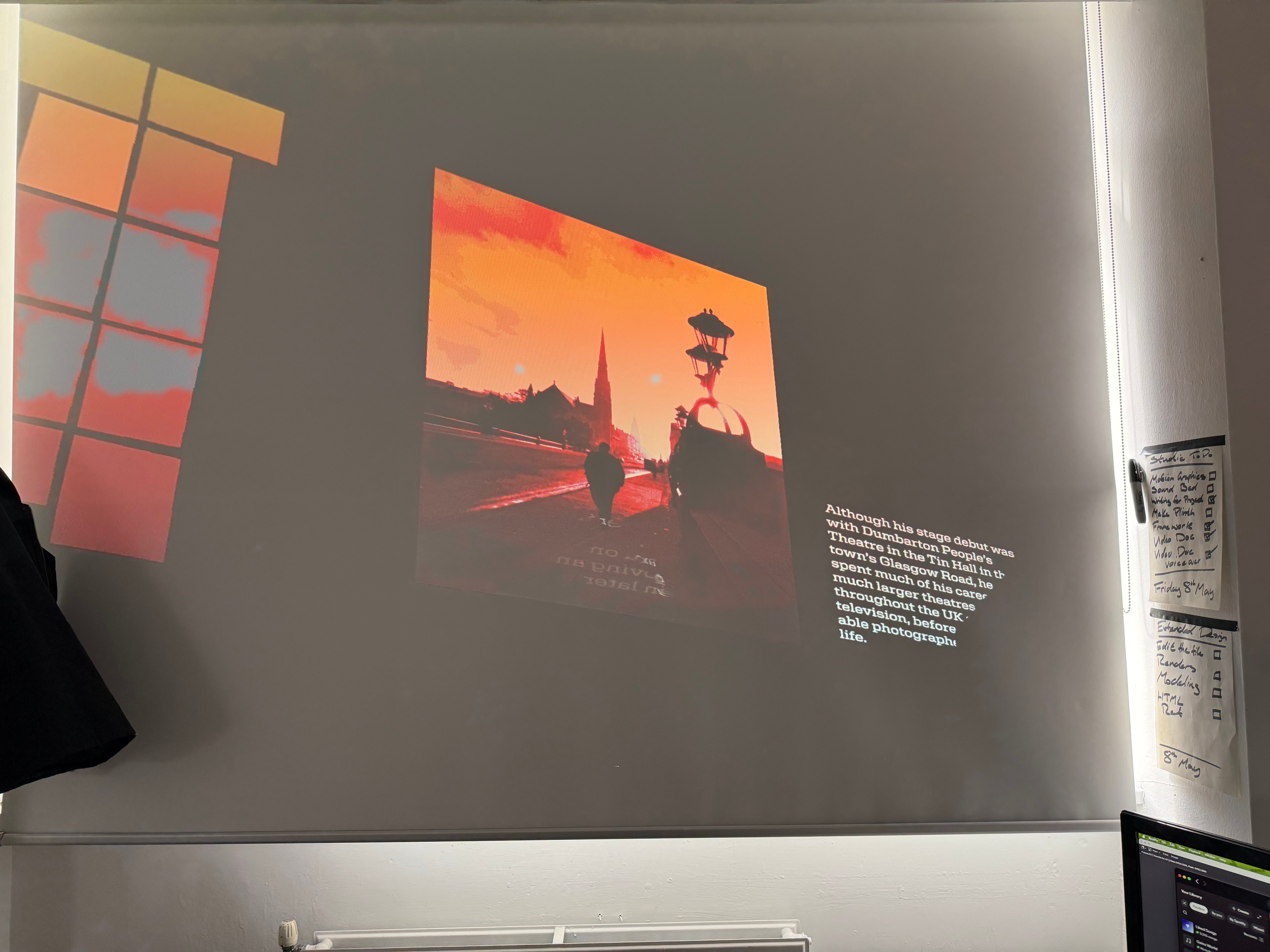
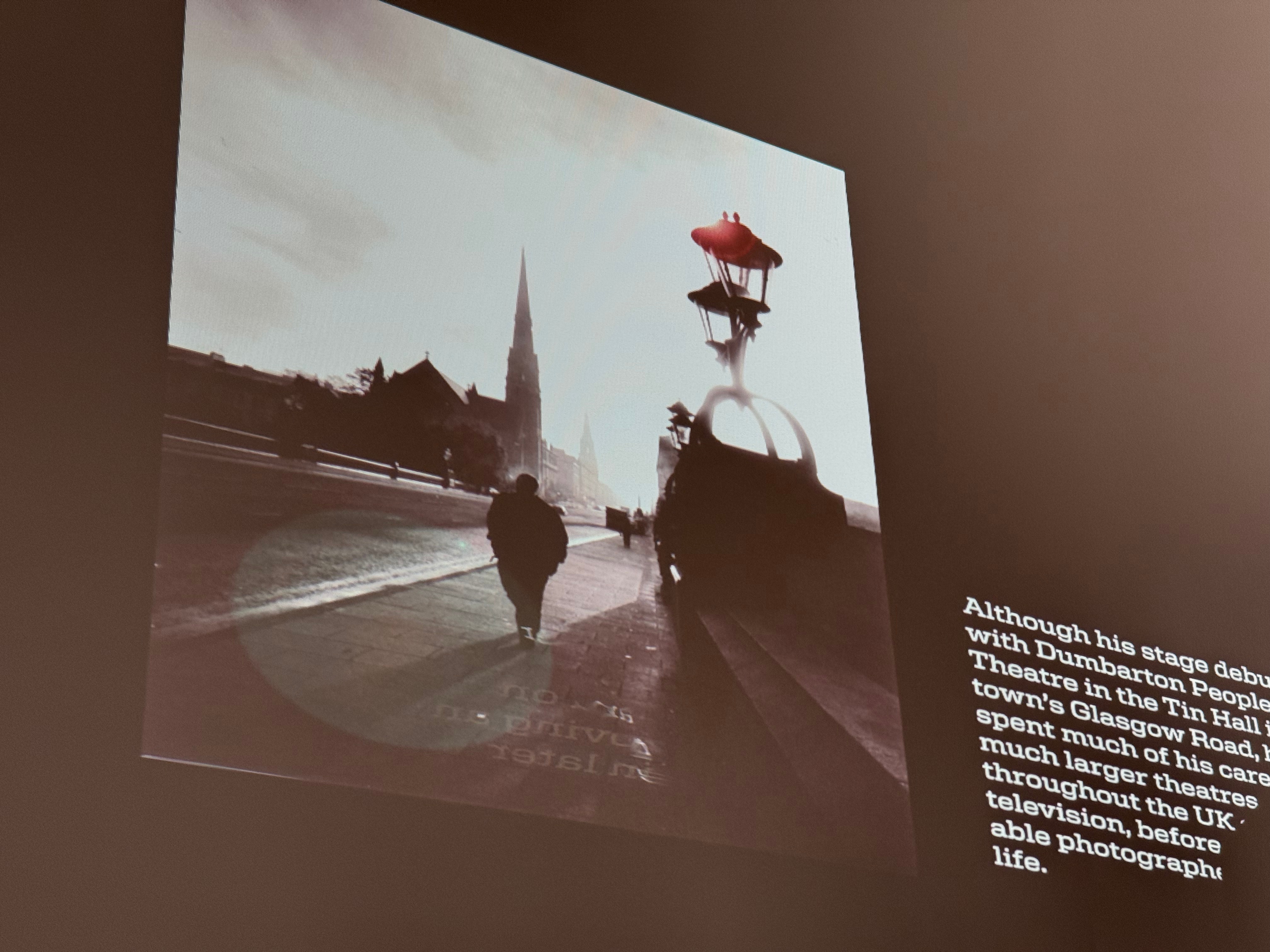
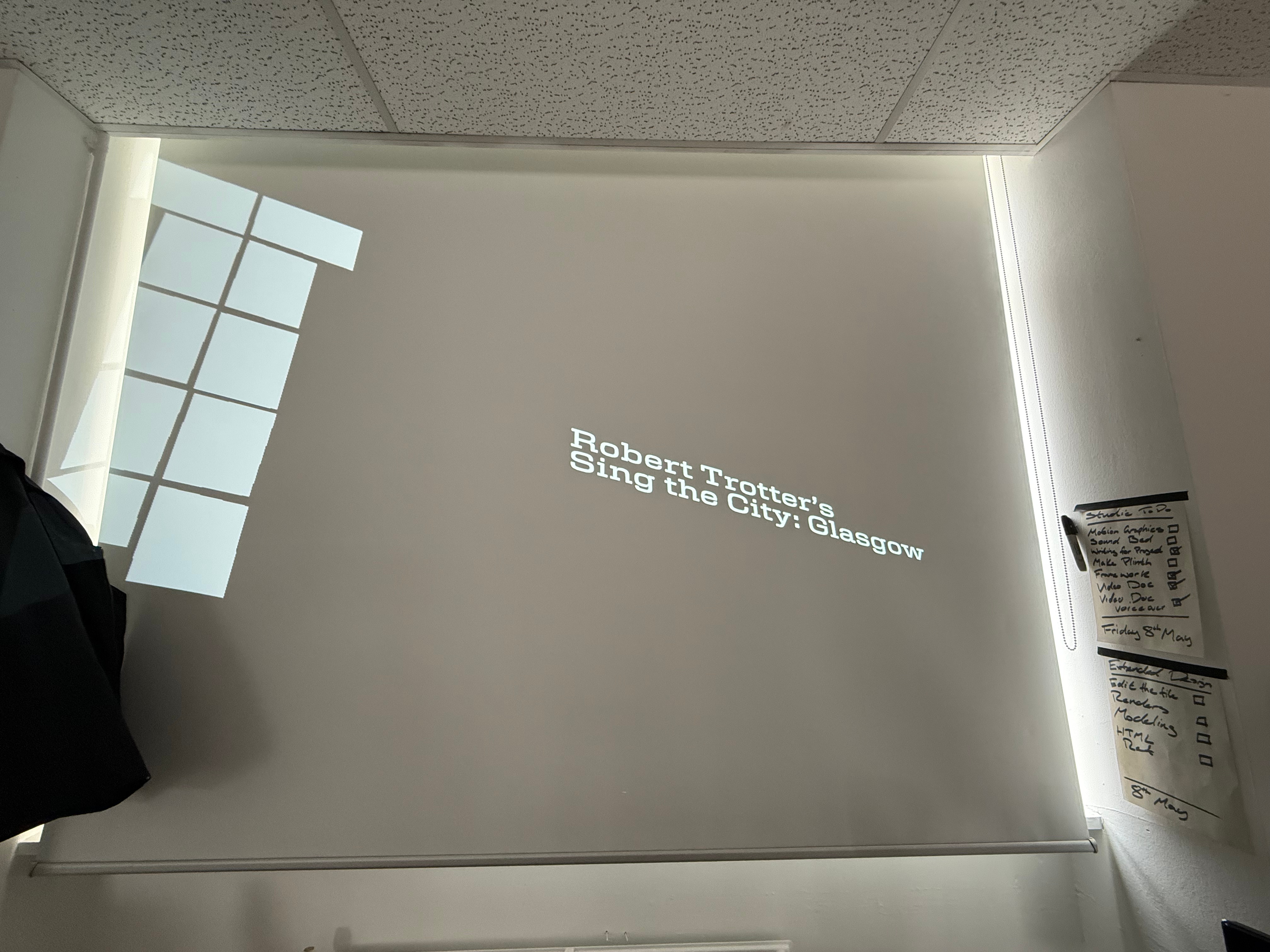
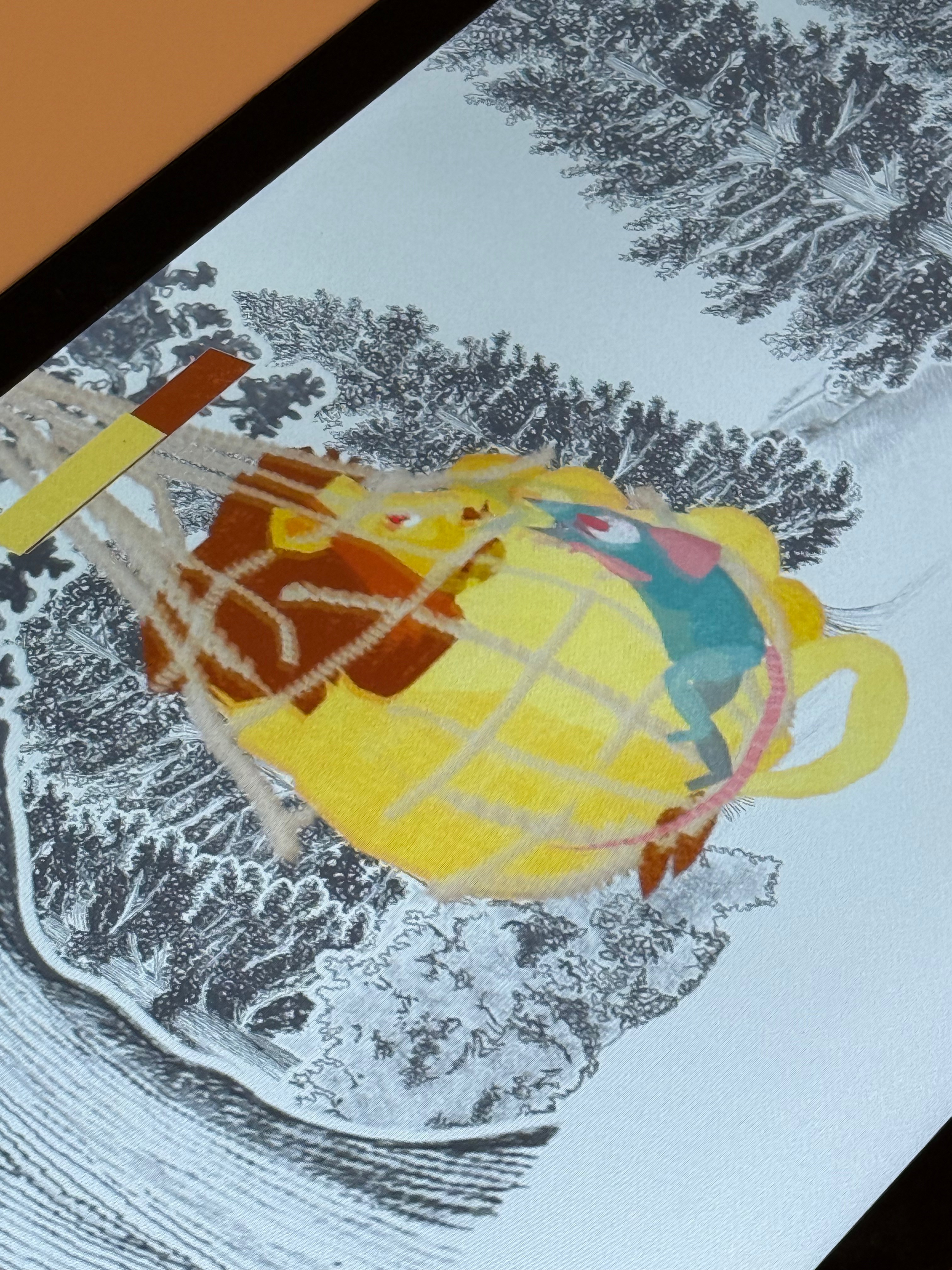
The images are approximately the right size for the projection; the writing was taken from the Figma board; all were assigned to their respective scenes; and the final touch was the audio I had collected beforehand, again all assigned to the scenes they were intended for.
The Audio:
Some of the audio was either not good enough, due to strong winds on the days of recording, or the scene would be almost impossible or very unlikely to recreate without it being a project of its own. So with some minor layering of ambient noises and freesound recordings, it seemed to paint the picture I wanted.
With almost all the media assembled, it felt that I had really done something today.
Collecting the laser cutting:
After not being able to get into the studio, either being busy or the woodworkstudio its self being closed, I finally got in and got a chance to speak to Andy in the lasercutting room who saved me by double checking with sizes and doing it right there with a free bit of scrap wood, I’ll look into this more when I’ve handed in and have time to focus on the degree show.
Building the Prototype/Chat with Jen:
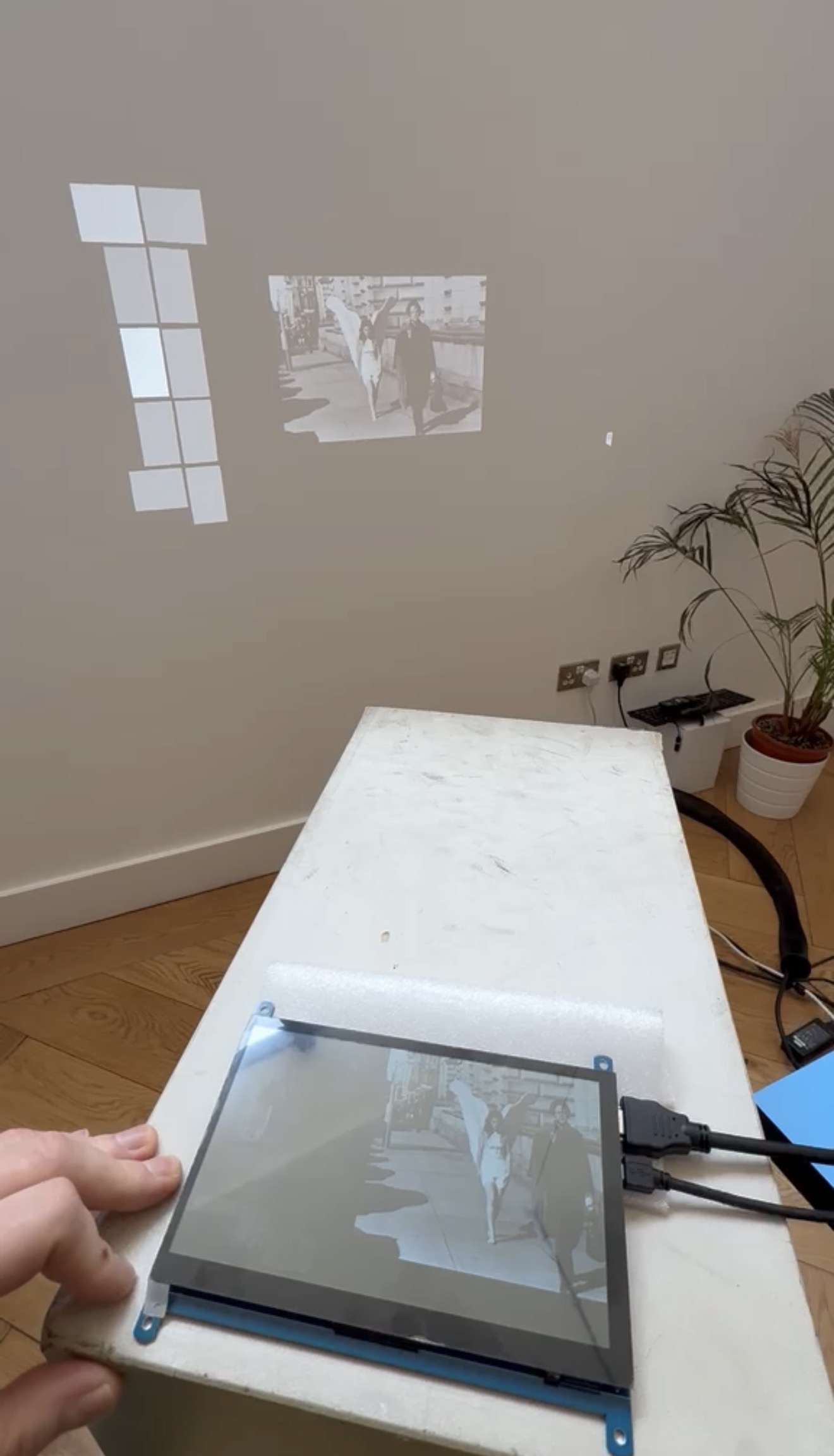
After collecting the laser cutting from Andy, I was free to assemble the prototype again and get Jen’s opinion on it. For the most part, she seemed happy with it, but did make a great point of tying the mounted photography on the wall to the selections on the touch screen.
I also kept it running, just to see if there were any problems, stress testing it as I worked on finishing Extended Design. The second and third years came down, as they do, to go for lunch, and all got a shot of it, and it seemed to be quite a positive response.
Implementation with Pav/Quick Iterations:
With Pav keeping me right, it was another productive day of finalising, exporting and plugging in the scenes I had made on After Effects, whipping a USB back and forth while listening to music and getting things done. I find I can make the best and quickest decision when I have someone asking as if I’m the expert, which is my project, so I should be, but with no time to second-guess myself, I knew what font, what spacing, the timing, everything just clicked.
Another thing I noticed was how long I was taking to do the paralaxing shots. I just built them up so much in my head and kept putting them off, but when I needed to, I just did them. Now, I would like to spend more time on them so they are perfect, but given how little time I had, I was pretty proud of them.
I owe him big time for elevating my work to where I’m happy with it. I need to get to that level on my own, though, a one-man army that can do both sides.
Ticking things off the list:
Recording the final piece of audio:
On Sunday, I finally got the chance to make the trip to the Barras and record my final elusive piece of audio: the noise, hustle, and banter of the Barras. It also worked as some rest; I’ve been working consistently on all the projects, and I’ve been forgetting to slow down at times.
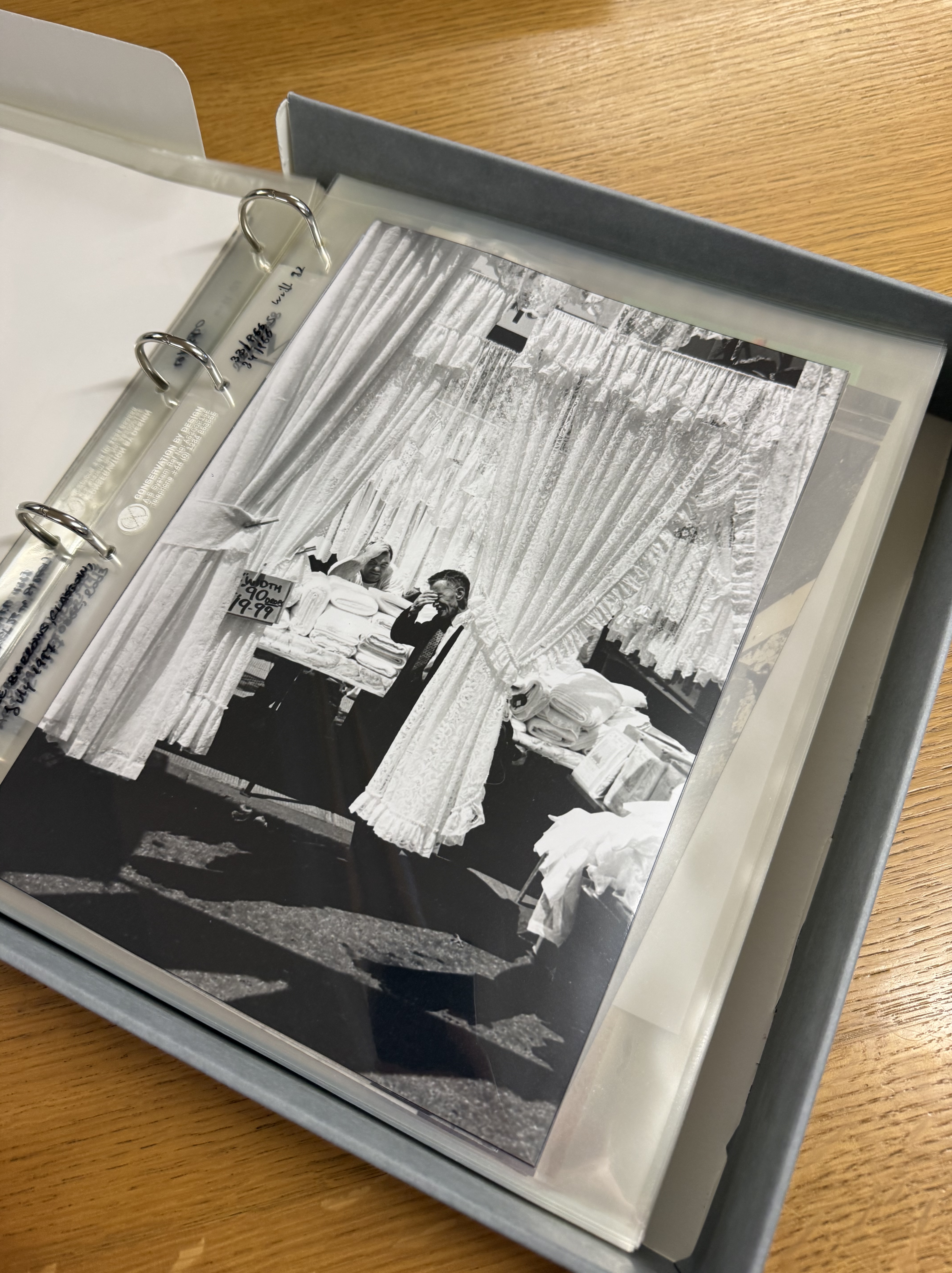
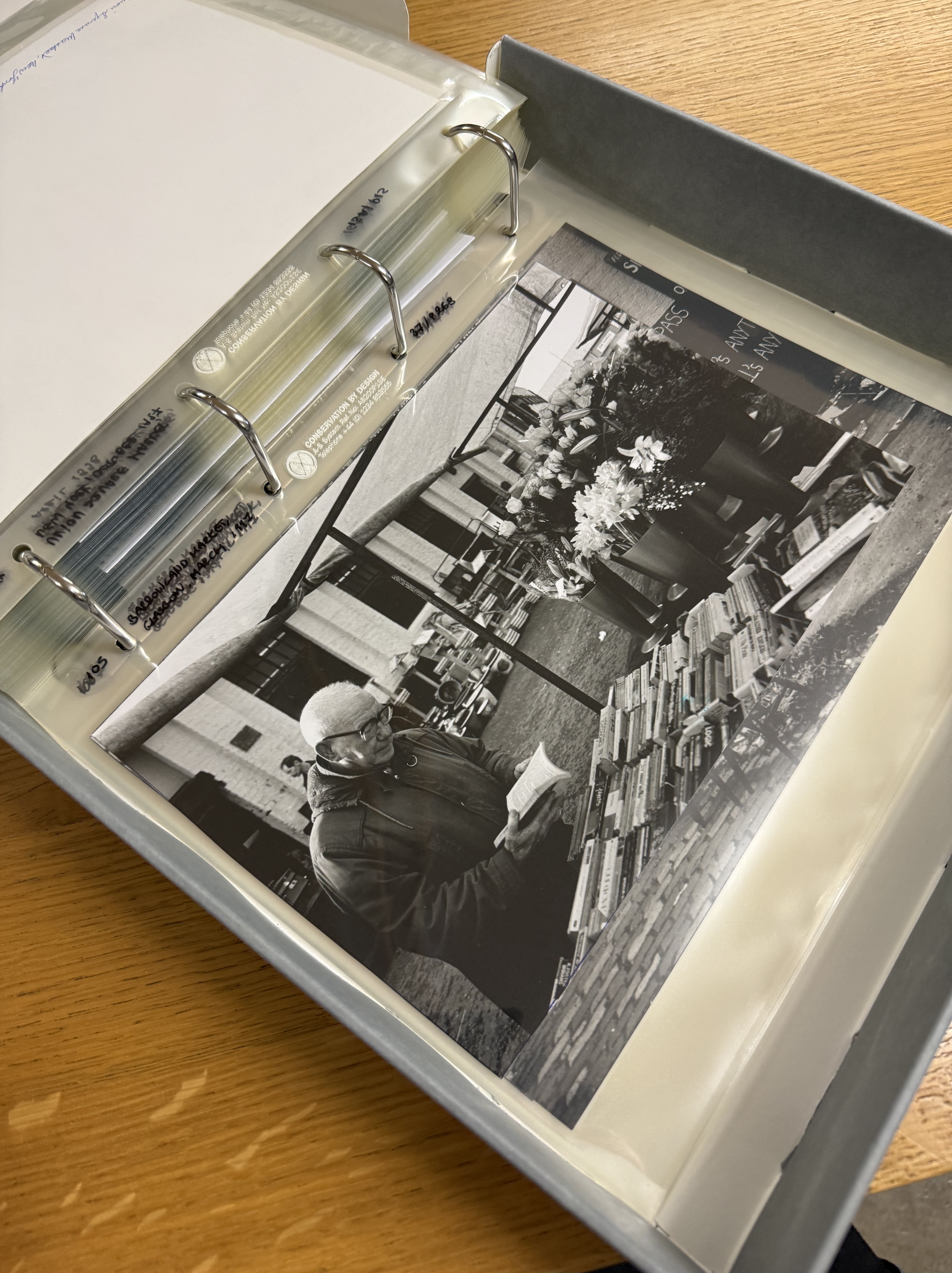
It also felt as if it was a poetic summary of this project, I started to feel on track with this project when I seen Robert Trotter’s photography and fell in love with it, how beautiful he made Glasgow seem, how he found the stories and framed them beautifullly and one of the shots that first caught my eye was the one in the Barras the two men surrounded in net curtains and the final piece of the puzzle that I’m collecting is in the same place. As I stood there enjoying the people, the sights, the smells and the fantastic madness, I felt a little bit closer to Robert Trotter and everyone who loves this place.
Below are the two audios from that day of the noise of the space and the man that seels pies in the Barras, and I think it’s exactly what I was looking for:
Tidying up the scenes:
Last night, just to put my mind to rest I wanted to look over the scenes for the projection and ist good that I did, I guess in my stress and speed I didn’t notice all the small mistakes, like the kerning being off, the edges of some masks not being perfect, just a lot of small little things that would have been obvious projected onto the side of a wall.
Reflection – 8th May 2026:
Before handing in, I want to look back at the whole project and reflect on each step of the process now with the hindsight that I have at the hand in date:
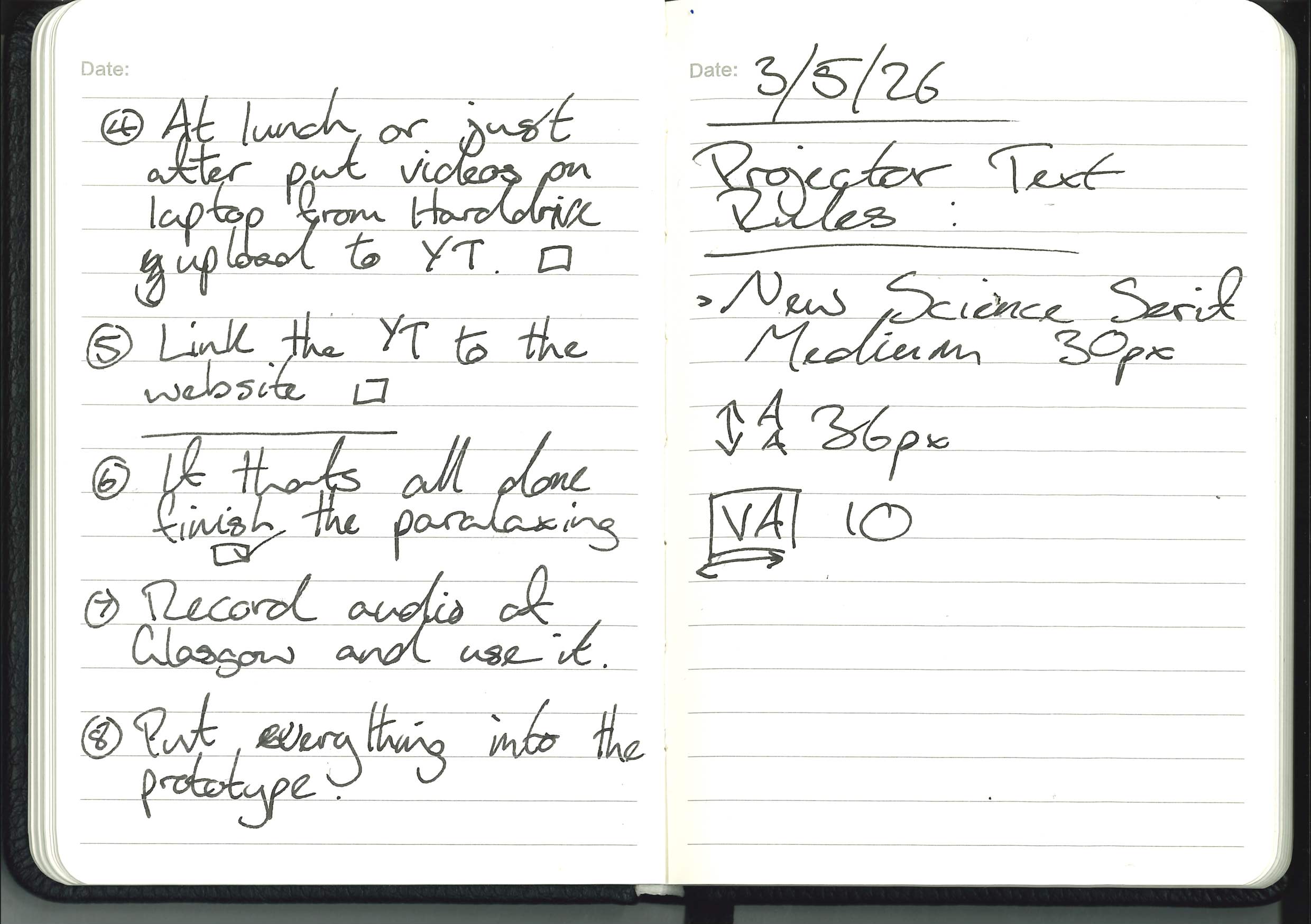
All of it was coming to a head this week; all I had in my head was to ‘stick the landing’ and to finalise and produce work that I’m proud of. Over the last couple of weeks, I’ve been writing to-do lists constantly, just trying to keep myself on track, but they kept growing. Every time I rewrote them the got longer and longer, but in weeks 11 & 12, I felt like I was finally getting things off. The list kept getting smaller, which gave me even more motivation to keep going and power through.
I’ll be honest, it was exhausting at points, but that’s because I cared about it so much, and it’s not as if I had a team of people. I had the lectures and Pavs’ help, but they have their own things to worry about. But looking back at it now, I wouldn’t change anything about the process. I learned so much in such a short time, and I loved it.
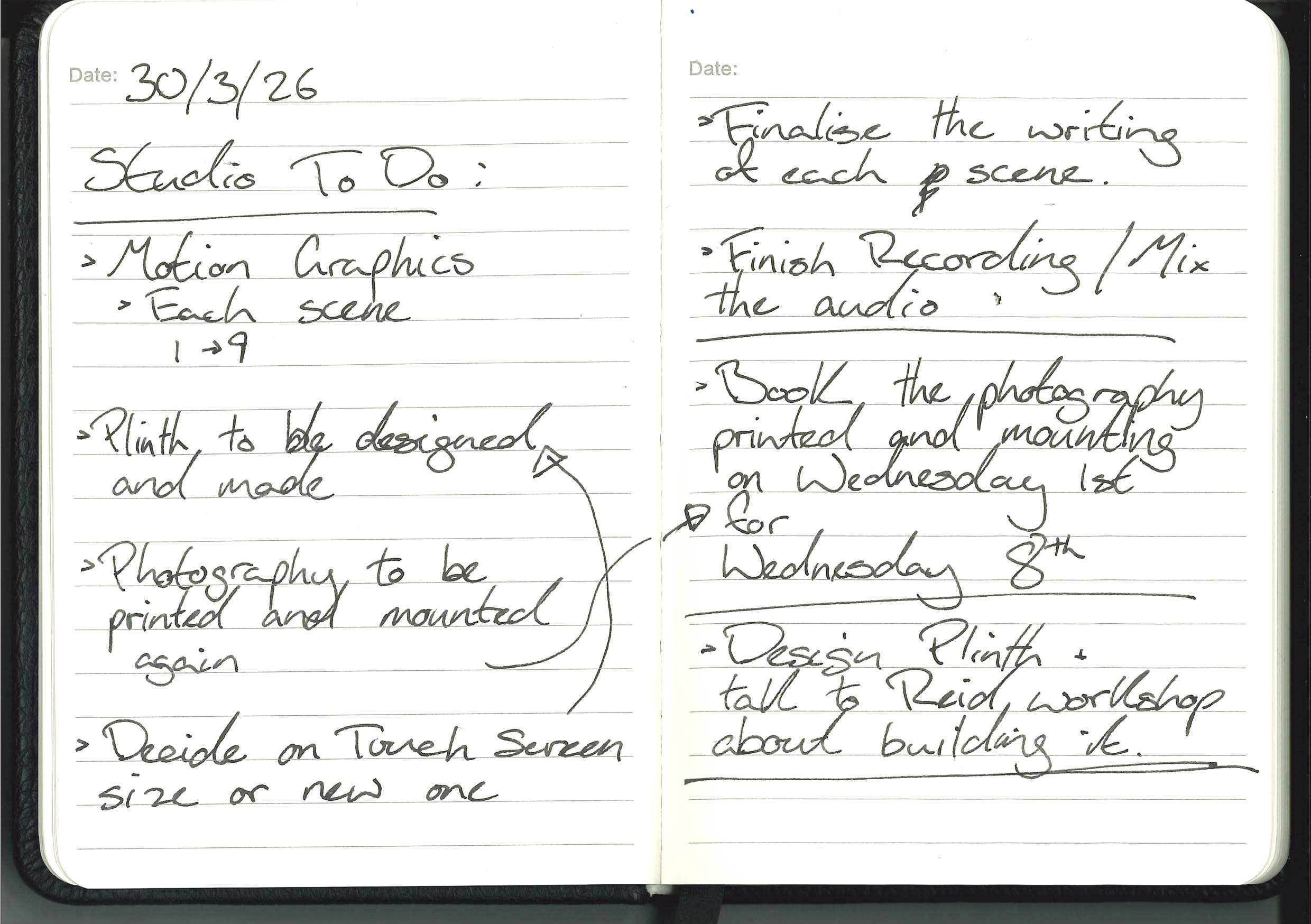
So this week started with a bank holiday Monday that put a bit of a spanner in the works, in that everything was closed, and the fact that Stockline Plastics was closed on Friday, the weekend, and then this Monday, and that means that I won’t be able to get the mounting board I need in time for the printing and mounting on Wednesday.
So today is a day for planning and chilling out, whether I like it or not.
Things are open again:
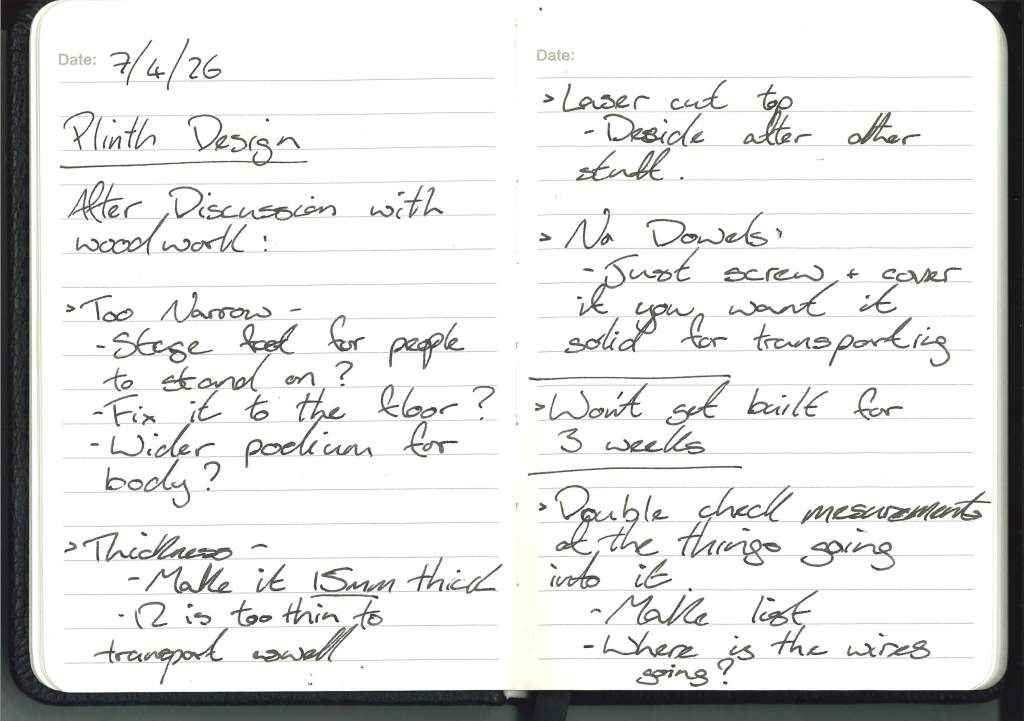
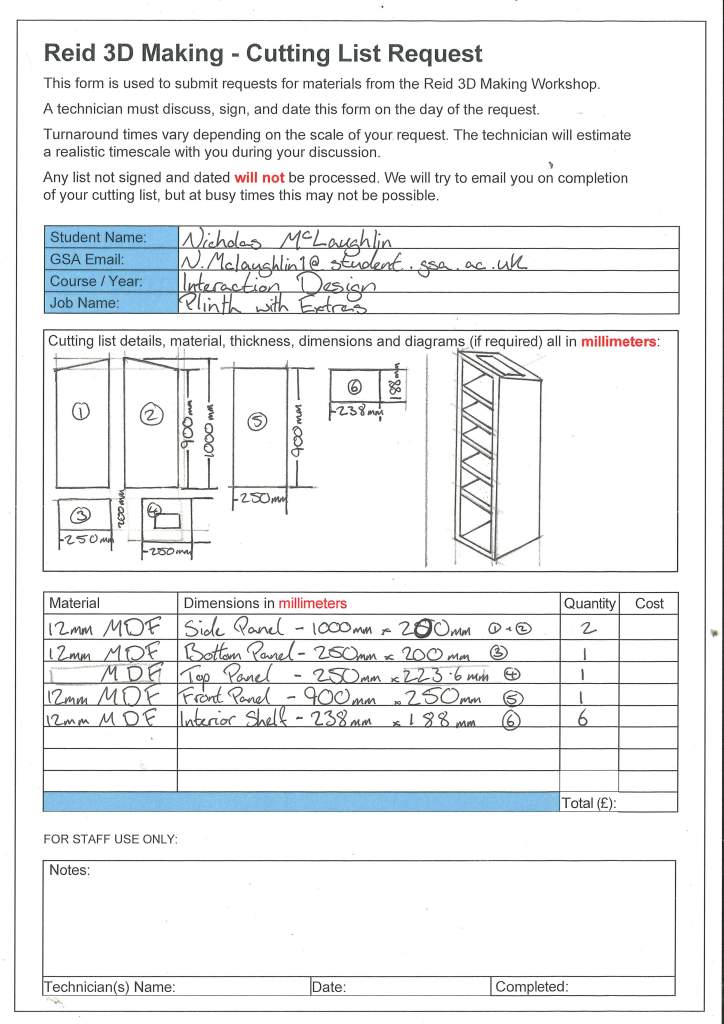
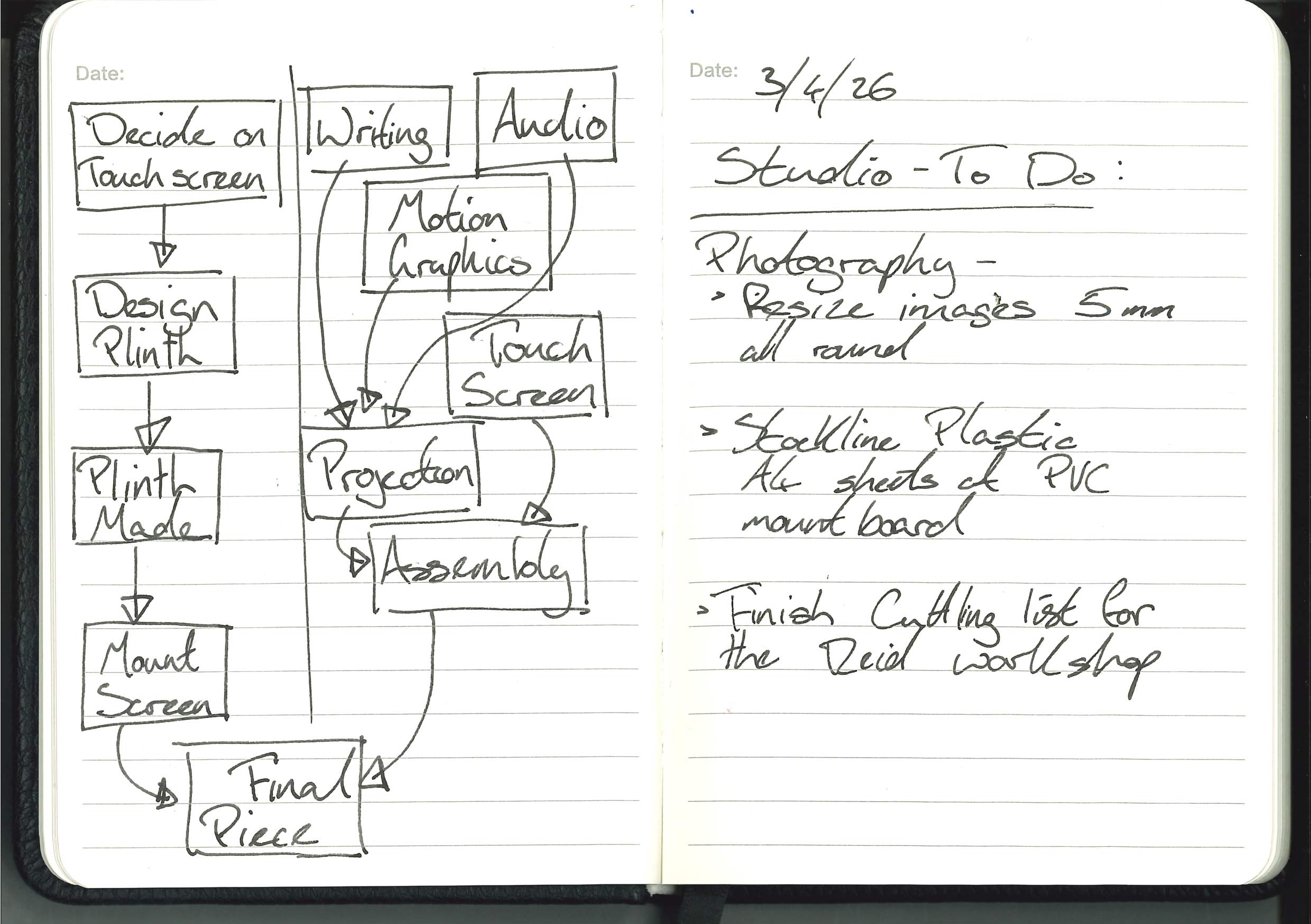
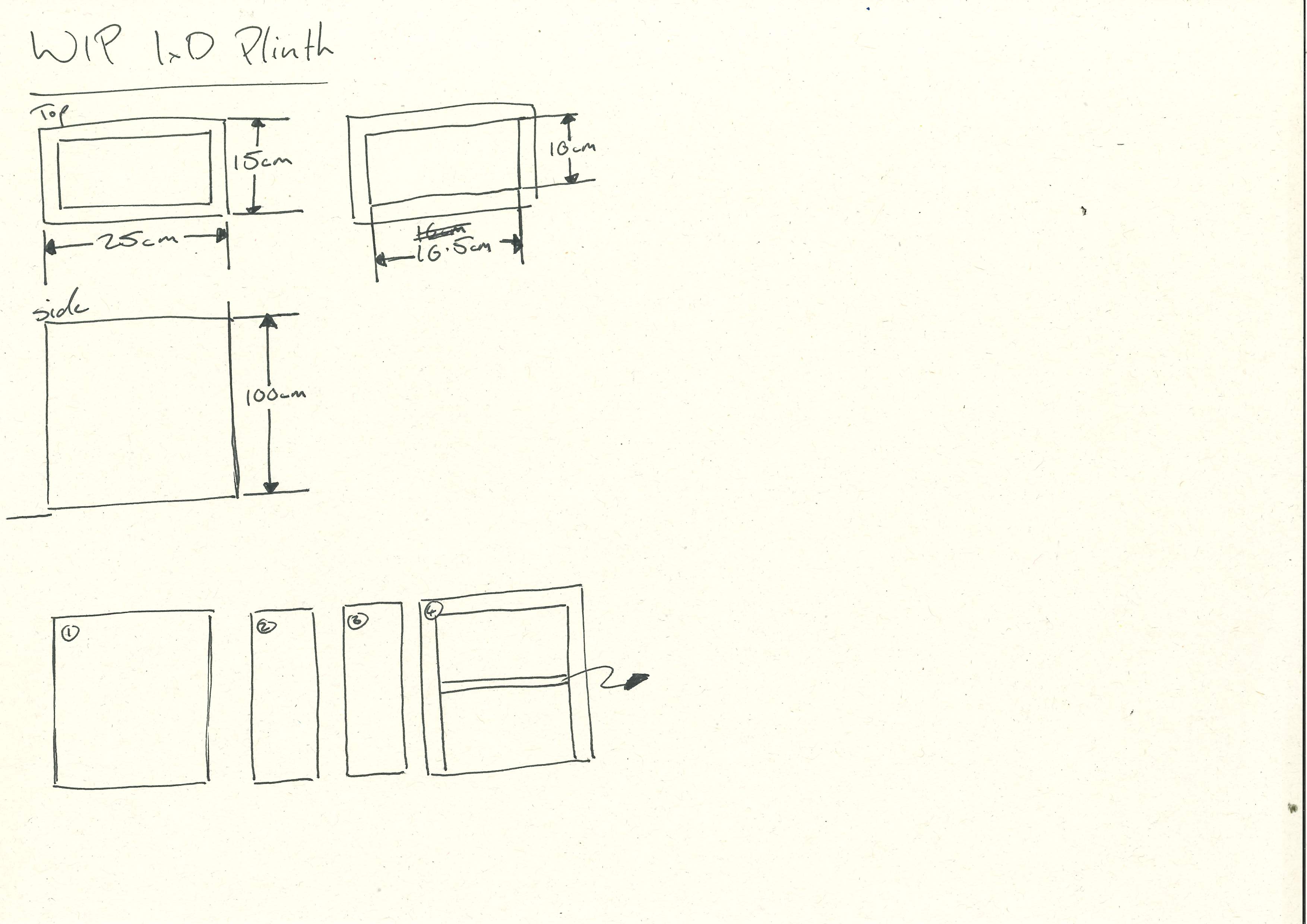
Ok, things are open again today. As I said in last week’s post, I’ve worked on the plinth design to solve the problems I had at the WIP and to consider what I’d need it to do for New Designers.
With the design and measurements from Friday, I went to the Reid workshop, and John was helpful in letting me know what won’t work with it, so I can fix it.
The cutting list is the first iteration of the plinth design; the second was accepted and taken to the wood workshop by Andy.
So with the design changes, I went back to the Reid workshop and discussed a plan for the plinth. If I’m ahead of the game with the plinth, then I’ll have plenty of time to implement the extras that Tom and I worked out before.
Chat with Paul:
While chatting with Paul and having a bit of a moan about the photography mounting, he made the point that there are other ways of mounting the photography and that it might not need to be done at the Stow just because it’s “professional”, it was yet another moment when Paul, Cat or Gillian asked a simple question that makes me come to my senses and gives me permission to relax and not stress as much.
After the chat with Paul, I handed in the plinth redesign and then stocked up at Paint and Mortar with everything I need to mount the photography tomorrow.
Photos printed:
So, not the most productive day, but I got the photos printed at the Stow. It’s one thing off my list, and I’ll mount and cut the boards tomorrow when I’m 100%.
I feel like I am making progress, just slowly, like wading through water. The thing is that when I’m not here, I’ll miss it. I need to enjoy this last part of my time at GSA.
Chipping away:
After consolidating the Motion Graphics work I’ve done so far, I felt a bit better because I realised that a lot of it is much closer than I thought and will only need a bit of TLC to get over the line and ready for the hand-in.
Also, after a chat with Pav and him showing me the Unity framework, I can use it all seems more possible and manageable, and the fact that even just using the audio to add to the photography is ok and that it’s better to let the photography speak for itself with a bed of audio to accompany it than to force in motion graphics and make it laughable… I’m not being dramatic when I say that the bird animation I was trying was shocking.
Video Documentation Workshop:
Well, after the workshop, I think it all hit us how much we have to do. I think there was a healthy level of panic in the room, but one that would help us get it done.
My main takeaway from the workshop was both how much we have to do and that it is very possible and manageable, as long as we all lock in for the next step: the hand-in, then the degree show, and then New Designers in London.
Spinning Wheels:
The past couple of days I feel like my wheels have been spinning and I’ve not been getting much done, I’ve been chipping away at things but just does not feel like I’m doing enough.
Video Documentation:
Voice Over Script:
For ease of editing, I broke the script into 3 parts: beginning, middle, and end. The beginning was how I started the project, lost and unsure. The middle is how I found both the focus of my piece, being Trotter’s photography, and the resolve that I am a designer, and that I had doubted that for a time. And the end is how it has come to this, and how realising my passions, interests, and abilities as a designer has led to the interactive exploration of Trotter’s photography.
Script:
What do I want to say?
What is the point of the project?
What is the story of the project?
What happened at the start?
What happened in the middle?
What happened at the end?
What have you made?
Start :
This final year at GSA was yet another of self-discovery and self-development as a designer. I started this year unsure of my direction with this project, as all do, but through that discovery and development as a creative and a practitioner, I found that the direction of my passions and interests would naturally lead me through and to a place in my project and later in my career where I can thrive.
I used this opportunity to look inward as well, not only considering the passions I have for design and technology, but also why I have them, looking to my life before GSA.
Middle:
After turning my attention to myself and my upbringing in Glasgow, Clydebank and Dumbarton, I found the work of Robert Trotter in the GSA Archives: an actor, writer, director, and, after retirement, a photographer who grew up in Dumbarton and moved to Glasgow to pursue his passions. After looking into Robert Trotter further, I began to see similarities between us and found inspiration to never let my creative passions die, even at a late stage in his life.
I saw in his photography that he, like myself, had an apparent fondness for the people and characters of Glasgow.
End :
So, with my solidified passion for design, art and photography, the desire to share that with others, and a deep appreciation of Robert Trotter’s photography, I produced a piece of work that lets anyone explore only a small selection of Robert Trotter’s Sing the City collection.
Using a mix of physical photography that has been printed and mounted, digital representations of that photography that I’ve augmented in After Effects and a podium to control the experience. My goal with the work is to spark the same passion and appreciation in others that I found.
Voice Over Recording:
With the script written, I decided to just jump into recording the voice-over for the documentation, learn by doing and iron out the clunky writing that works on the page but less when spoken.
After trying again and again, I wasn’t very happy with my voice over, but when revisiting Ineses and Jennies video, the thing that stood out to me or appealed to me was their personality and warmth, so as I was recording over and over again and after a few off-the-cuff takes, I remembered something that Paul said when refering to the writing of my studio project, ” people like anicdotes, things that they can relate too”. So, as I was just recording myself speaking, I was reminded of a story my dad always tells:
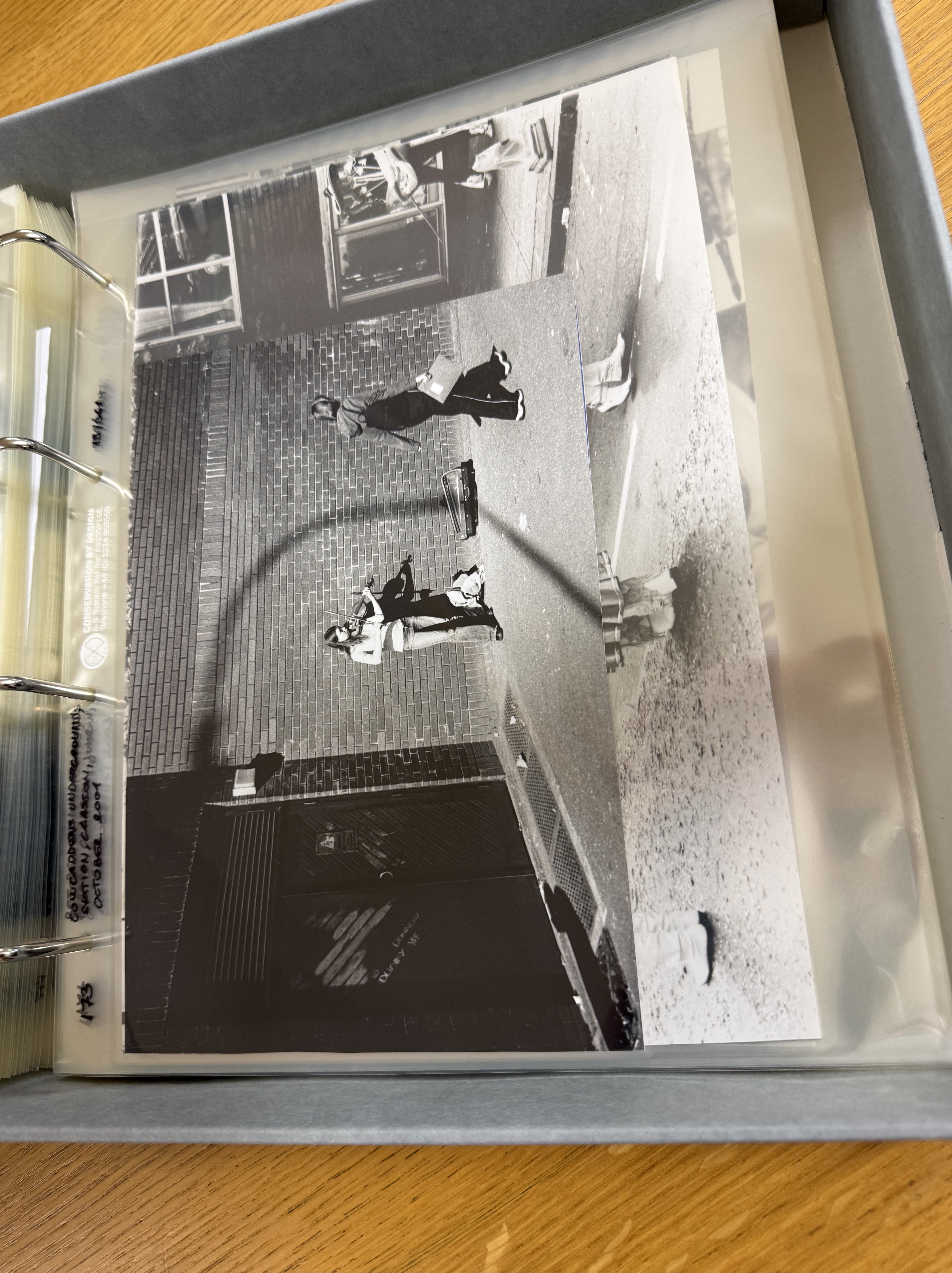
“Oh, he’s always been obsessed with Glasgow. When he was a wee boy, like 8 or 9, I’d ask him if he wanted to go to the movies, go shopping, or do anything… he’d say, ‘Dad, can we go to Glasgow and people watch.’ He was happier getting a steak bake from Greggs and sitting on the Buchanan Street subway station and just watching Glasgow”
I then go on to talk about how I loved the people of Glasgow and the city, and that when I saw Trotter’s photography, I felt the same way, as if I had found someone who had seen the same things but had captured them.
Locked in:
With the video documentation, something just clicked, in one day, assembling the entire video. The first day was spent writing and recording the script, developing it on the fly, and making it more conversational.
There was a little blip between the two productive days when I thought I had lost my footage and documentation I had shot for the WIP, but while in the ISO basement, working on the projection for the names and trying to clear space on my struggling laptop, I found them.
So the next day, armed with everything I needed, I put on the headphones, the loud music blasted, and I made the video to a pretty solid standard.
Reflection – 8th May 2026:
Before handing in, I want to look back at the whole project and reflect on each step of the process now with the hindsight that I have at the hand in date:
At this stage of the project, it became obvious that, to do what I had to, I didn’t really have enough time, so I had to use this new ability to just get the head down, lock in, and produce the work I needed to a decent standard. Looking back now, I still think the standard could be better, or I could have done more in the time, but I’m starting to think that that will never really leave me.
That feeling aside, most of these two weeks were about knowing what I had to do and doing it. With the extending design, the video documentation, and the main project, I didn’t have time to second-guess myself; I just had to do it.
At this stage, I’m looking at what worked with the WIP and what didn’t, I keep saying to myself and everyone else that it’s not a time to do something brand new, it’s a time to just take it to the next level, how I’m trying to do it is by seperating its current state its its core elements and then upgrade each of those elements separately and then bring them together again, ideally making the whole thing better.
One of the great pains at the WIP was the plinth, obviously it wasn’t mine so not ideal and Gillian was right that I didnt need to make my own for the WIP and that I’ll do that for Degree Show, I’ll design it as much as I can and try to figure out everything I need before I go down to the guys at the workshop and get their opinion.
How to improve:
I’ve been so bad at documentation because I honestly don’t feel like I’ve done anything. I’ve been trying to figure out how to improve each aspect of the project.
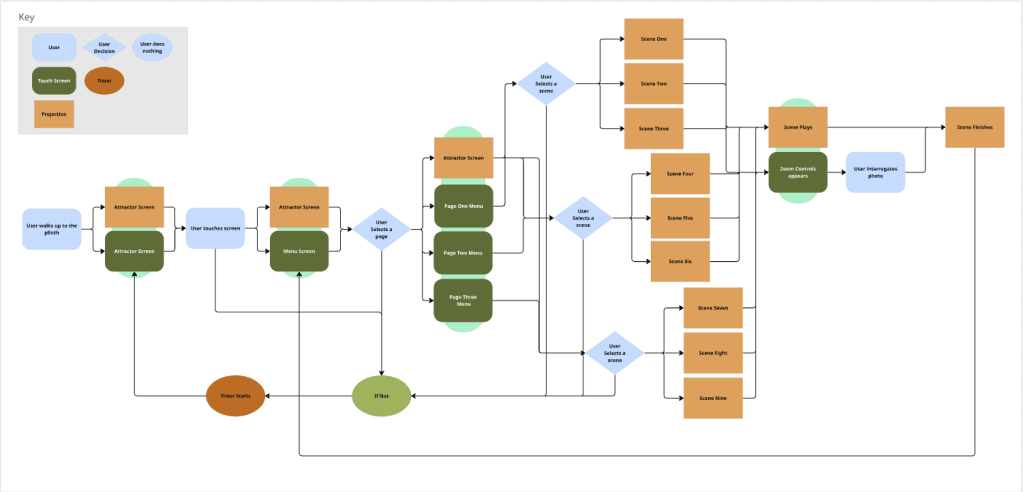
I have used the Miro Board to design the user flow for the piece, I undertstand that this might seem a bit extra but I was having trouble getting the user flow logic in my head and wanted a visual way of making sure I cover all my bases, so I can go through this flowchart and make sure I have accounted for every interaction that I want the user to experience.
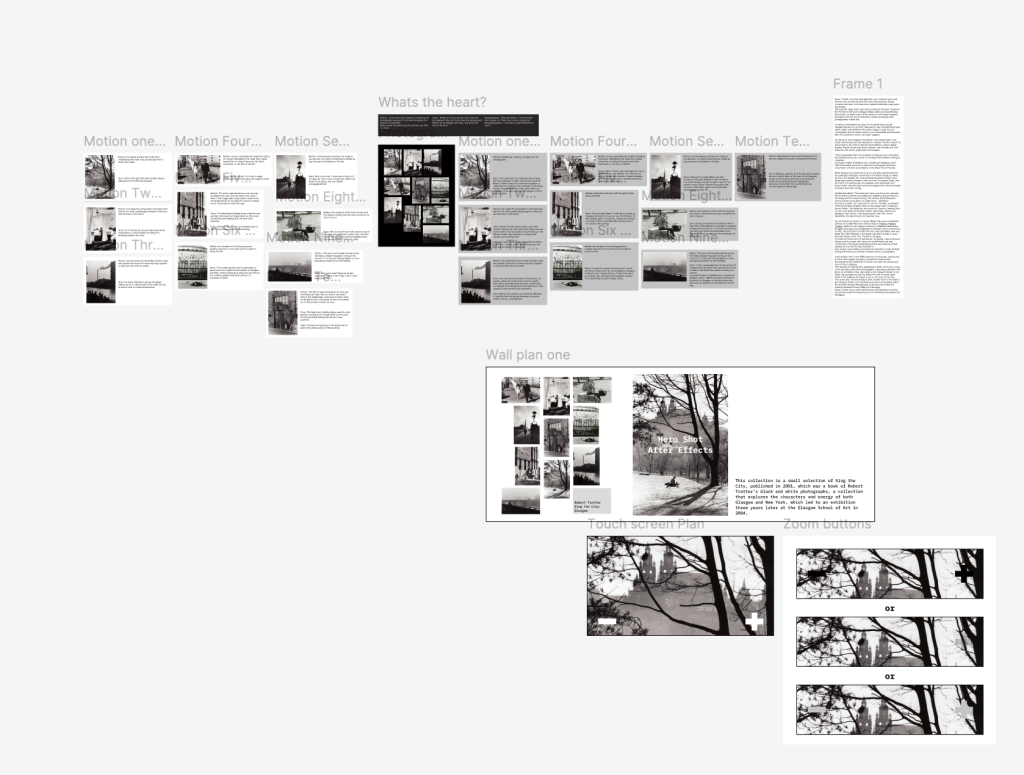
With all the planning and writing I’ve been doing, I thought that a Figma board with writing and mock-ups of where I am and what I want to do with the project would make me feel better and like I’m actually doing something.
Each scene will be upgraded so that instead of me telling people what’s so good about the photography, I can show them. This will be less, in Betina’s words, ‘lecturing’.
She asked questions about my piece that I think I should have asked myself earlier, but a fresh pair of eyes is always helpful. She asked whether I wanted it to be a workshop or a lecture.
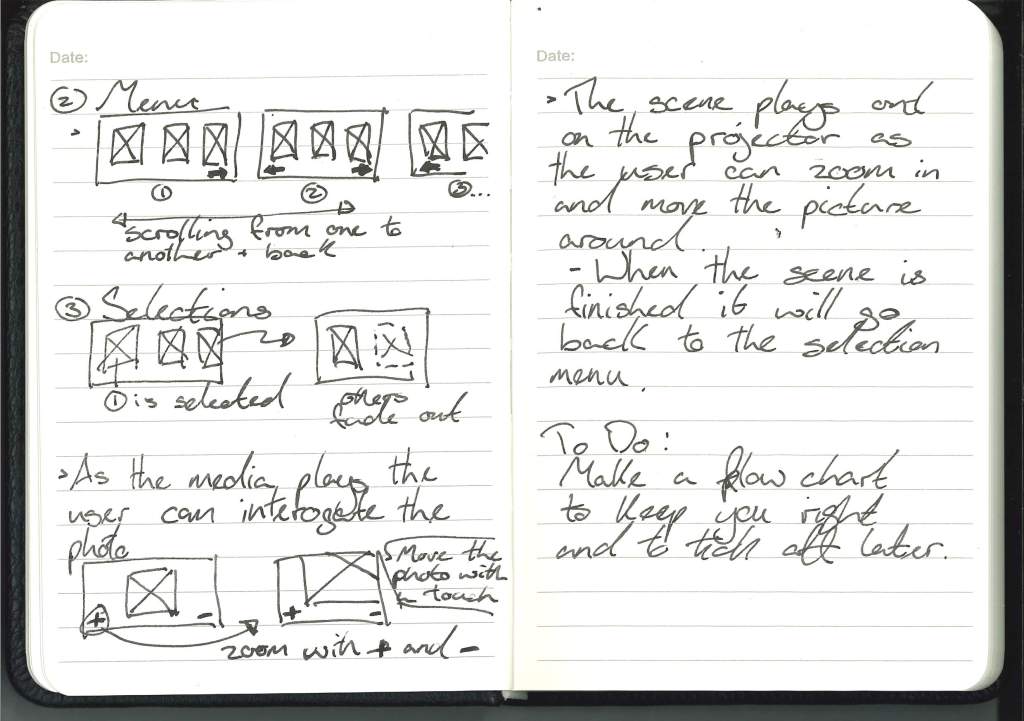
What pinged in my head was, do I want them to stand there, board listening to me or reading my writing, or do I want them to take part? My goal is for them to be engaged, so I have to give them something engaging, something to do. To answer that, I’ve designed a touchscreen interface that allows the motion graphics to play while the user explores Trotter’s photography themselves.
One of the initial ideas that Pav and I were bouncing around was cards with RFID tags, so people could hold the photography and then place it on a table to explore it.
And the second question was: do I want them to listen to me or to an expert about photography? So, with the writing, I want an expert to write each paragraph.
Recording the Audio:
On a particularly windy and rainy day, not the best for recording audio, I went out and recorded most of my audio, going to the same places Robert Trotter took the photos and using the H1 to capture the sounds of the location as much as I could.
I should have recorded more audio on a different day without the wind, but I still got a lot of what I needed.
Reflection – 8th May 2026:
Before handing in, I want to look back at the whole project and reflect on each step of the process now with the hindsight that I have at the hand in date:
After the WIP and the positive feedback on my piece, the idea was to take each element and upgrade it separately, elevating it to a level I can be happy with, and then bring those upgraded elements back together to make the piece for the degree show better than the WIP.
As this week has been a whirlwind, I’m updating this learning journal after the fact; there might not be as much to write as I’d like, since most of weeks 6 & 7 have been spent on implementation, problem-solving and development
Monday:
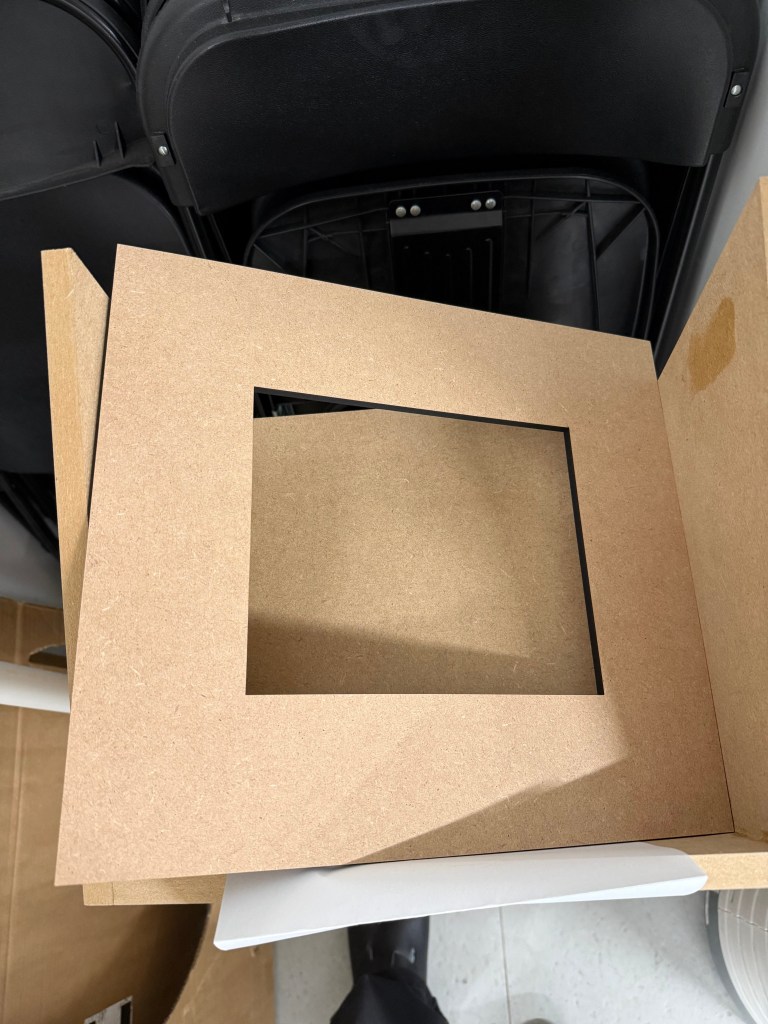
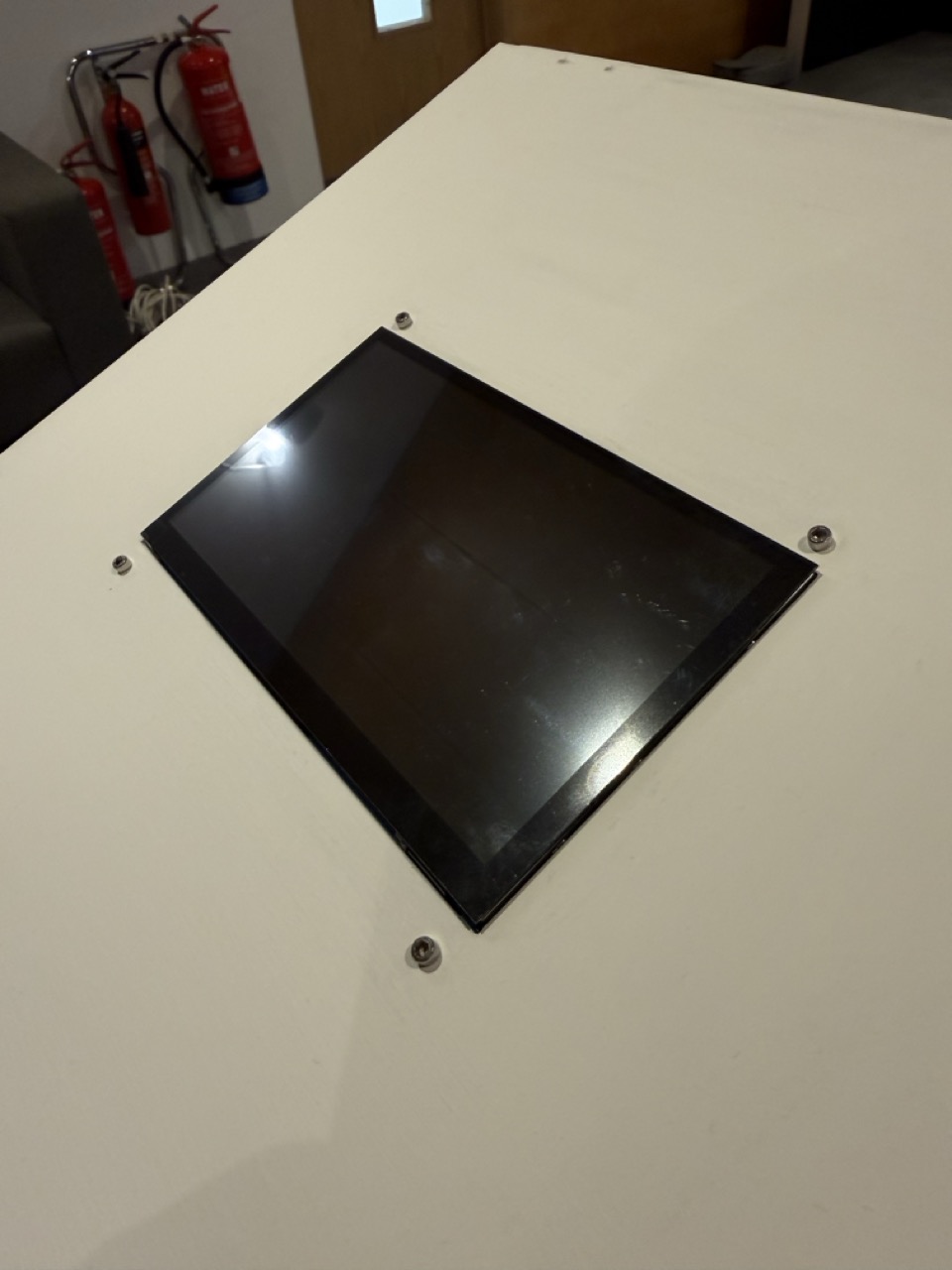
After designing and sorting out the file for the laser cutter on Friday, I was booked and ready to get everything cut in the morning, then ready for the walk around of the Reid basement. But as it was a bit later, I had time to assemble and glue the box for the top of the plinth.
At this point, I noticed a disservice I did to myself in previous years. I hadn’t laser-cut and glued a box before; I had either repurposed an existing box (control lunchbox) or hidden the wiring and components in a Tupperware container (expressive data chandelier).
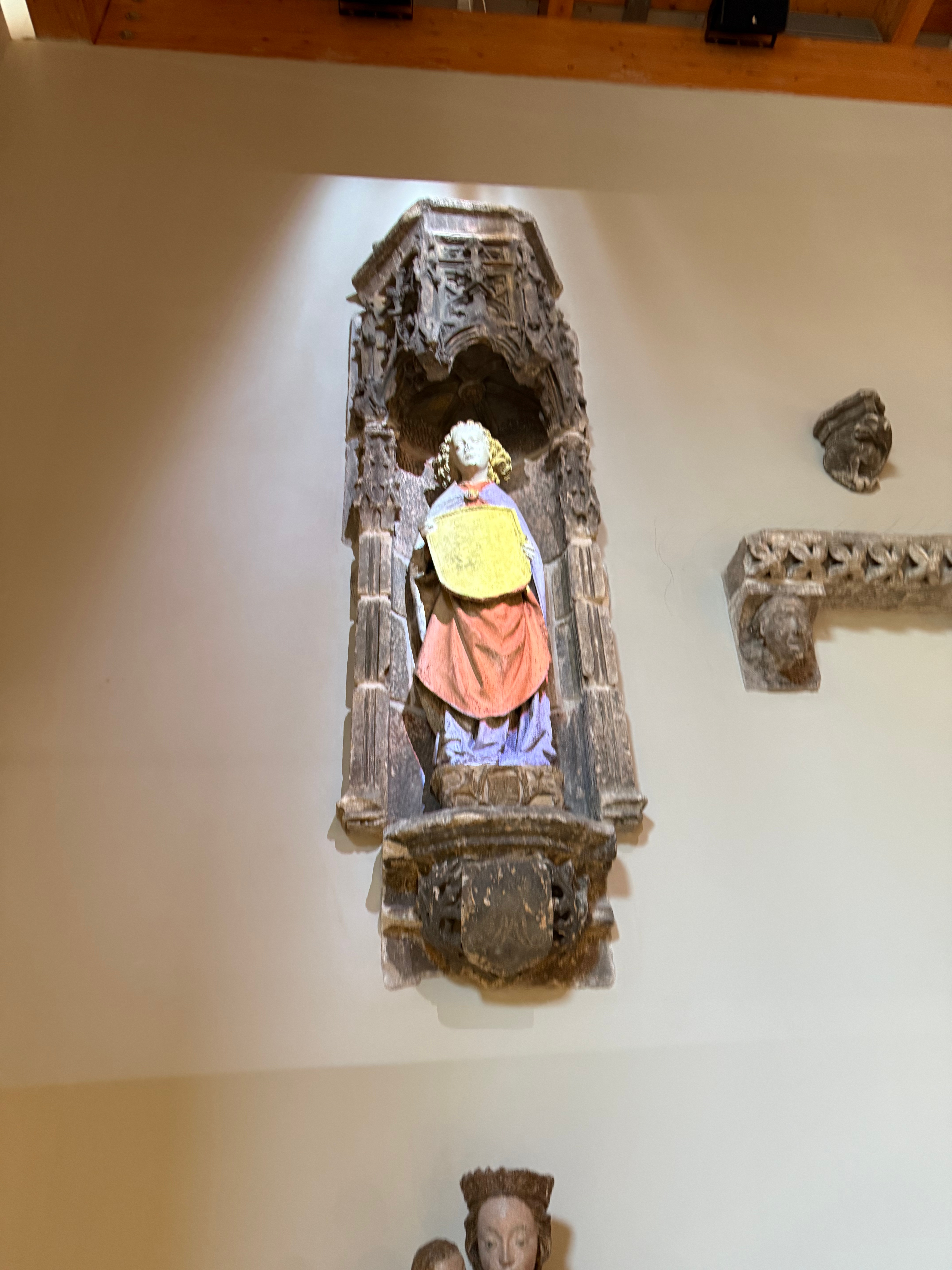
We had the walk around the Reid basement when I was able to visualise my piece in the space and start to imagine what it would be like, how people would use it, and how my piece might work with other pieces in the space.
Tuesday:
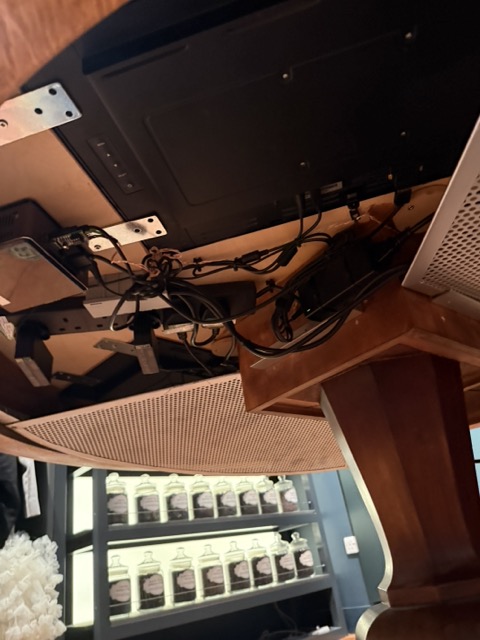
With a game plan for the space and the technical requirements of the piece, I knew the wiring would need channels to run through and between the plinths, then out to the wall power.
With the box glue dry and the sanding sorted the box was ready for the first coat of paint along with the same paint to freshen up the podium so that both the box and the podium had the same colour and a similar texture to each other, the idea was for both of them to be indistinguishable from one another, now looking at it, that didn’t really work because I measured the plinth incorrectly so there was a slight overhang, but this will be sorted in the final piece because I want to get a plinth made for it.
Tuesday was a labour-intensive day as it was mainly transporting everything from the Barnes to the Reid.
Wednesday:
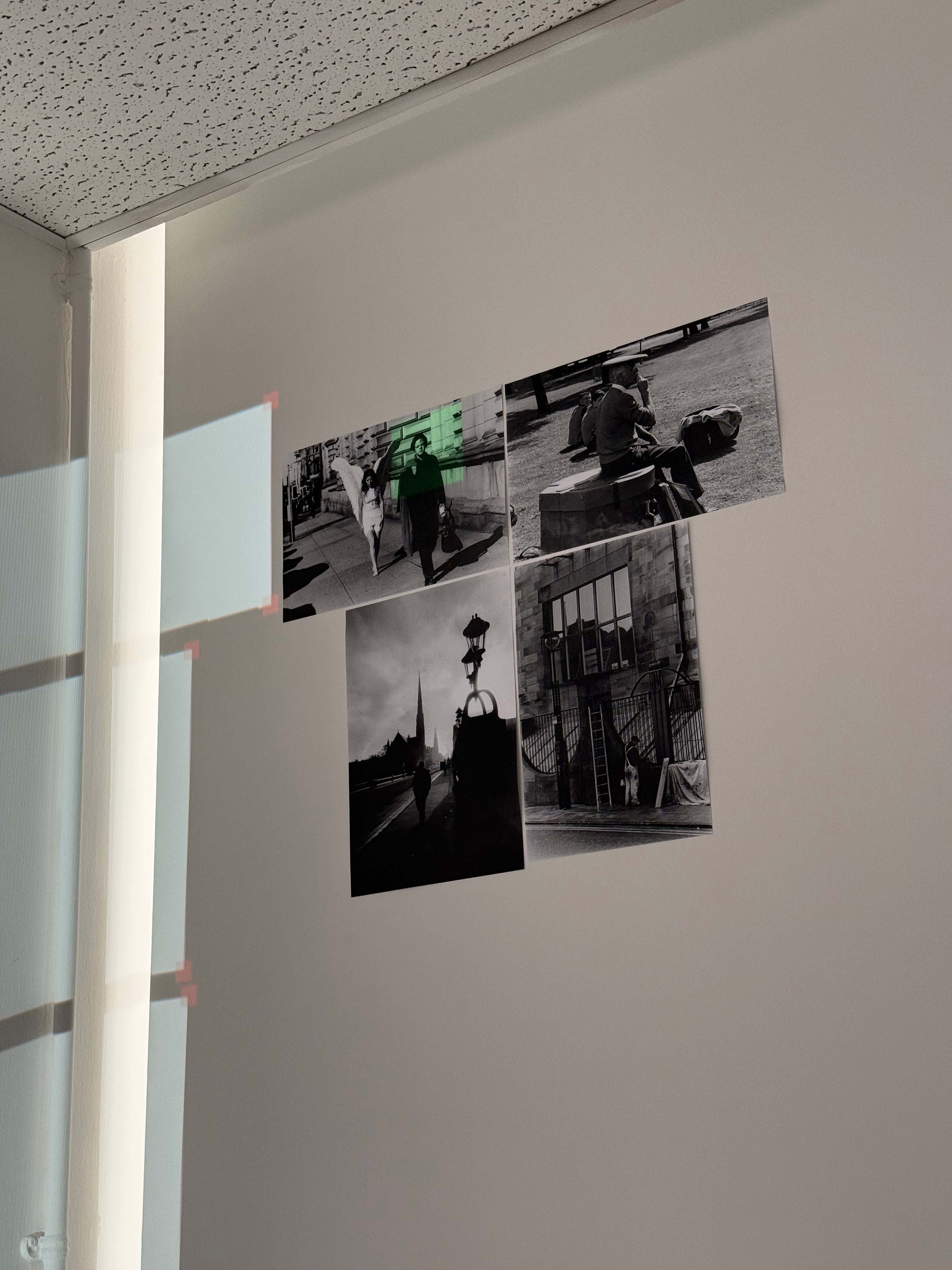
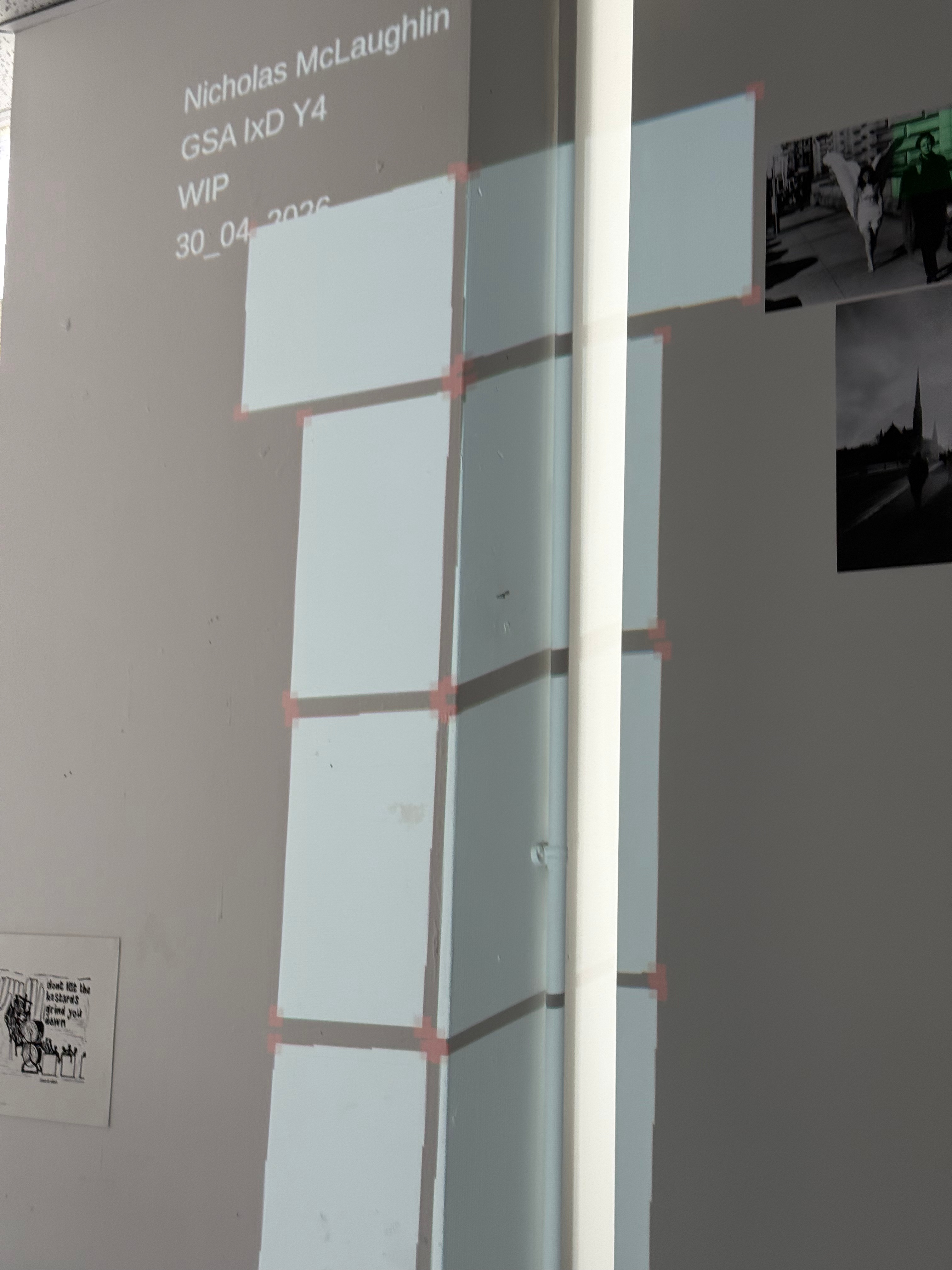
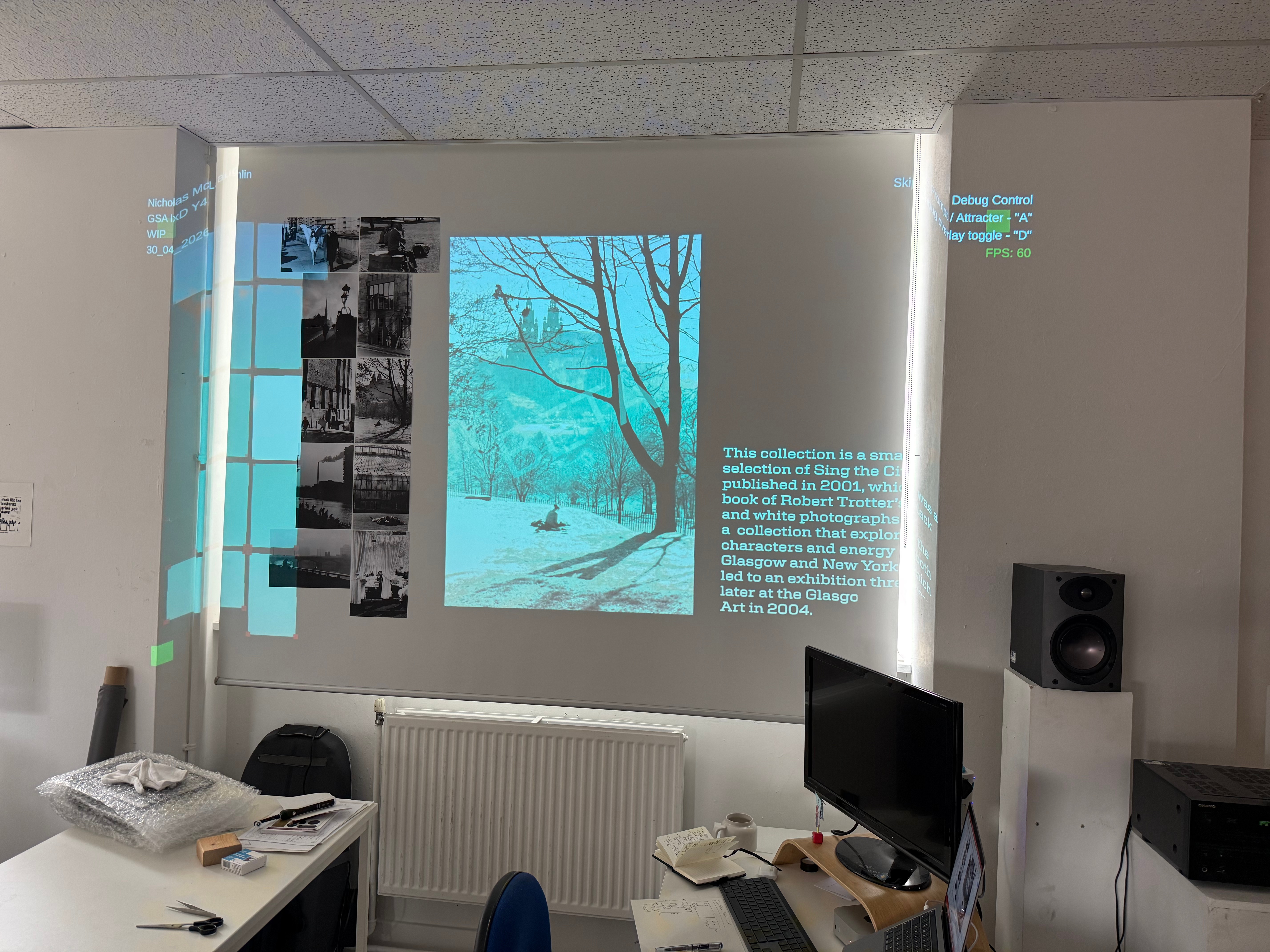
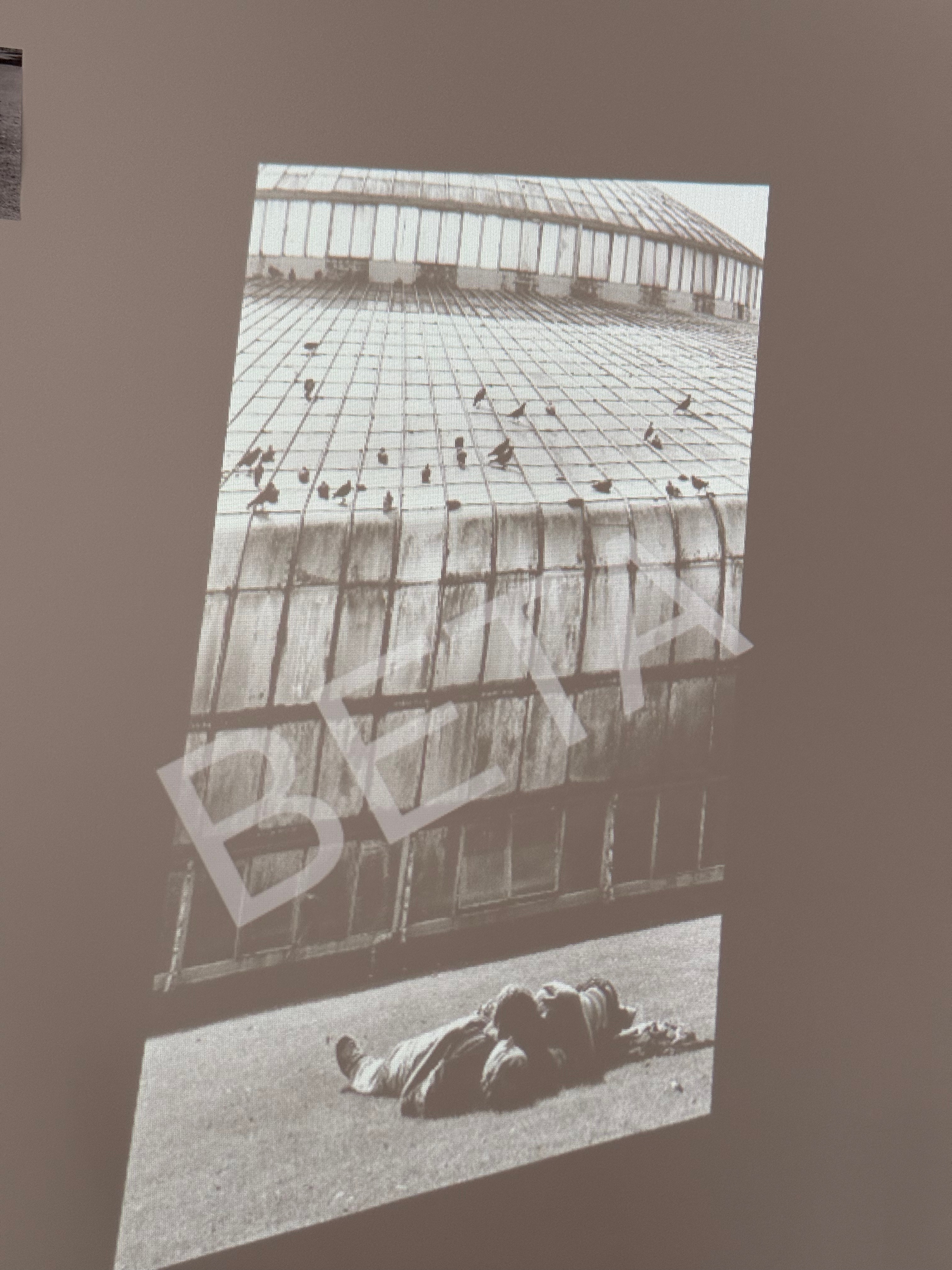
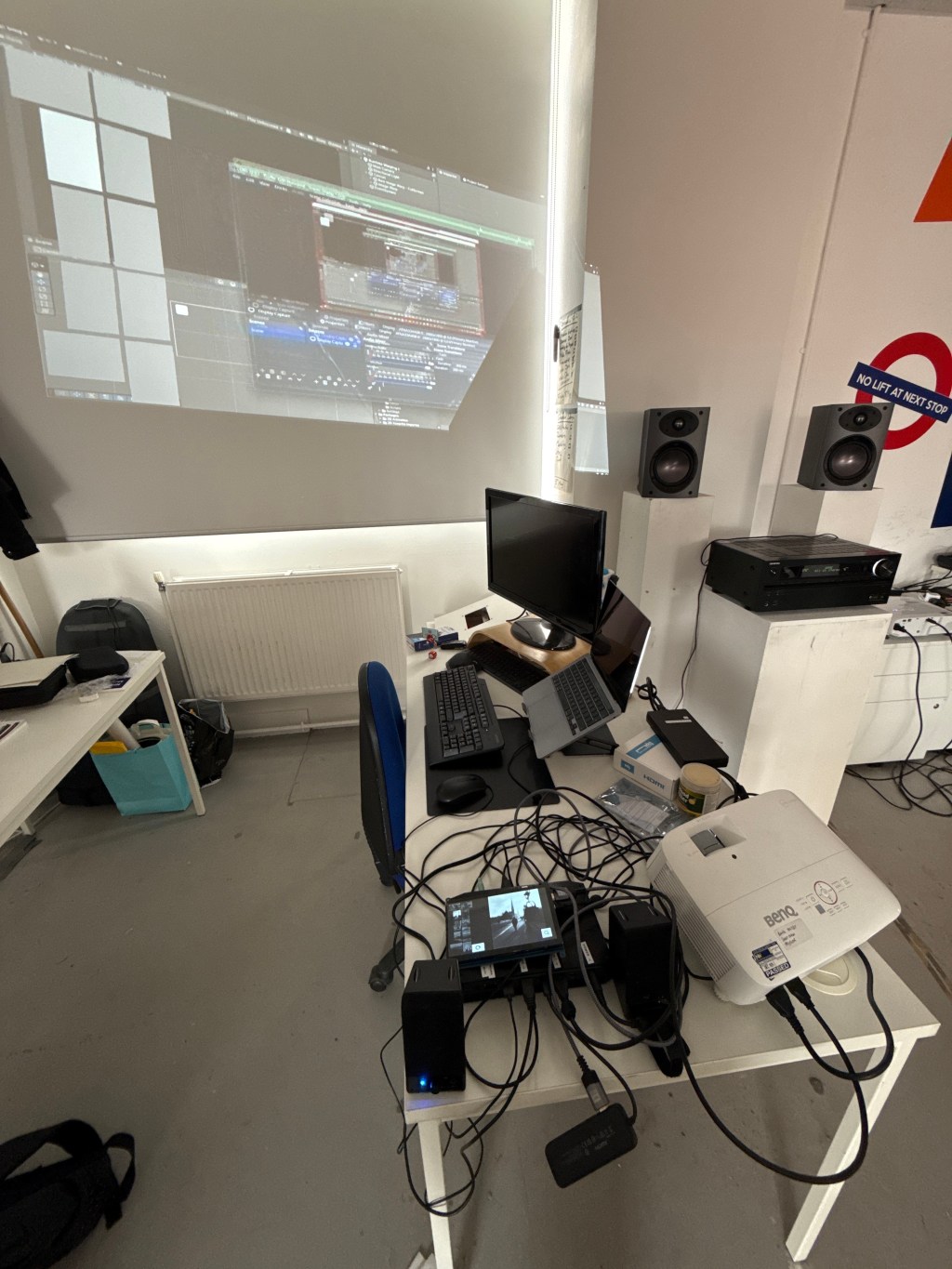
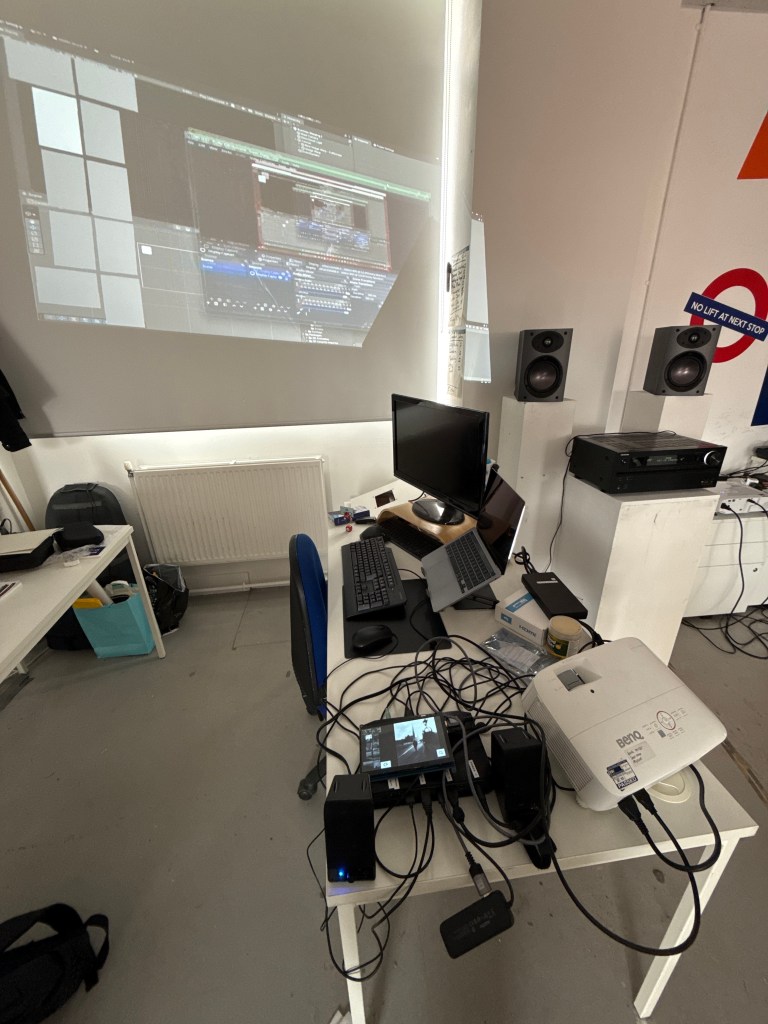
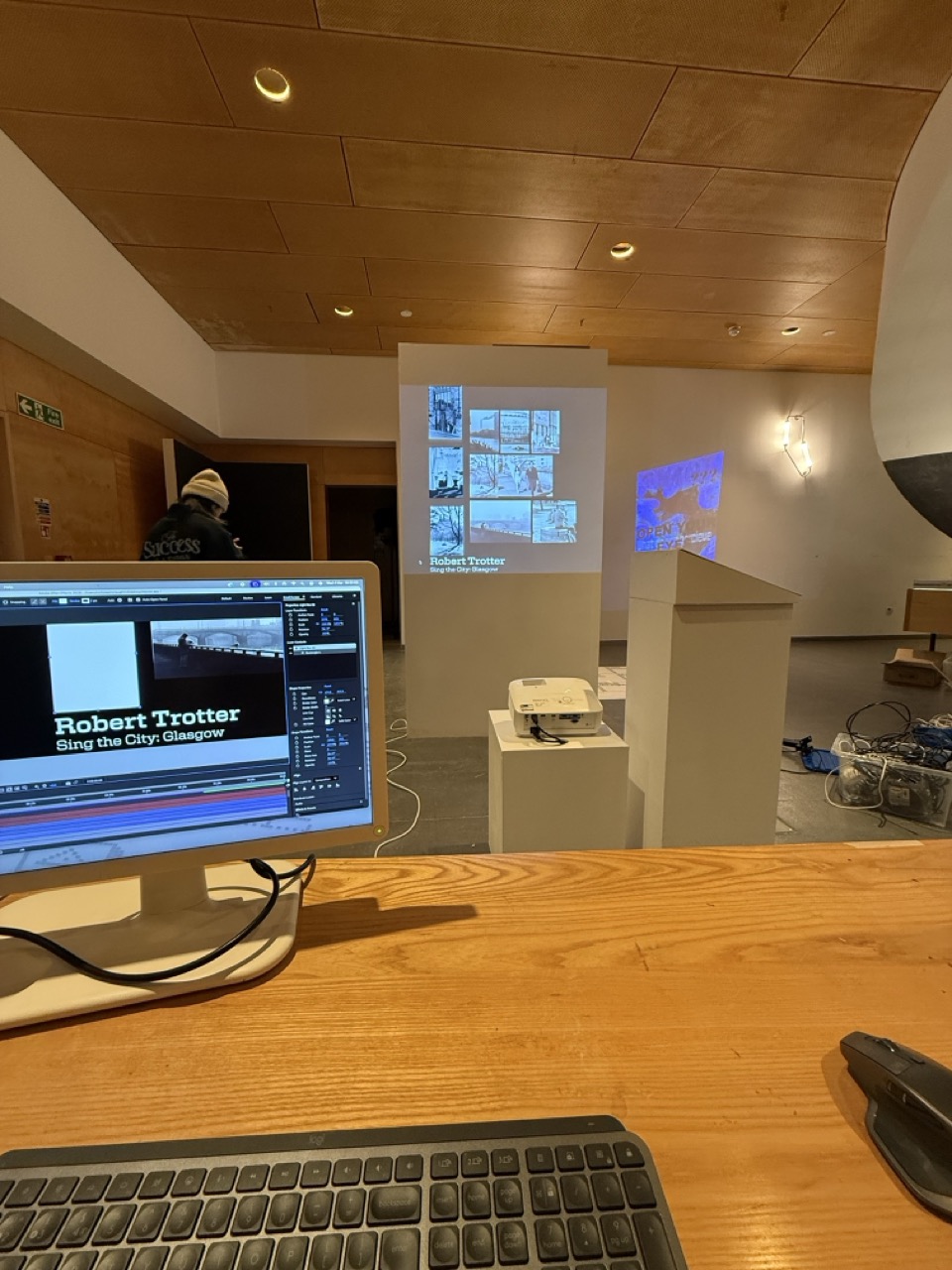
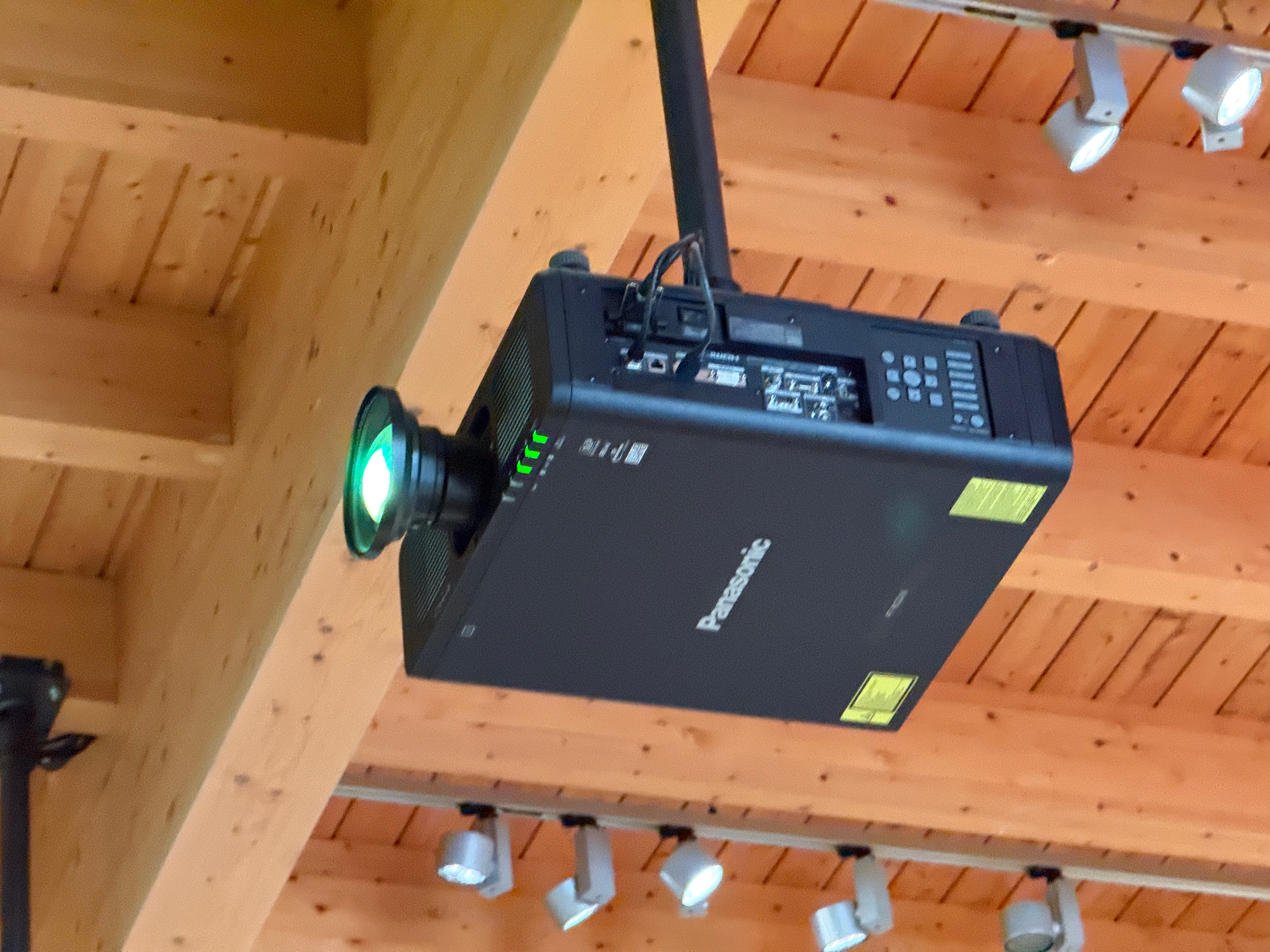
With the projection set up and a clear idea of the space and what I want to do, I was able to set up a screen, desk and my projector. I was able to map the images to the wall and remap the motion graphics onto the printed photography.
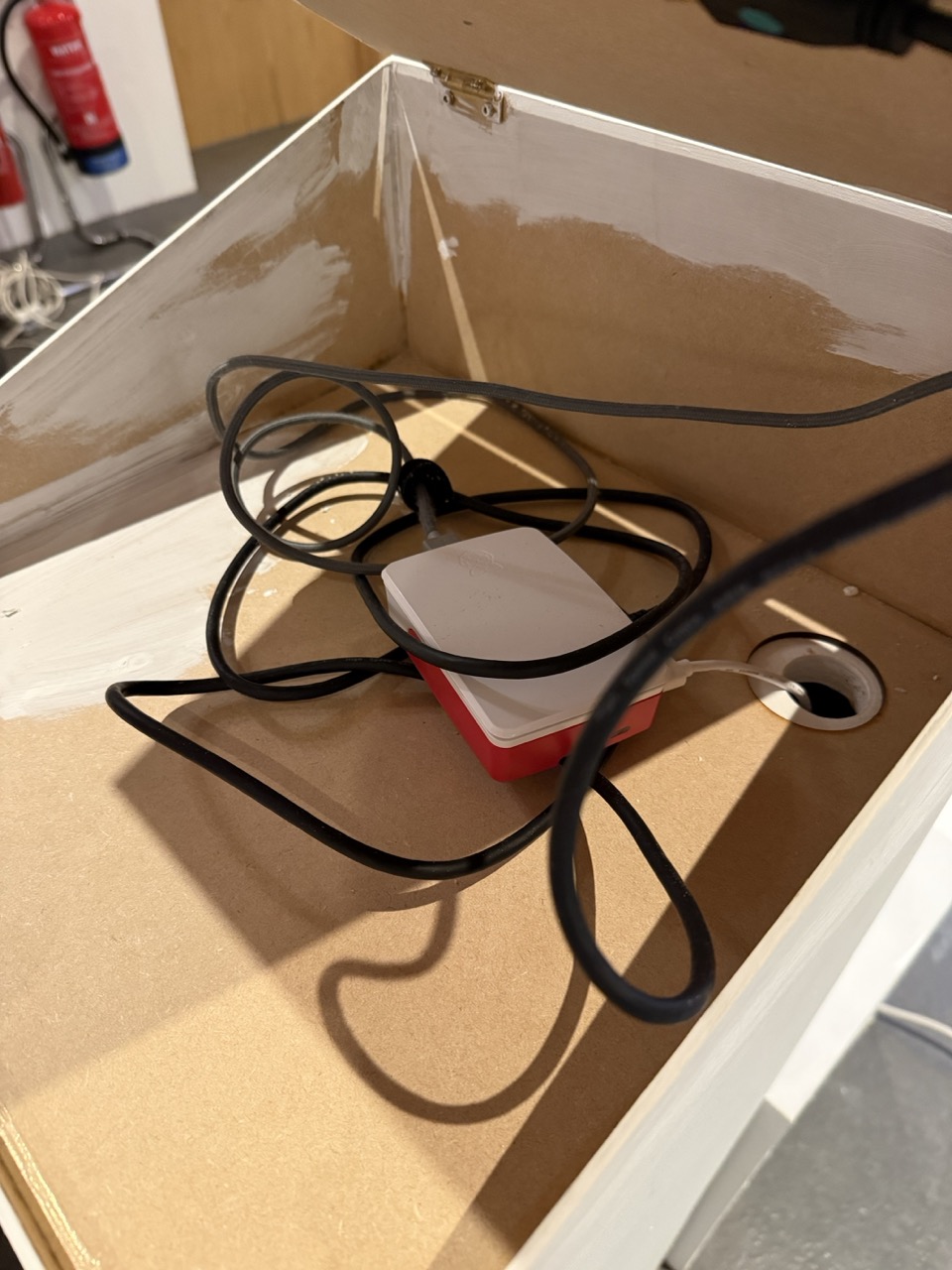
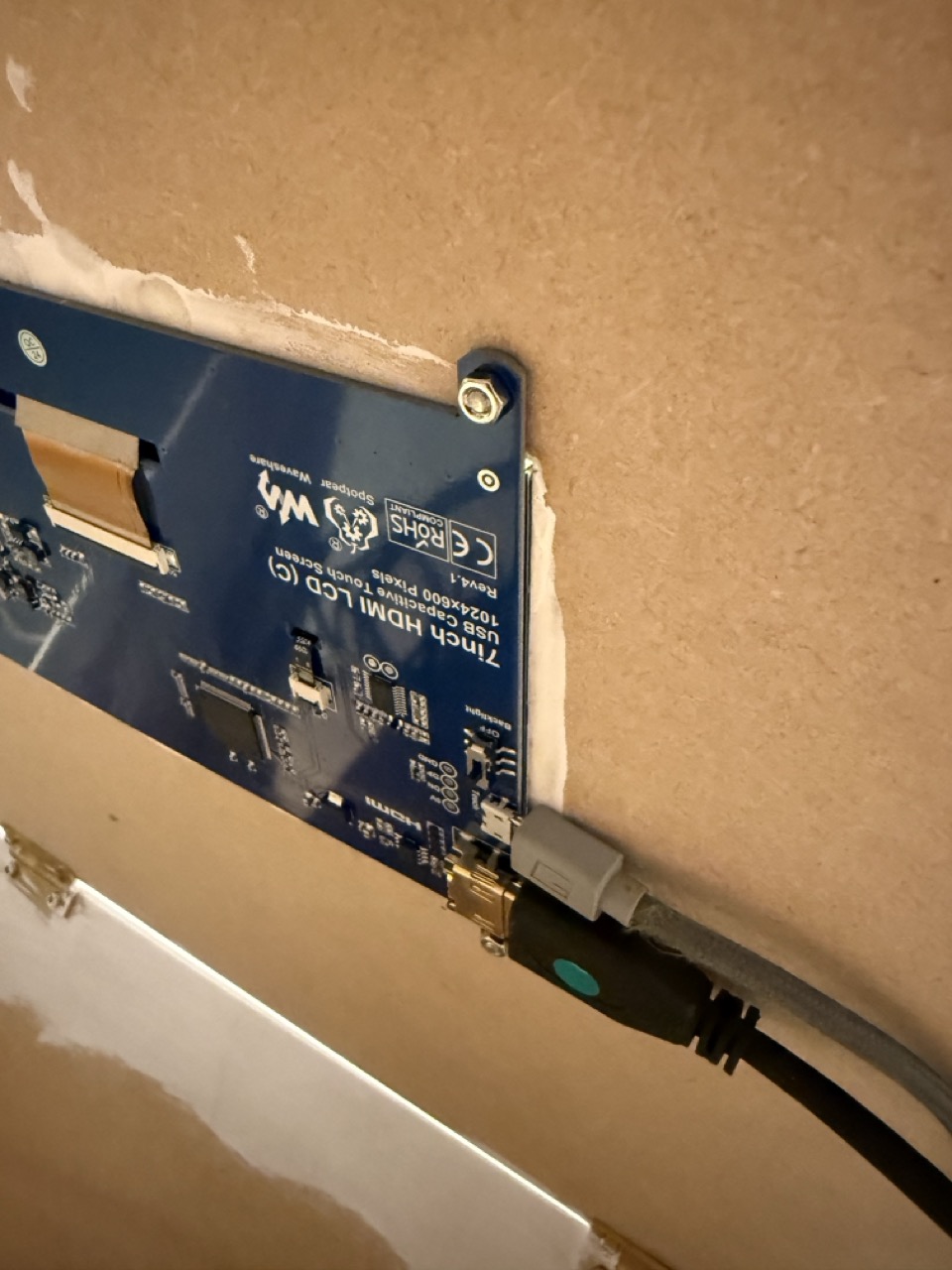
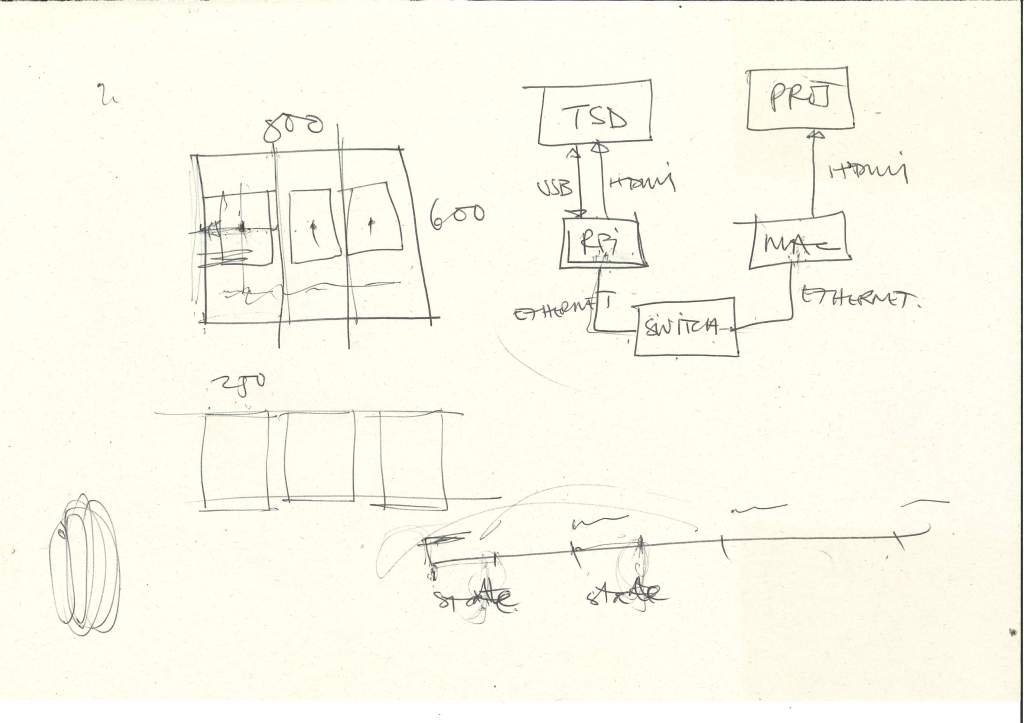
At this point, there was only a temporary wiring from the projector, the screen I was using for remapping the motion graphics, the Mac mini that I was working on, the touch screen, the media player Raspberry Pi that was running the touch screen sketch and the Ethernet switch that was connecting the Mac mini to the Pi.
Thursday:
With the scenes mapped, exporting them was the next step and getting them plugged into the code that Paul had done for the projector and the Mac mini and the code that Cat had done for the Pi, plugging my media into the framework of that code was easy, but Paul and Cat were trying to get everything to work together, which seemed to be a bit annoying. The next iteration of the piece will need to be as easy as possible for both me and my lecturers to implement.
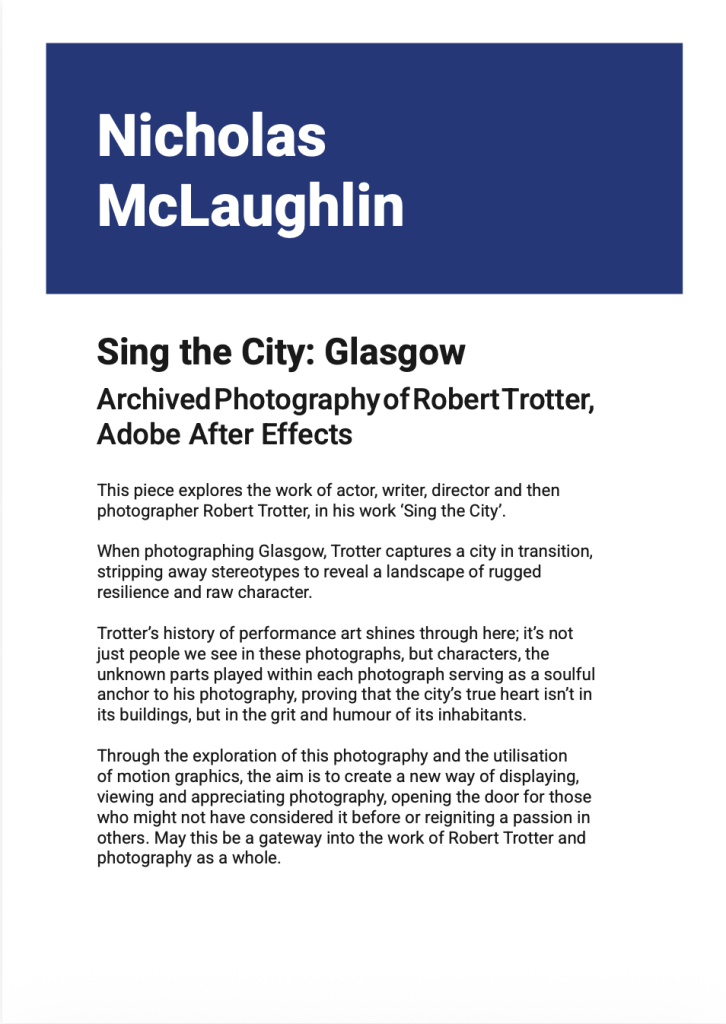
Late on Thursday night, after a day of trying to get everything working, I was writing the description in the middle of the night, looking at Trotter’s photography with fresh eyes, trying to communicate the passion I had for the photography and how I wanted the piece to make people feel.
This piece explores the work of actor, writer, director and then photographer Robert Trotter, in his work ‘Sing the City’.

When photographing Glasgow, Trotter captures a city in transition, stripping away stereotypes to reveal a landscape of rugged resilience and raw character.
Trotter’s history of performance art shines through here; it’s not just people we see in these photographs, but characters, the unknown parts played within each photograph serving as a soulful anchor to his photography, proving that the city's true heart isn't in its buildings, but in the grit and humour of its inhabitants.

Through the exploration of this photography and the utilisation of motion graphics, the aim is to create a new way of displaying, viewing and appreciating photography, opening the door for those who might not have considered it before or reigniting a passion in others. May this be a gateway into the work of Robert Trotter and photography as a whole.
Friday:
As planned, Friday was for nothing but finishing up and tidying, so that’s what we did. I still had to finalise the wiring, even though I knew there was nothing else to do with my piece.
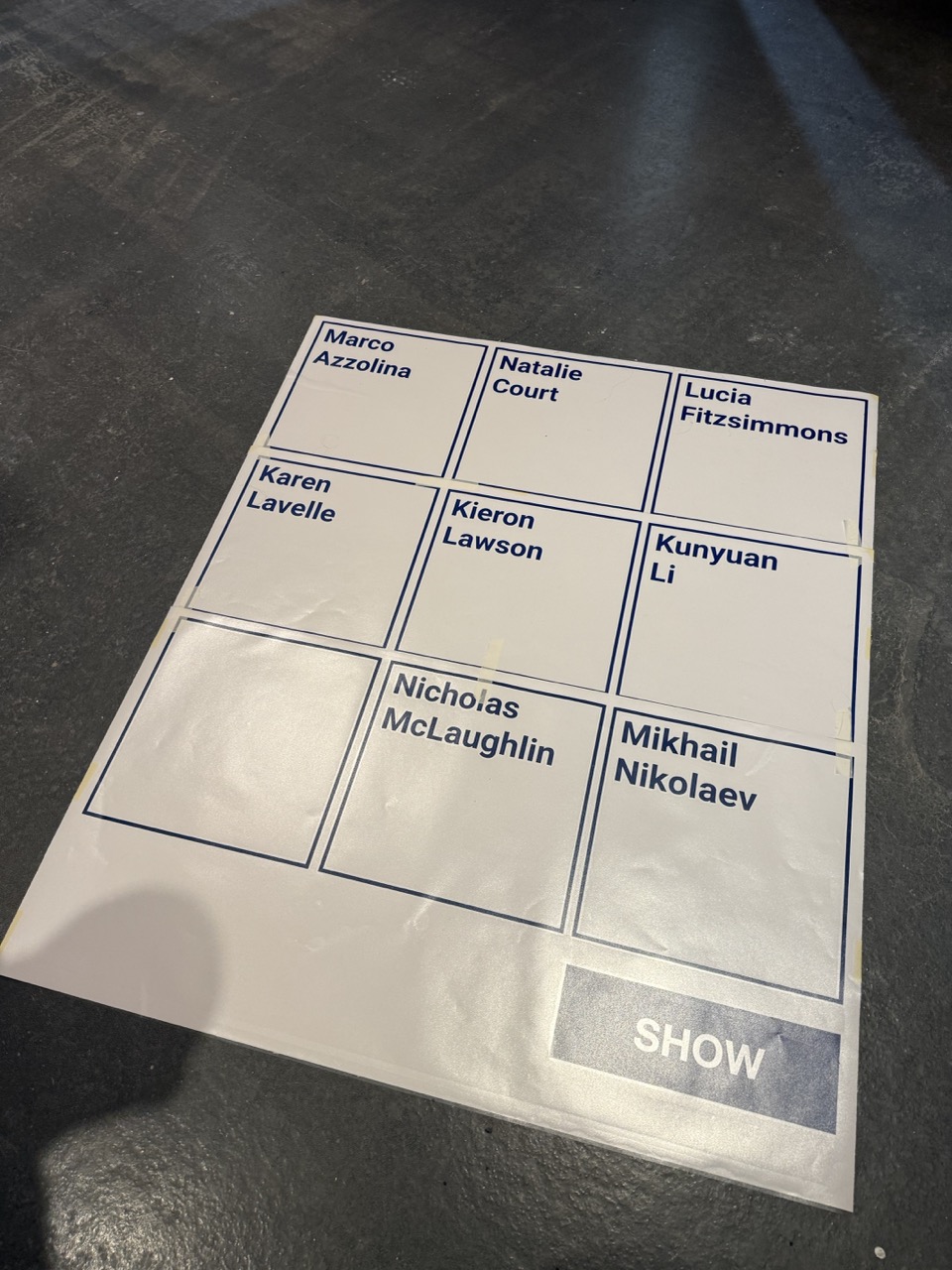
With the extra time I had, Cat asked me to create the name card designs for the exhibition. I just followed the direction of the Captcha idea we were working from, using the same font, shade of blue, and formatting as seen below.
Independent Study Week:
As this is an independent study week, the only thing to do is man the exhibition opening and catch up on some documentation. It seems that as soon as I started actually focusing on and making my piece with the WIP in mind, my learning journal lost a bit of focus.
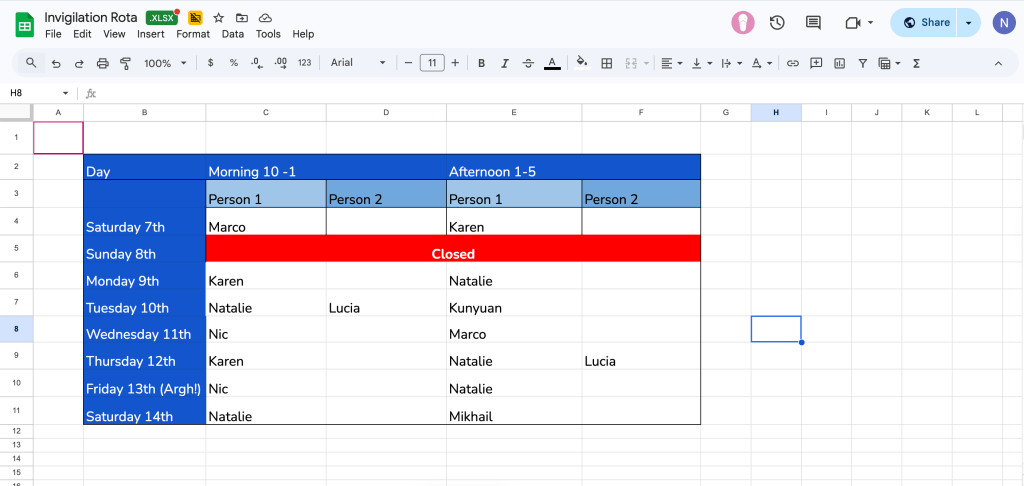
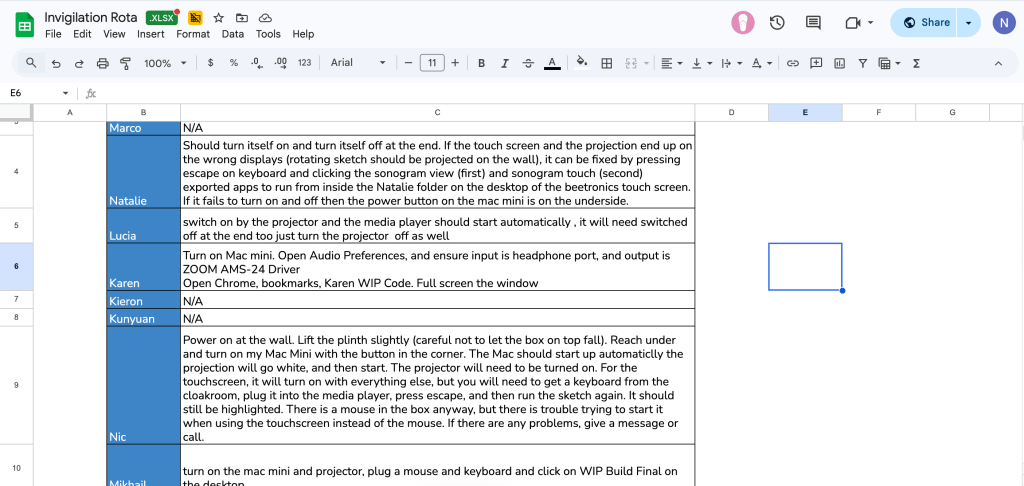
Since everyone got the WIP running and sorted in time with great help from Paul and Cat we were free to sort out the invidulation ahead of this week.
Thanks to Paul showing me that Mac computers can be set to run programs, boot up or even turn on themselves, for the most part, my work doesn’t need much fixing, other than having to reset the sketch on the touchscreen controller, but Cat has let me know that that can also be automated and boot up itself. I imagine with the Raspberry Pi’s internal clock and code to talk to it. If I don’t implement this feature in the WIP prototype, then I’ll definitely get it working in the final piece for the degree show.
Autopsy
Pav also told me that in ISO, they conduct a project autopsy when they review the project to determine what worked, what didn’t, and how it could be improved next time, so wile its still fresh, I should do mine, and then I’ll have a list of improvements for the degree show version of my piece.
What worked:
Users of the piece liked the simple touchscreen interaction.
The overall concept of the work grabbed attention and engaged people in the photography.
The scenes were not too long.
The soft transitions allowed the eye to follow everything.
The photography chosen was engaging.
It was obvious to use.
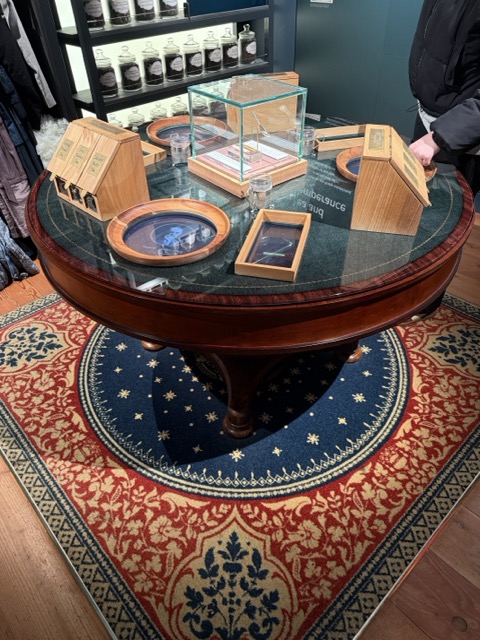
The slant of the box on the plinth gave clear direction on where to stand and how to use.
What didn’t:
It was too slow
The quality of the After Effects got messed up when having to remap in the Reid basement.
People wanted to know more about Robert Trotter.
People wanted more options for photography.
The podium could be more solid.
The transitions of the scenes could be smoother and quicker
The user interaction could be more obvious; most people knew exactly what to do, but there were one or two who had some hesitation
The highlight square on the printed photography wasn’t obvious enough; some didn’t notice it until their second turn or exploring a second scene.
More obvious feedback
Ideas:
Subtle Audio in the piece to add to the stories of each shot.
Subtle Audio feedback in the piece
There could be a more tactile way of exploring the photography
Bring more depth to the projected photography to tie it in to the printed photography (more foam board).
Custom Plinth:
Specifically designed for this project
To hide the projector
To hold the wiring neatly
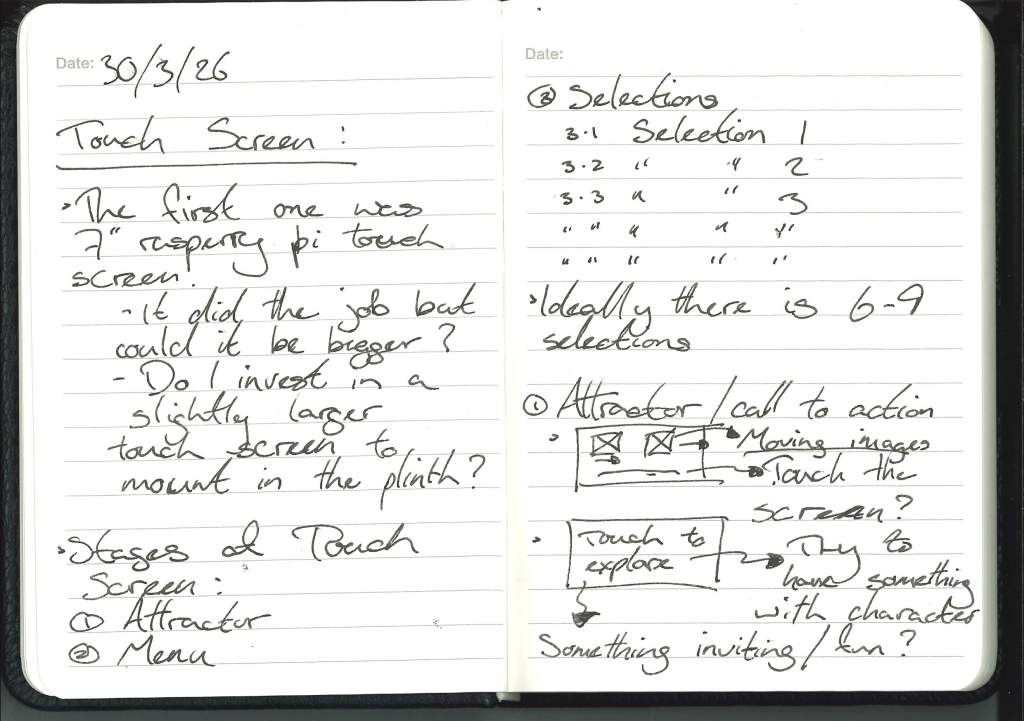
To highlight the touchscreen more – Same Touchscreen? Bigger?
Custom Vinyl cut for the plinth?
Paint the wall to frame the projection and the piece more.
How do the experts do it?:
With a clear idea of what I’m looking to go into in the future concerning my career, I’m now going into museums and interacting with displays to give myself ideas and to inspire myself of what I’m aiming towards.
Mackintosh Tea Room:
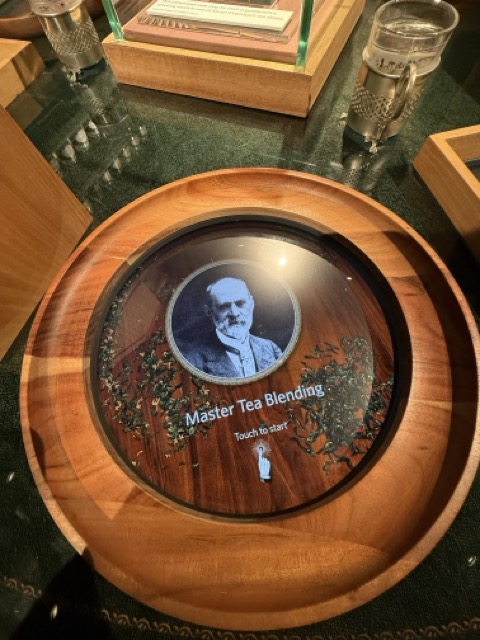
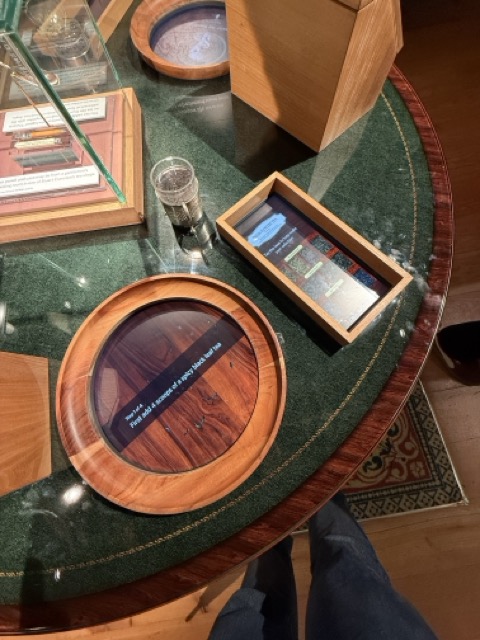
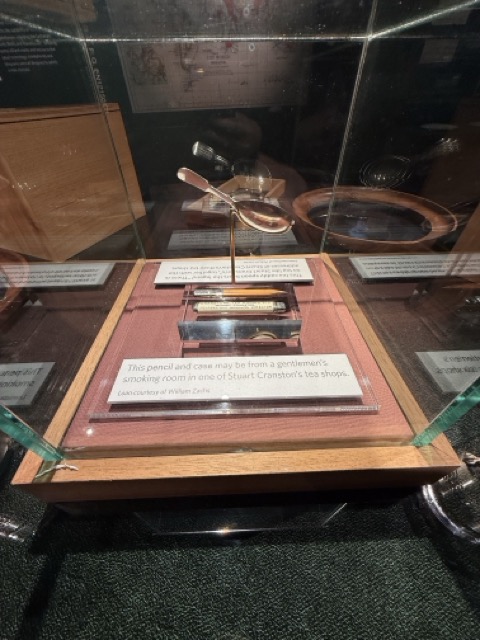
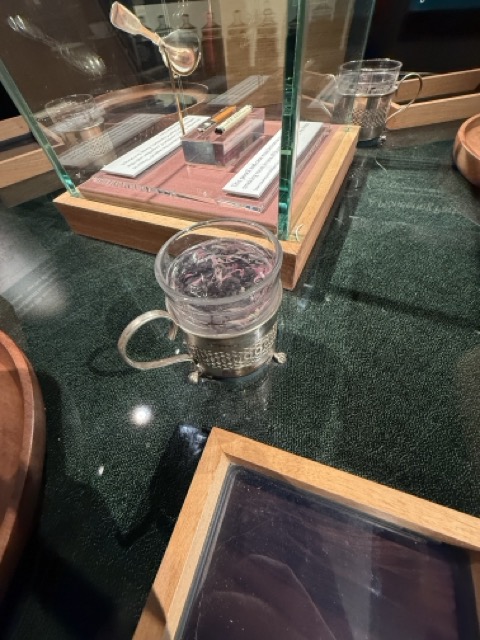
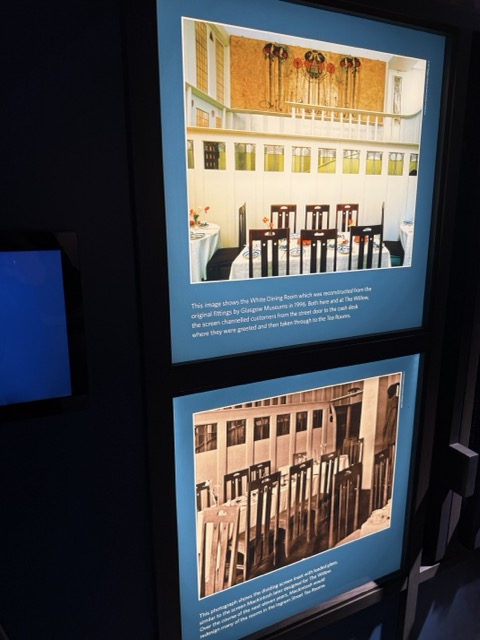
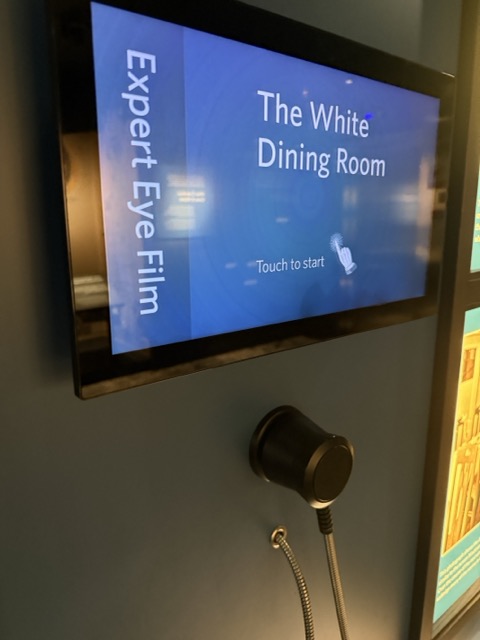
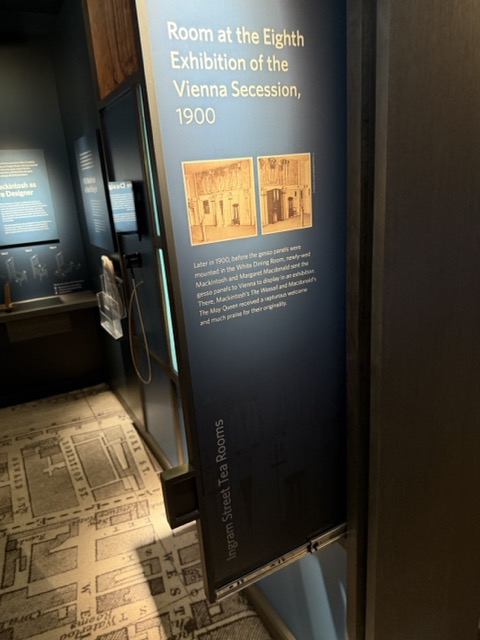
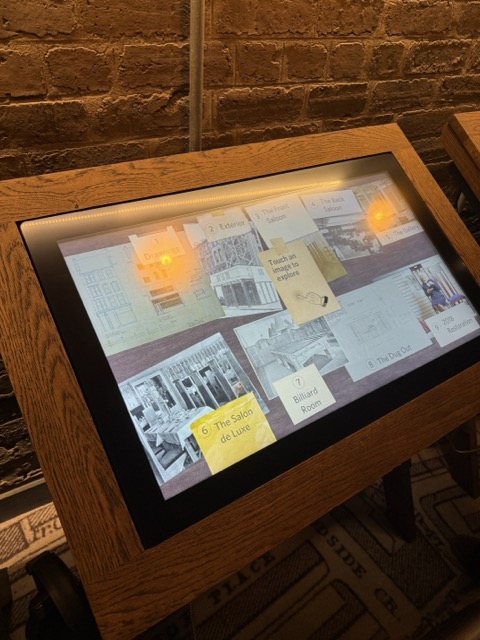
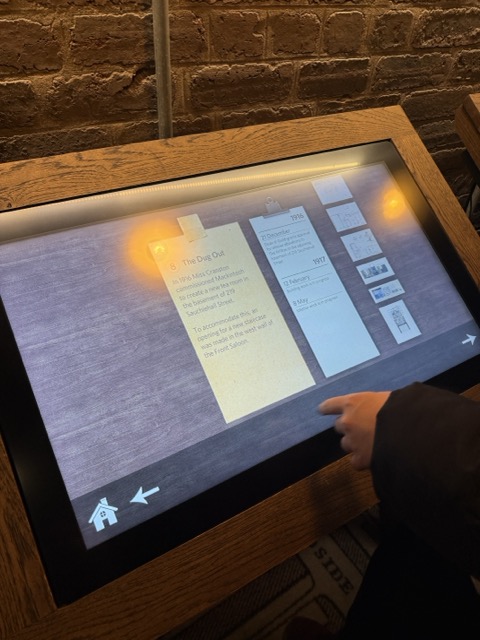
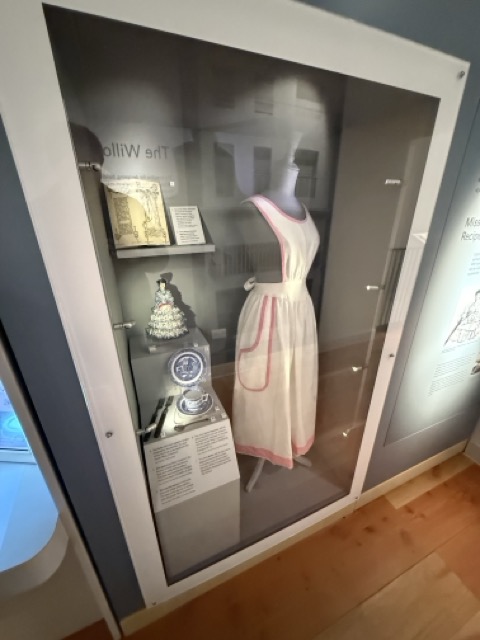
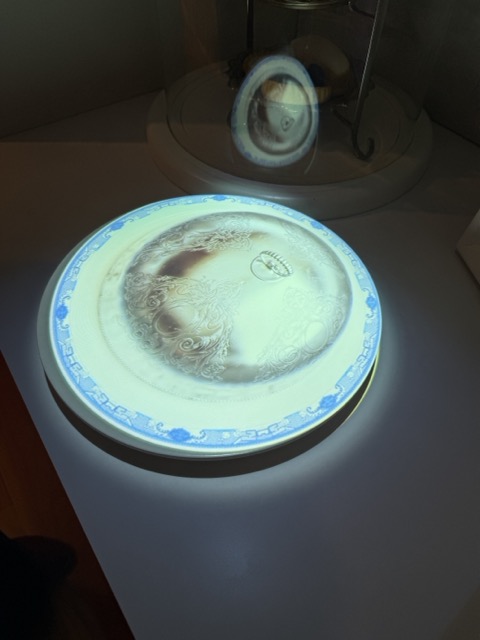
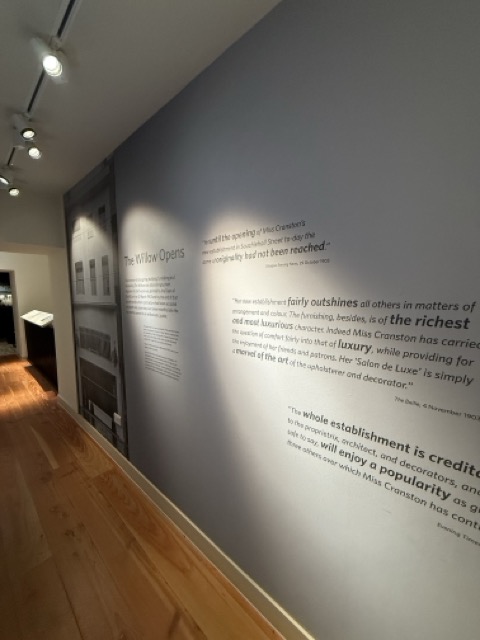
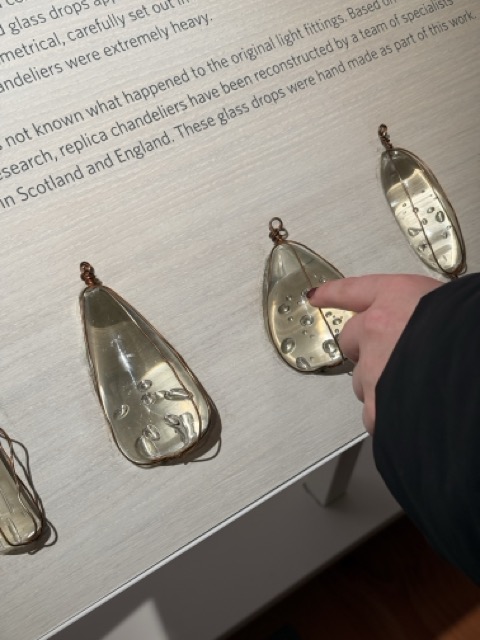
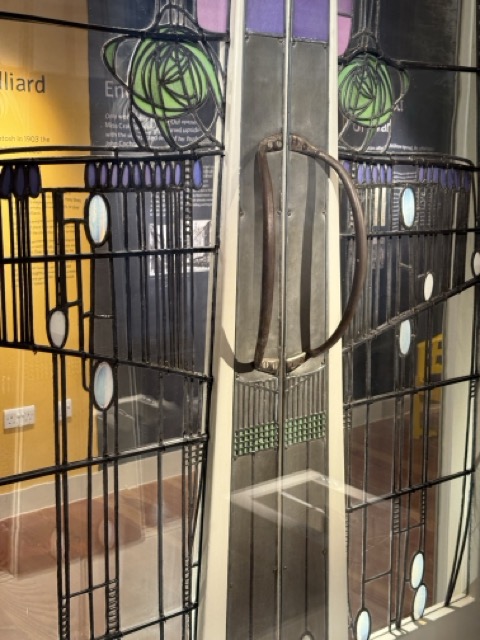
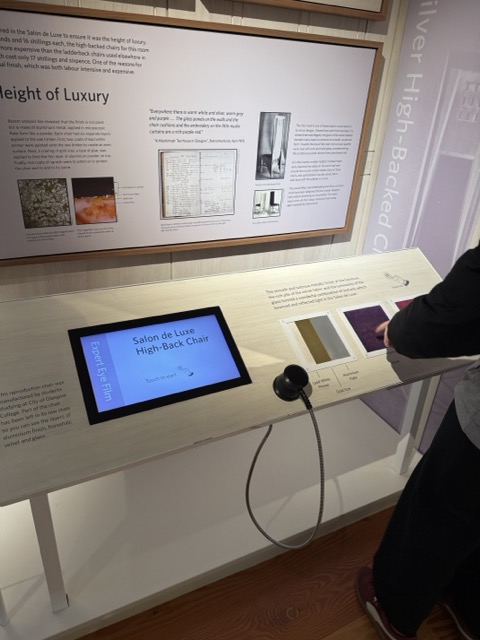
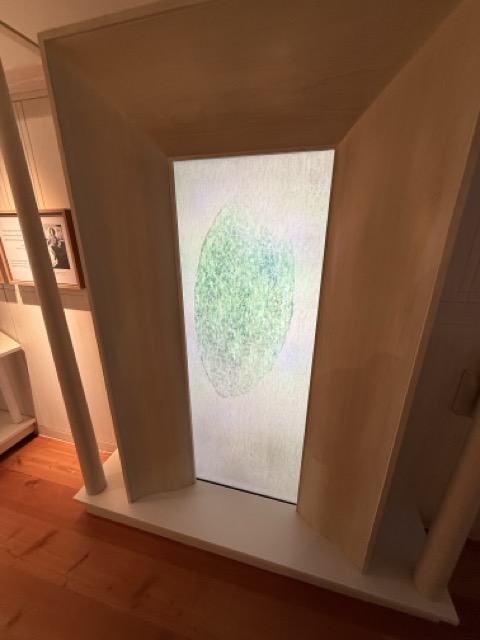
I enjoyed the storytelling of the Tea Room exhibition. What the teams involved did well was the attention to detail, and the set design of the exhibition; the only problem with it was that some of the pieces weren’t robust enough, they would either lag, stop working or not be working at all and just have a sign up saying that.
There was also one or two signs up for broken interactions in the Burrell Collection, but there was so much to see in that, and I didn’t have to pay to get in, but did with the tea rooms.
Visiting the Burrell Collection:
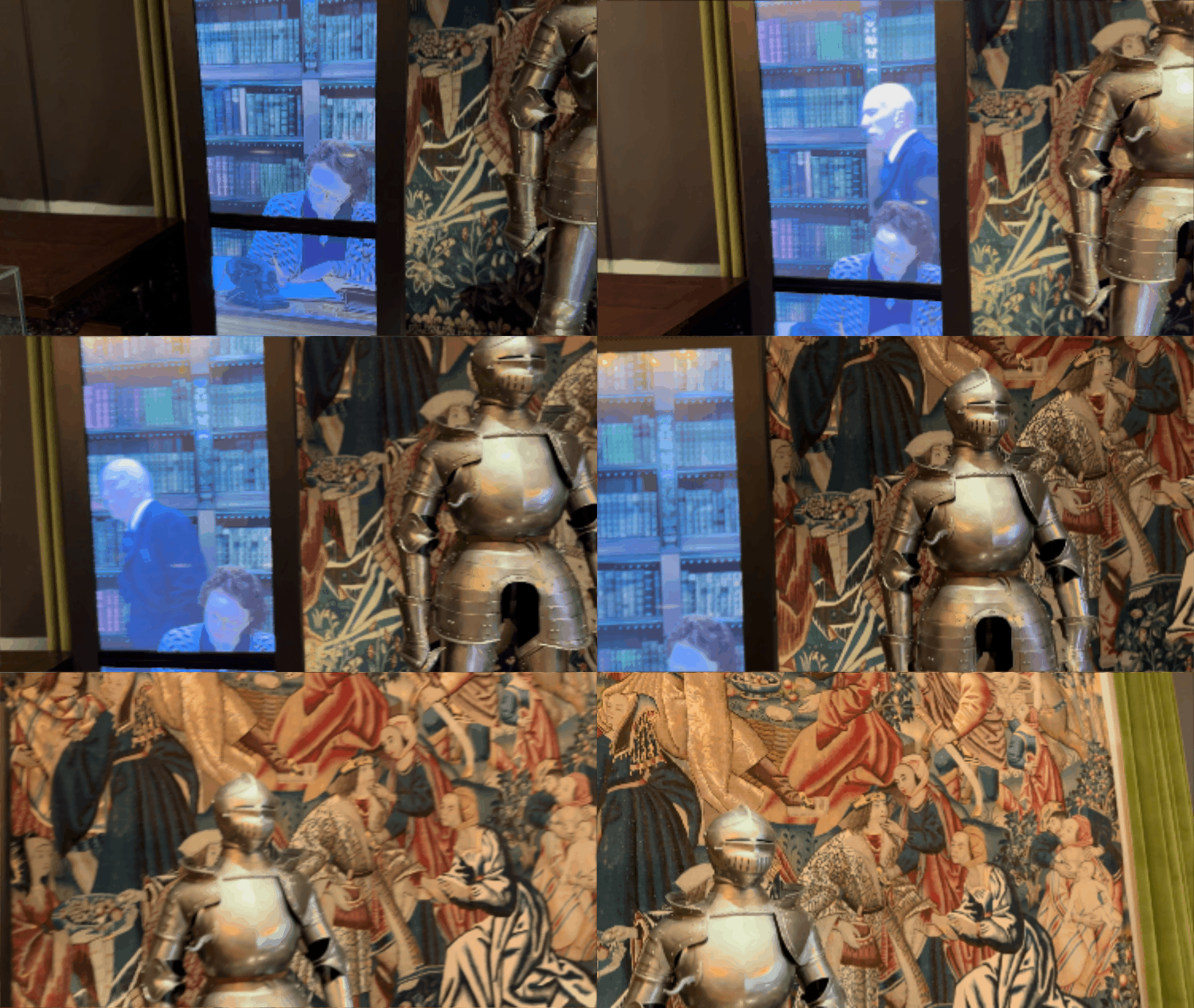
While at the Burrell Collection, I couldn’t help but think of my own piece and how I could apply some of the same designs to my work.
Notes from Pav:
Where to next?
What do you want people to take away from it?
It was way too slow; the animation has to be quicker.
It’s about the content; the content has to be engaging to keep people engaged.
A tactile interface for exploring photography.
Reflection – 8th May 2026:
Before handing in, I want to look back at the whole project and reflect on each step of the process now with the hindsight that I have at the hand in date:
Looking back mainly at week 6 leading into week 7, the WIP set up, it was yet another lesson on what I can do in such a short period of time if I get out of my own way and just get on with it, as well as trusting others. I try to do everything and do it perfectly, which usually leaves me frozen. But by trusting my fellow colleagues and myself, even more can be done.
An example springs to mind when thinking of the WIP poster, as seen in previous years and in DeSimulate, it usually goes to me, but with so much still to do, I was thinking of it as a chore, but Nat showed an interest and, with the brainstorming session of the previous week, solidified she did it, coming to me for help and opinions and it turned out great.
It’s just been one of many lessons this year, not only in developing my skills and abilities, but also in being part of a team and trusting others.
As with last week, most of this week has been spent either sorting out the different elements of this project or working on After Effects again, trying to make it more engaging and using the time more efficiently.
Again, I was so focused on doing a good job that I neglected to document the changes I was making, just made them until they worked, then saved them and moved on.
Cowboy Bebop Test:
When I was staring at the same After Effects scenes for a while, I was going a bit mad and wanted to look at something different, something completely different. Also taking on board the note Paul gave me to do After Effects experiments on something else, away from the project, and then bring what I have learned into the main projects.
With this detour/exploration, I really liked the framing that I did with the fight scene, with the photography, this will need to be much slower and focused, but just by masking off the main footage with black squares and drawing attention to key points of points of focus I feel like it elevated it in a fun way, I’d love to do more of this in my own time, or even just experimenting with something completely different opens my eyes to what I could do in the main project.
Help from Paul and Cat:
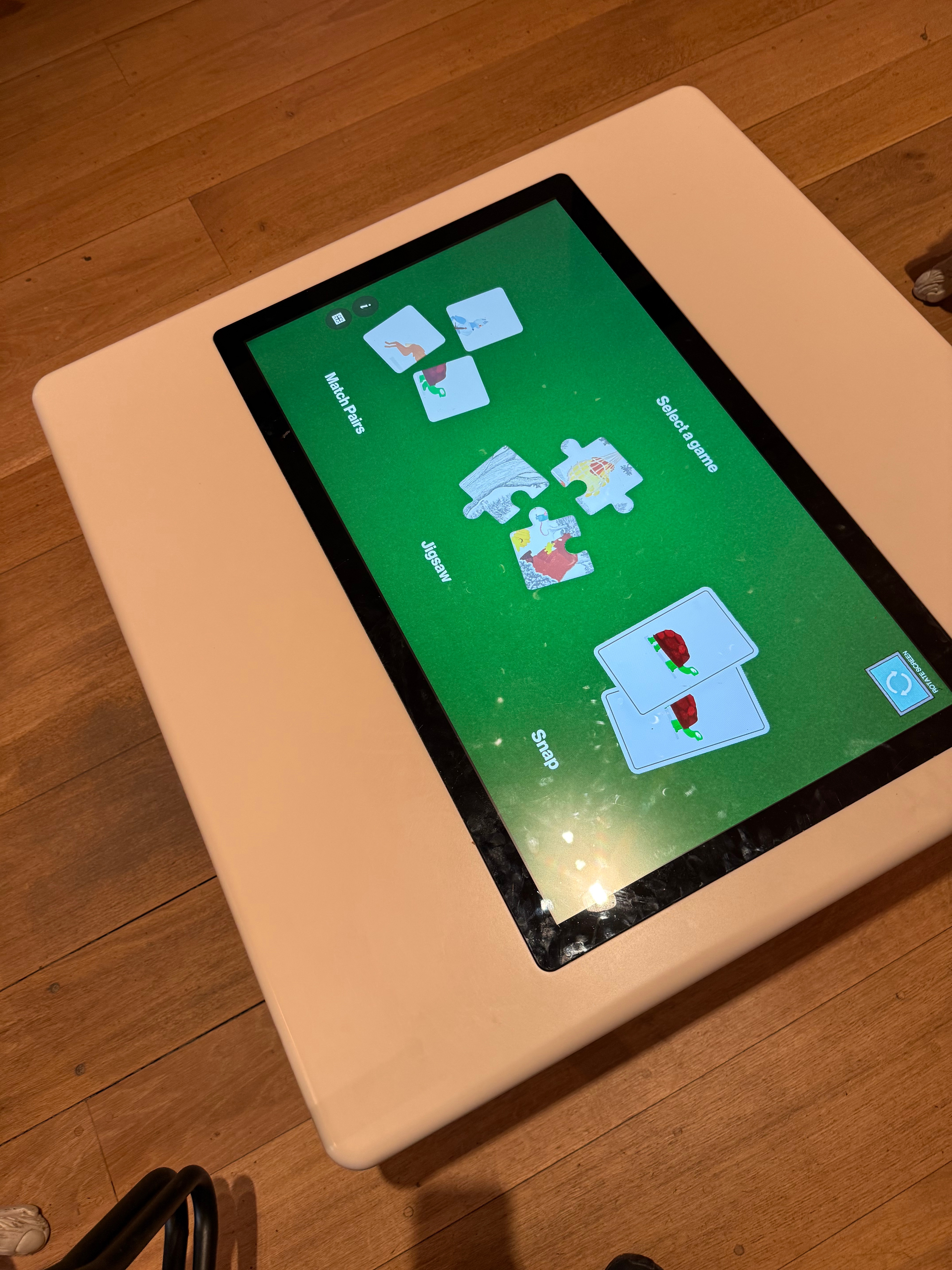
With the After Effects scenes to a point where I’m happy, Paul and Cat have helped me with coding the framework that turns my exported After Effects scenes into the interactive display I wanted.
Integrating the 3 selected photographs as buttons on the touch screen to select each scene.
Going through the logic and requirements of what I will actually need for each piece of this project to talk to each other and work seamlessly.
The Plinth and The Box:
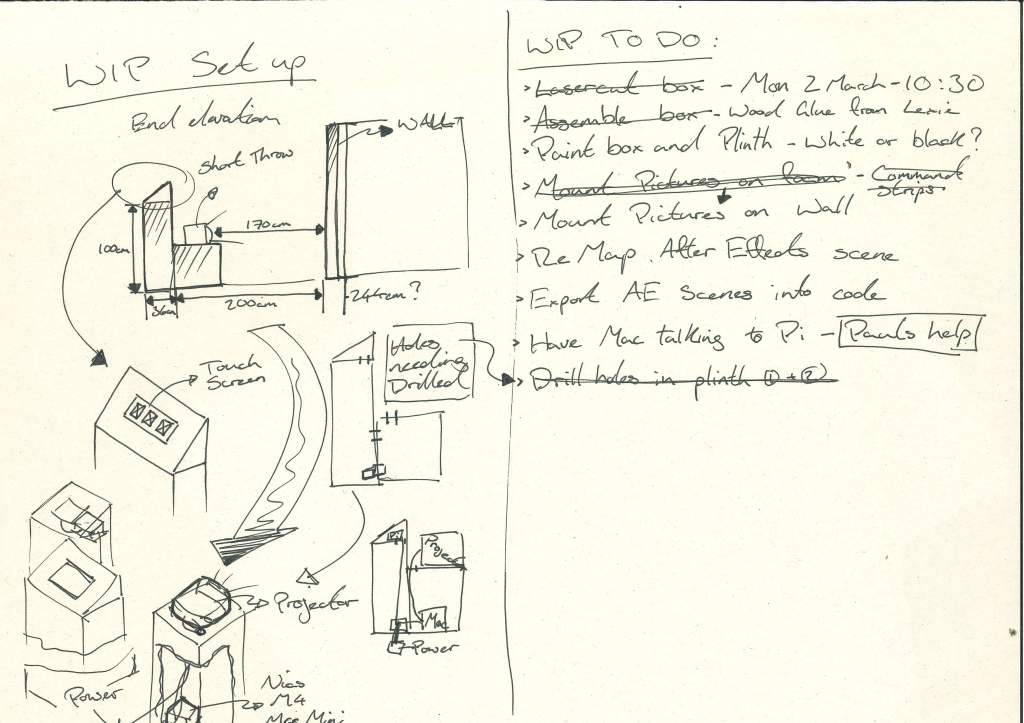
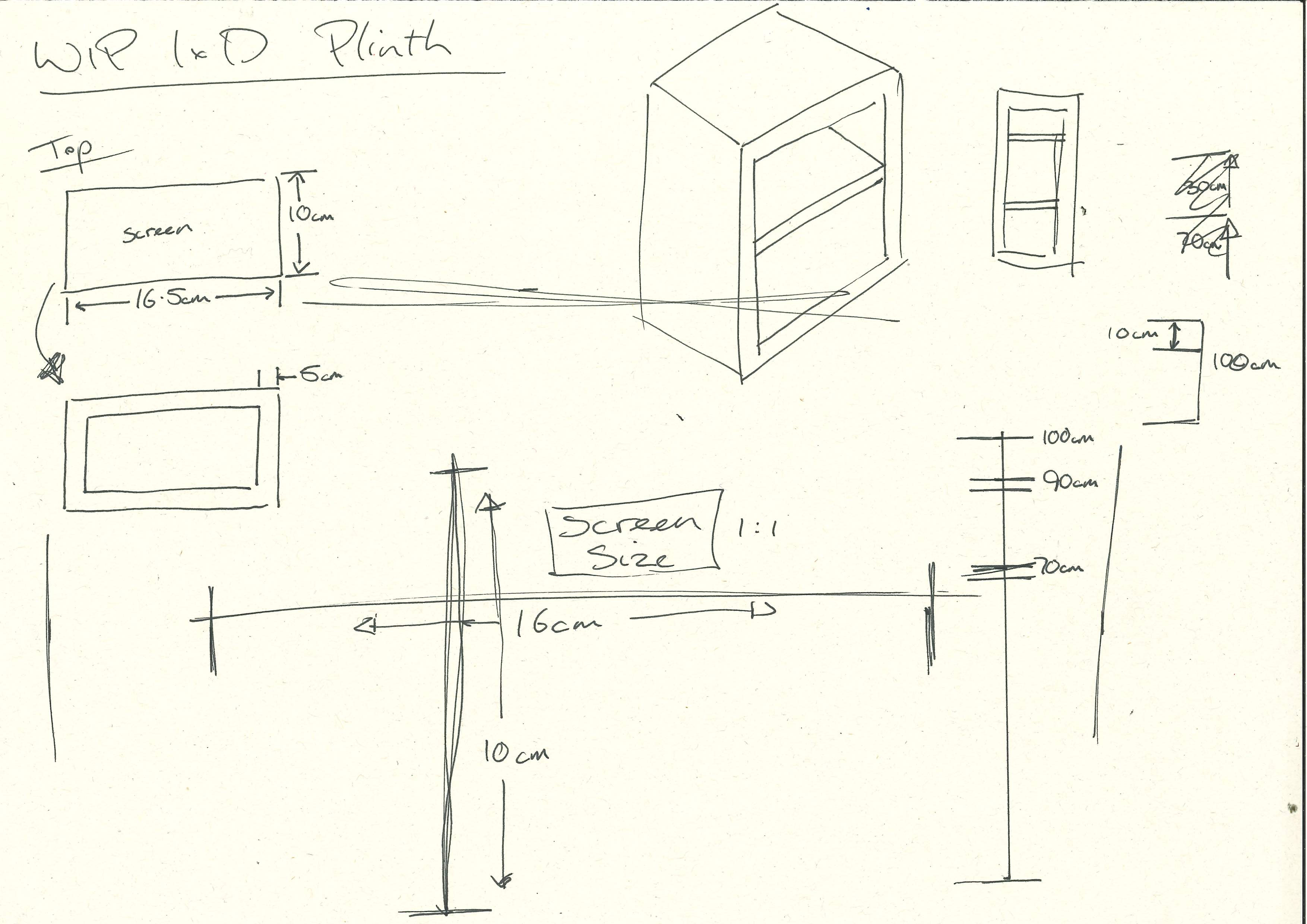
Initially, my plan was to have a custom plinth made for the WIP that would hold everything, but after a conversation with Gillian, she pointed out that going through the effort of that might be too costly, take too much time and be a bit overkill when the WIP is just that a Work In Progress and not the final thing and that designing and building a custom plinth it better to do at the degree show.
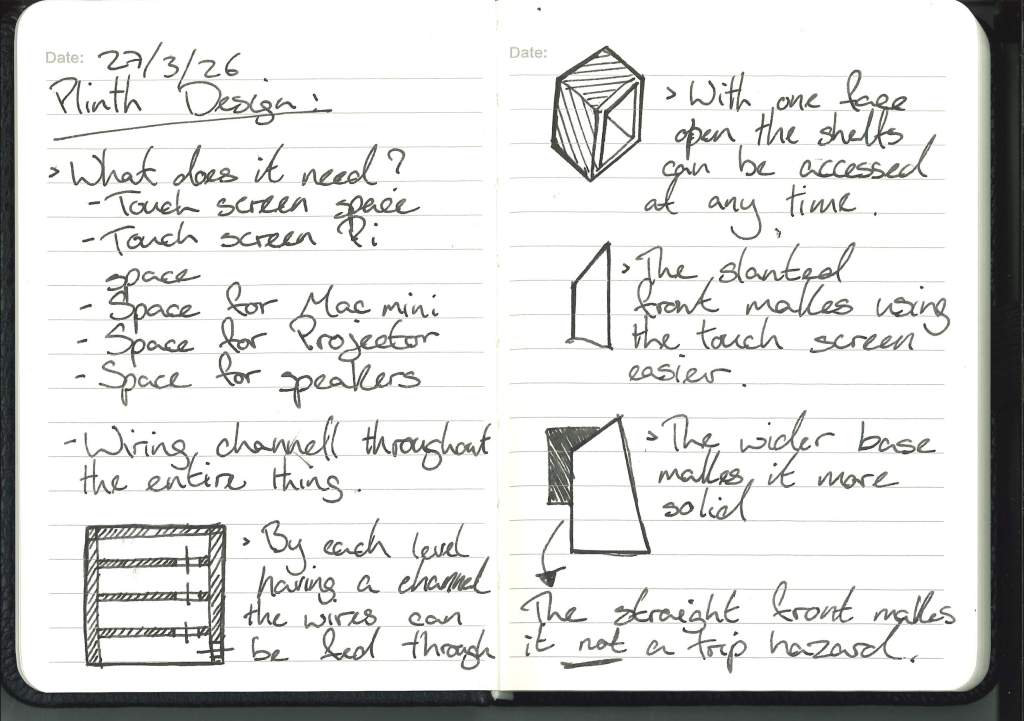
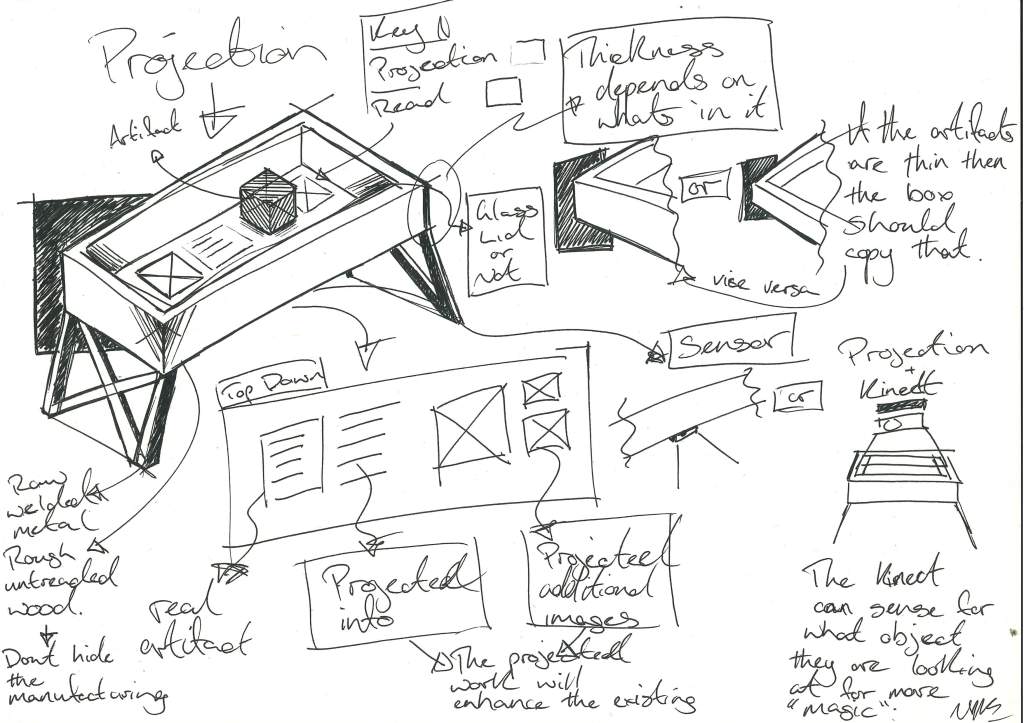
Above are some rough sketches of the sizes and requirements I would need for the WIP before changing the plan.
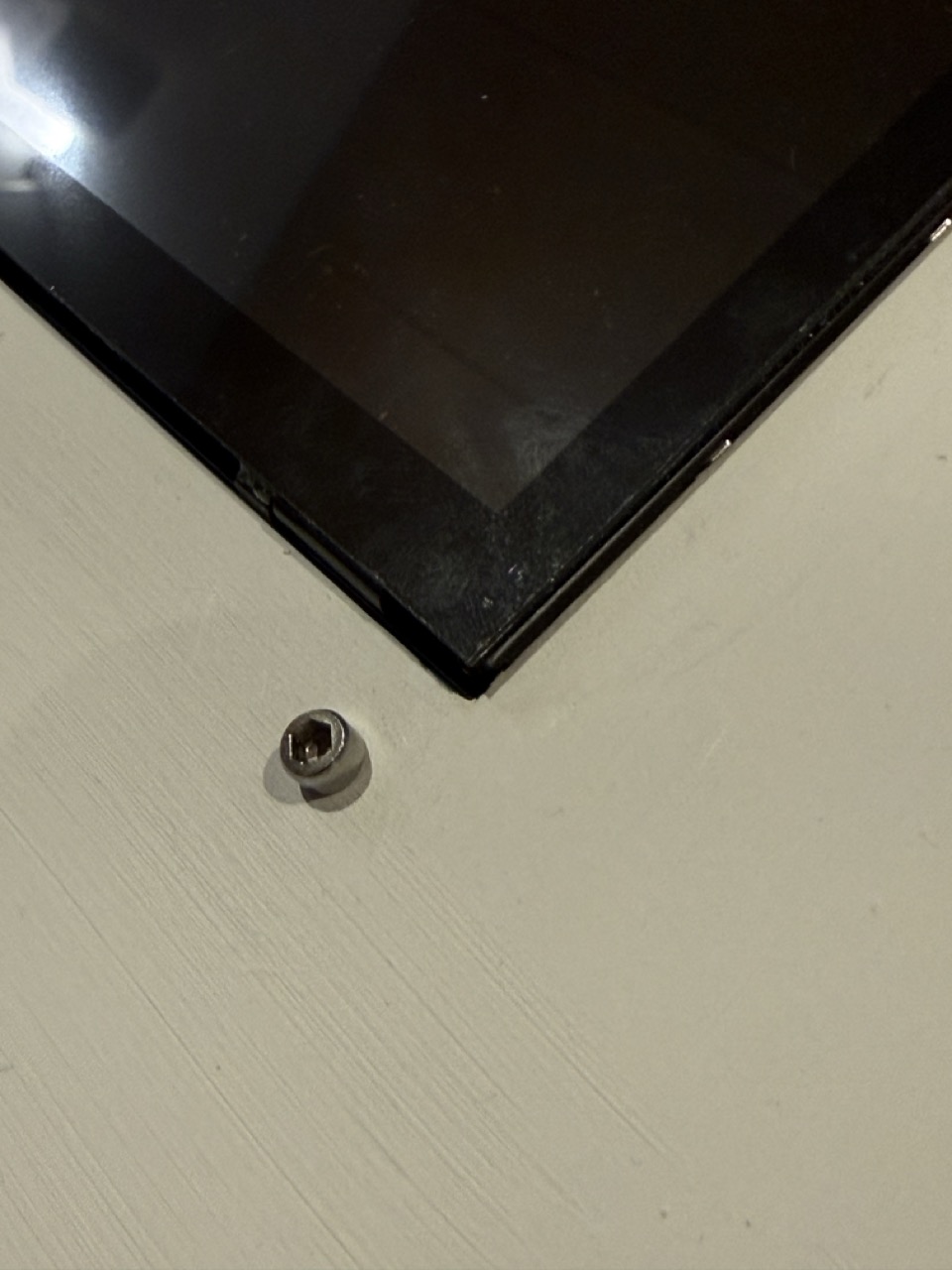
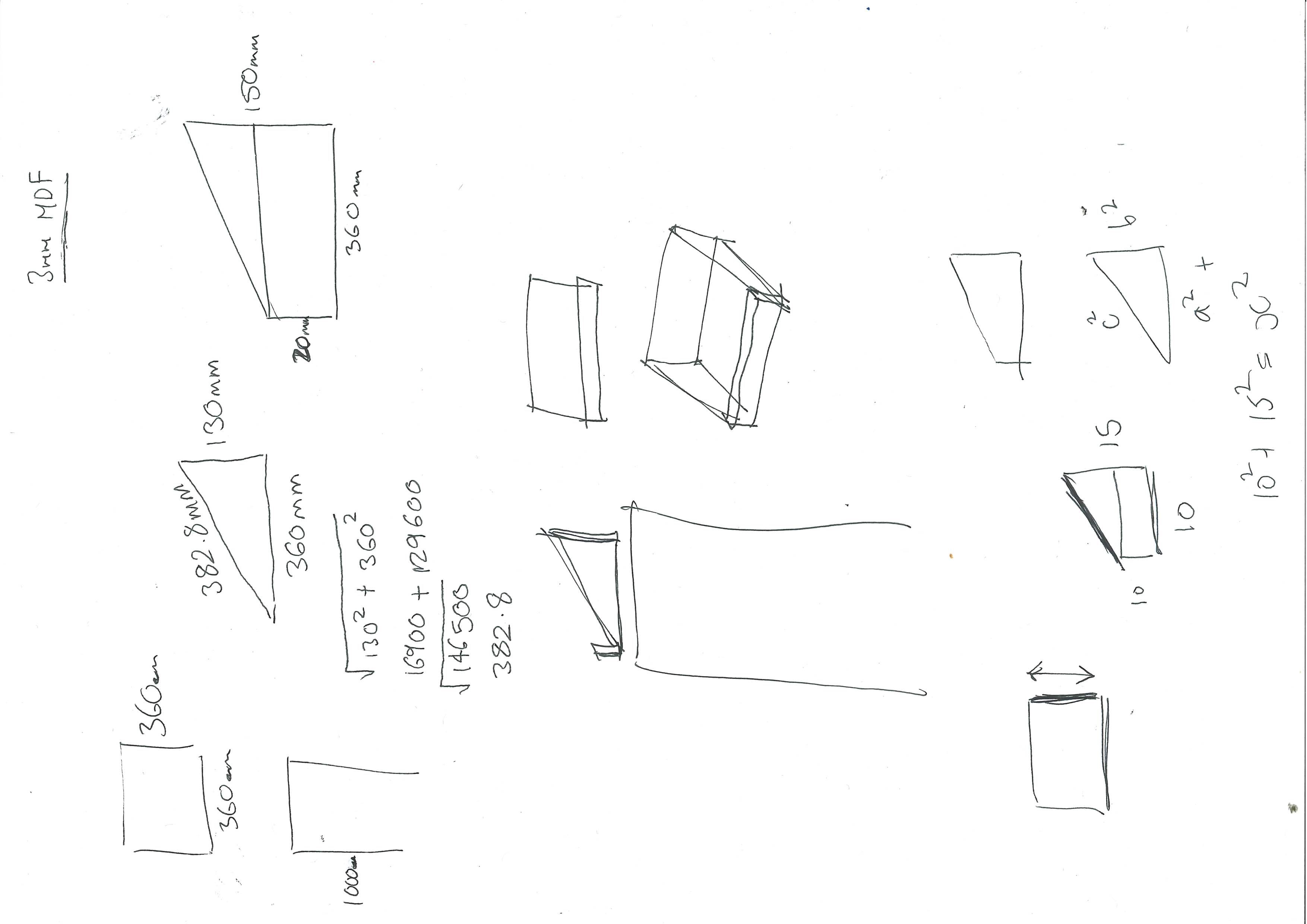
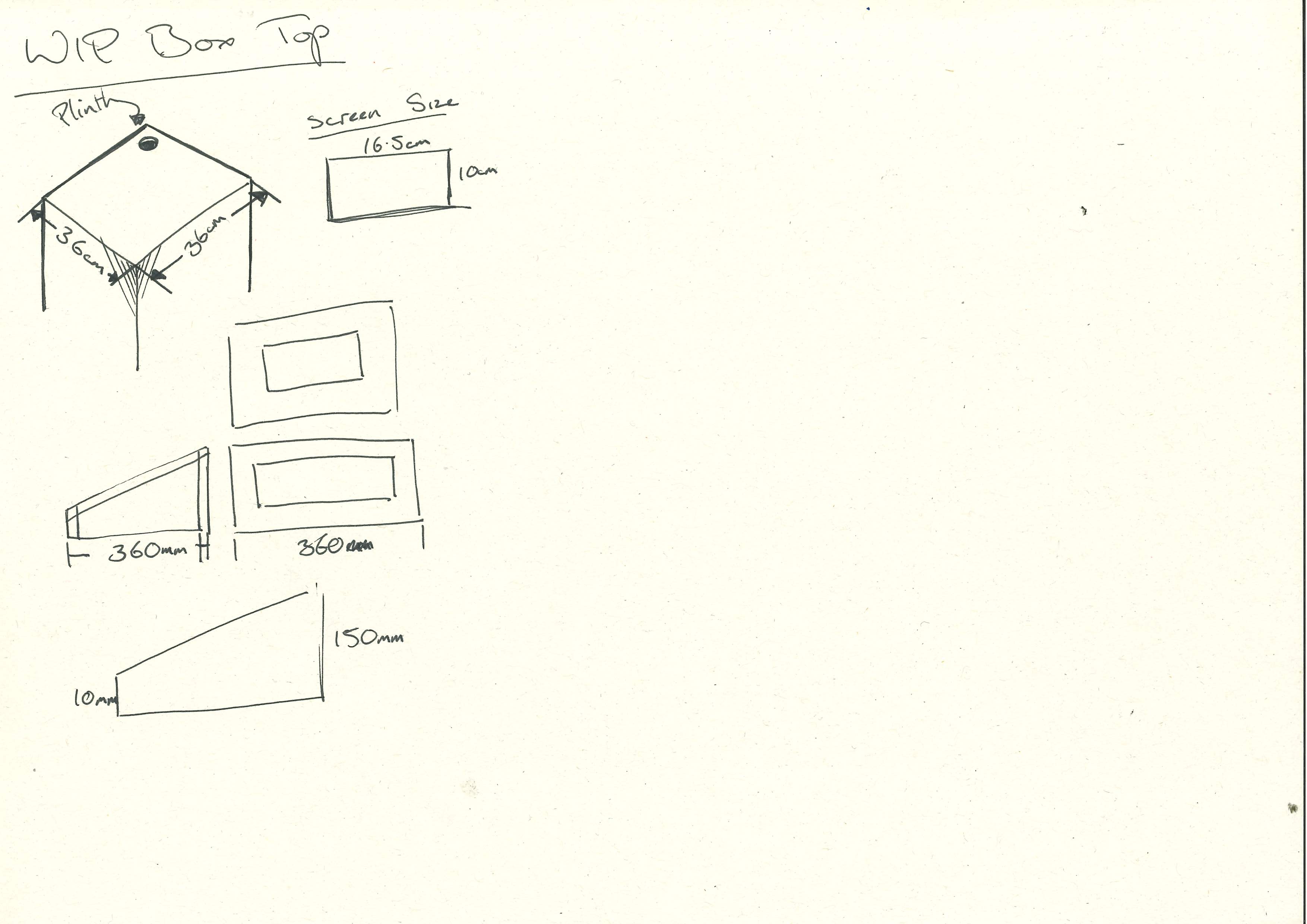
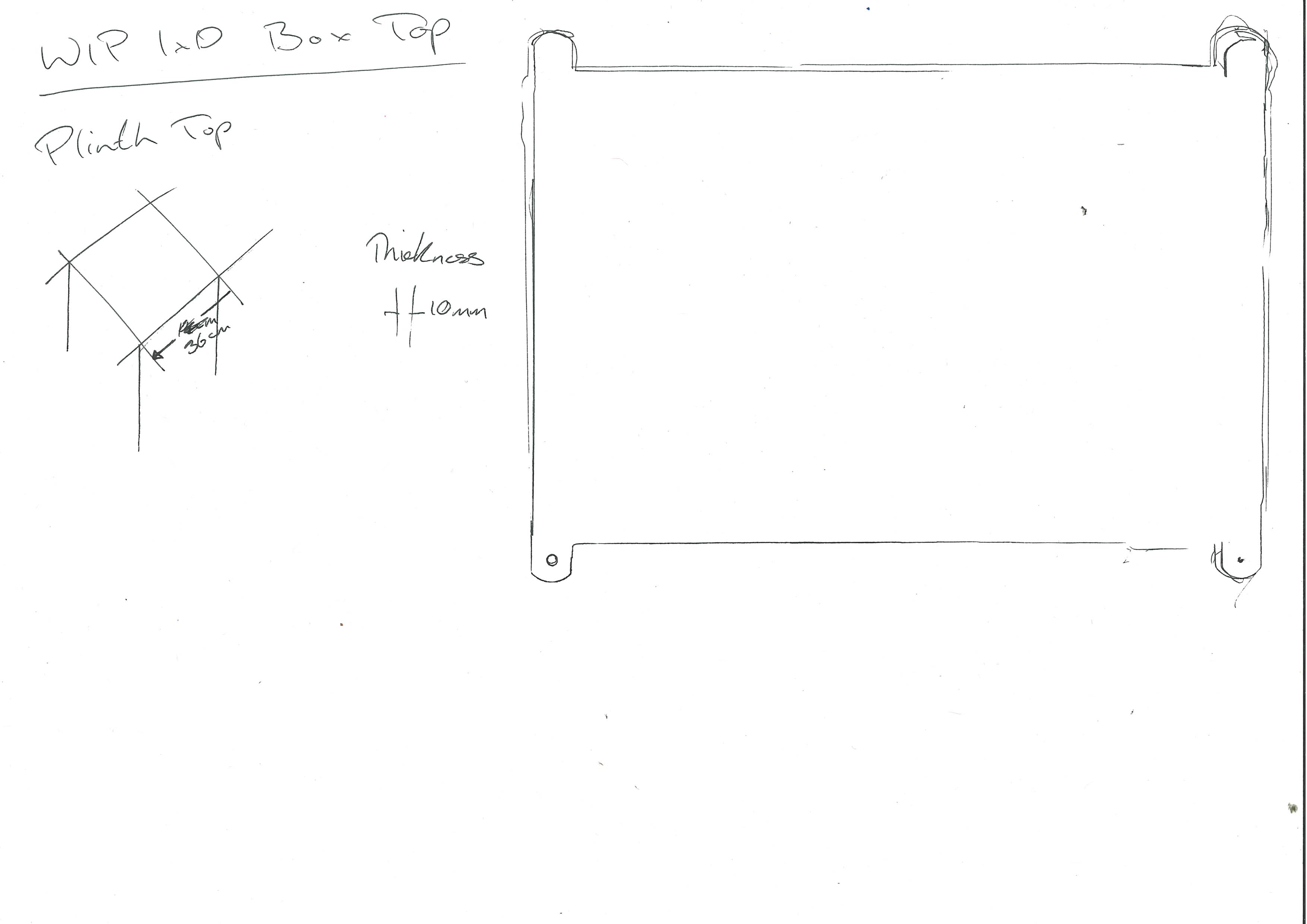
Below are more rough sketches, but now with the idea of taking an existing plinth that we have in the studio and either modifying it or building a box to act as a top of the plinth that will hold the touch screen and the wiring of the media player
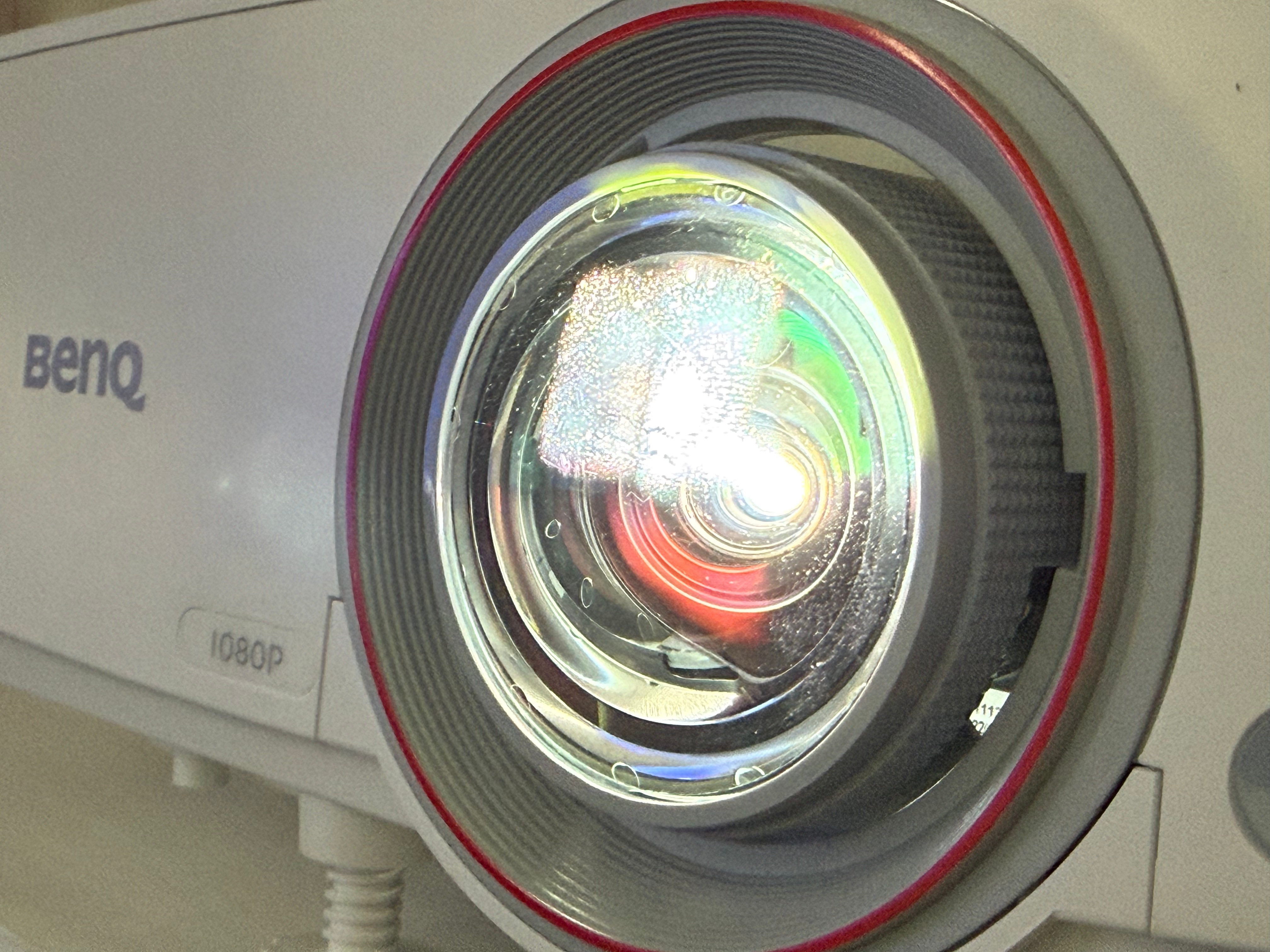
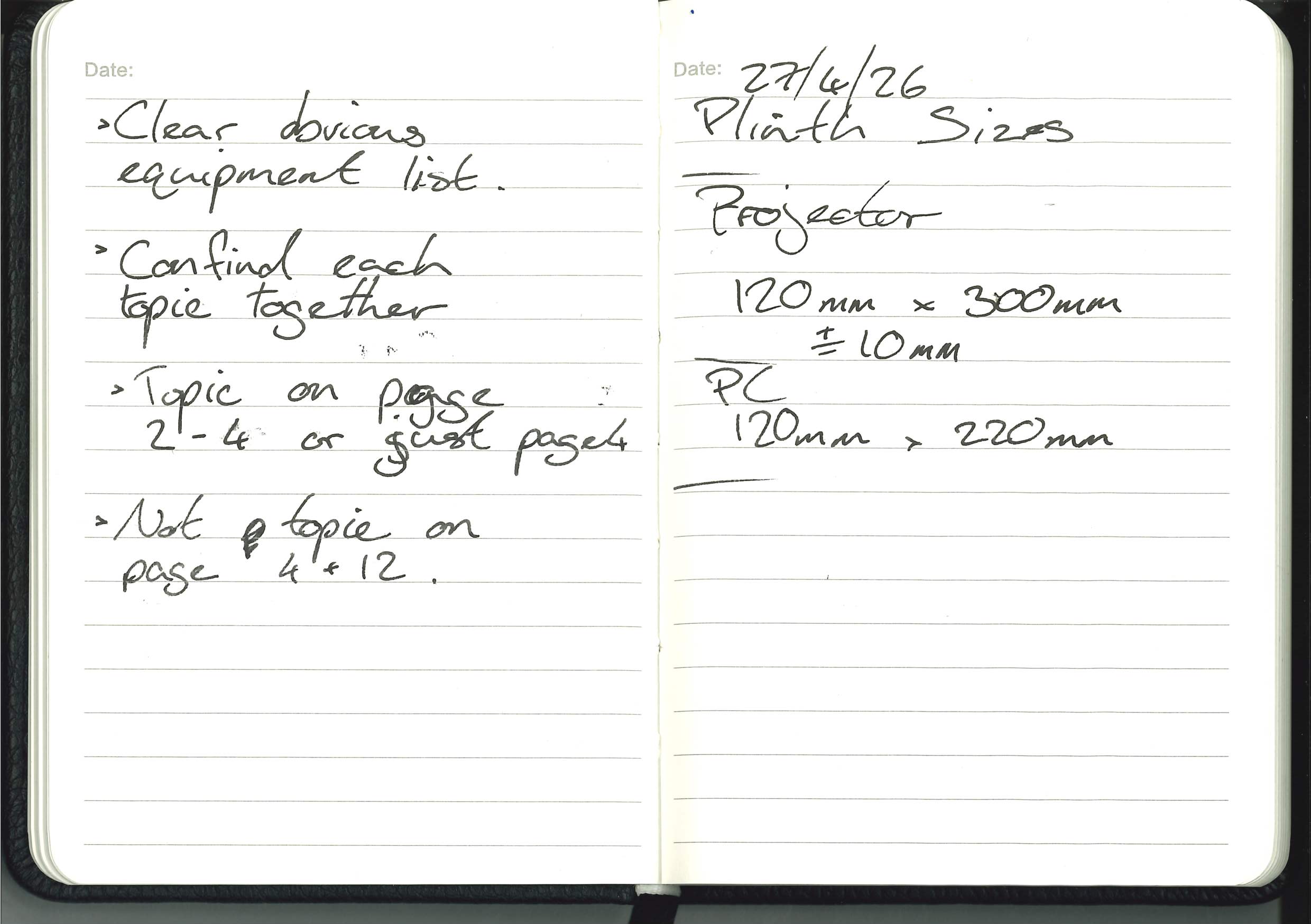
And below is a more finalised idea of how close the short-throw projector will need to be before the keystoning becomes too extreme, and images start to lose quality.
Another note on this sketch is that, by cutting channels into existing plinths, I can wire everything internally, getting a little closer to the clean, professional look I’m aiming for.
Photography:
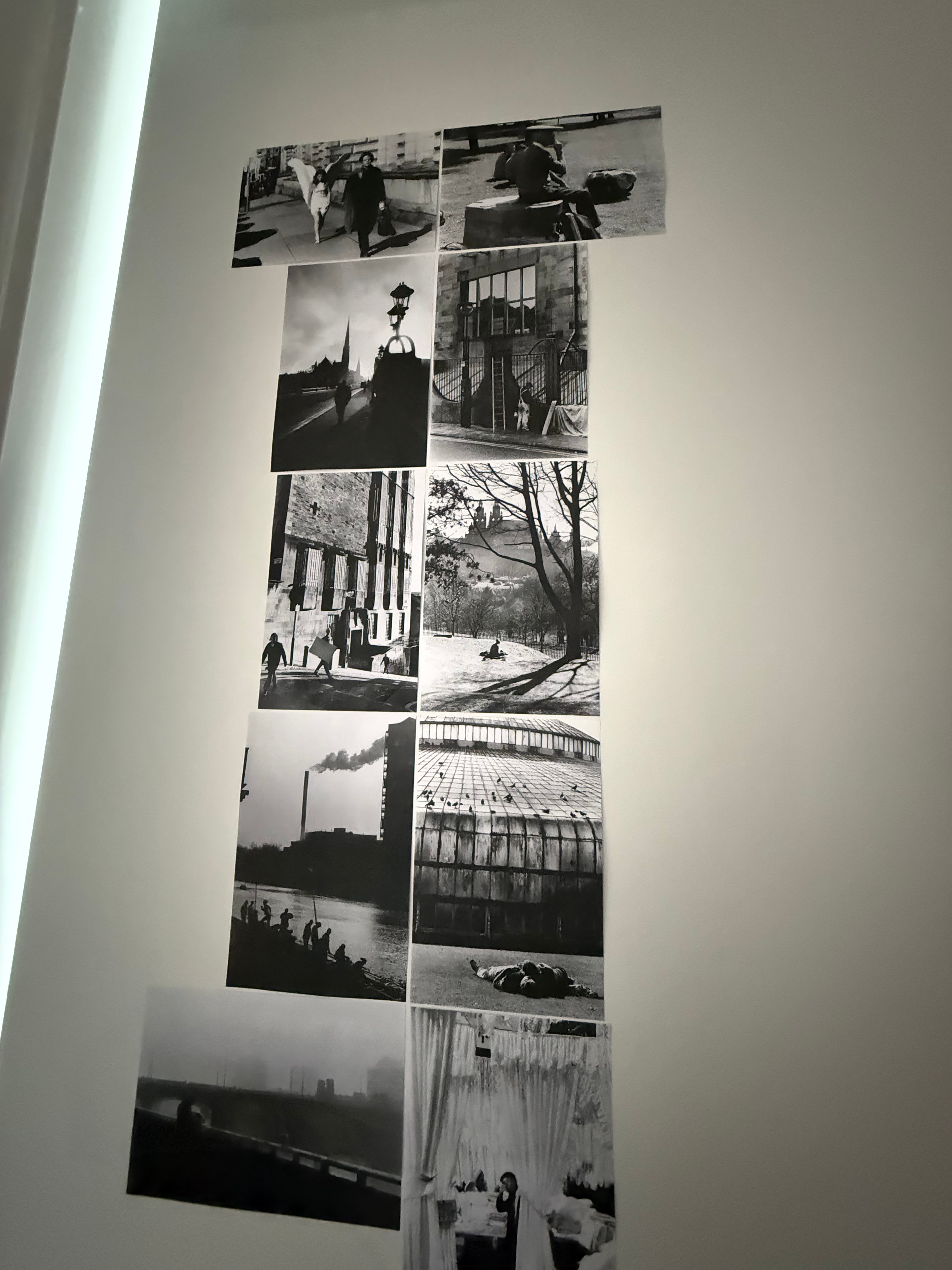
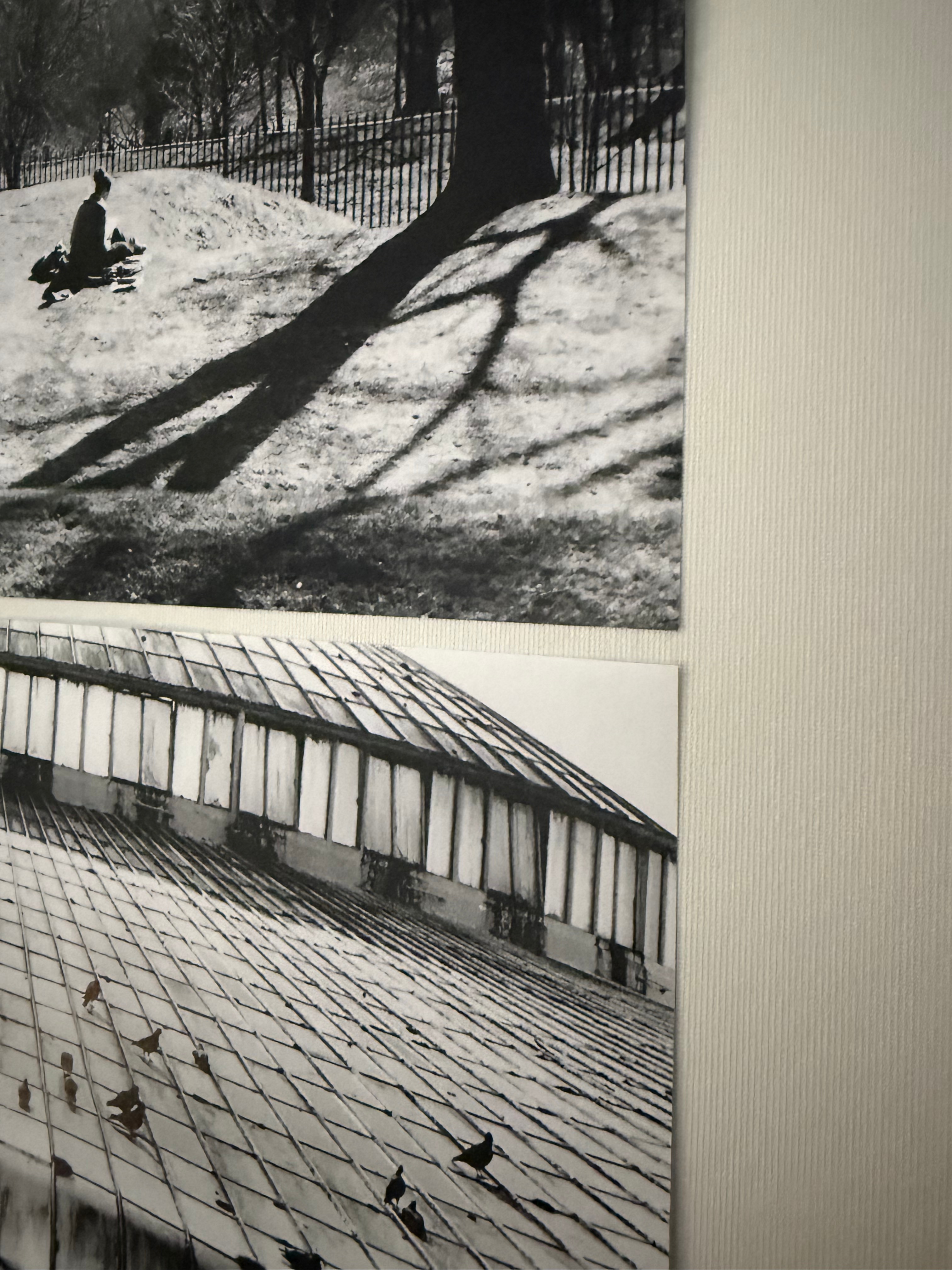
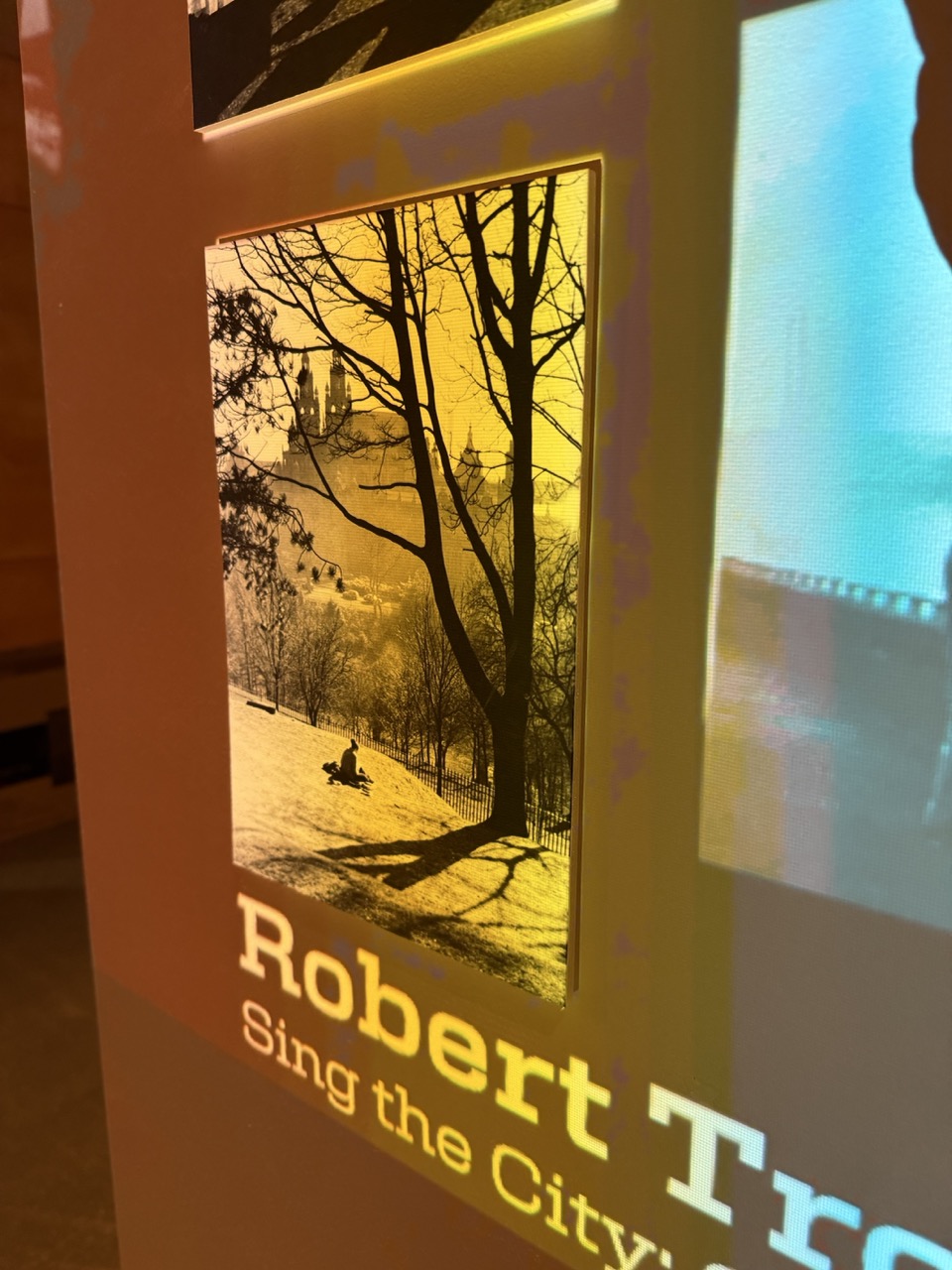
After getting the photography printed at the Stow, I had them ready to mount, and luckily for me, Nat generously donated the foam board that she had from the previous year and was no longer using. They were a bit larger than A4 and discoloured around the edges, but that meant I could cut and spray-mount the photography roughly in the centre, then trim the excess.
When discussing with the TSD photography staff at the stow, they showed me that simply mounting the pictures on foam board and mounting them to the wall with command strips elevated them to the level of a photography exhibition.
DeSimulate:
Throughout most of this year, while working on my studio work, my DH&T, and Extending Design, I have also been part of an exhibition outside GSA/IxD with a few of my colleagues. At the end of this week, there was the first run of our exhibition.
Reflection – 8th May 2026:
Before handing in, I want to look back at the whole project and reflect on each step of the process now with the hindsight that I have at the hand in date:
Looking back on this two-week period and now rereading this post, similar to the previous post, I was in the midst of losing my mind with After Effects, making tiny changes one at a time and trying to develop a style for the projection after the sudden change of plans/simplification of the project.
I think I was unsure of what I was looking for with the motion graphics and just carving my way through it. It’s only after the fact that I can see the project’s pathway.
This two-week period was the mad dash of realising that I had so much to do, and the set-up for the WIP was rapidly approaching, so I didn’t want to walk into the Reid Basement underprepared with the elements of my piece unfinished.
After the initial walk around the Reid basement and telling Paul about my plans, he pointed out that it would be too much and that I should simplify and focus on quality instead of quantity. So at this point, the interactive table was set aside, and the interactive wall display became the main and only piece.
My piece always seems to be changing and developing, dealing with limitations or developments in the project, from the early concept, to the WIP and onto the Final degree show and hand-in. I’m curious to see what it will finish as.
Looking back, that made sense because if I were doing the table as well, the main display would have suffered or not been finished at all. I need to keep reminding myself that the exhibitions I’ve seen and the work I’ve enjoyed have not been done by one person, but by a team.
Archived Photography:
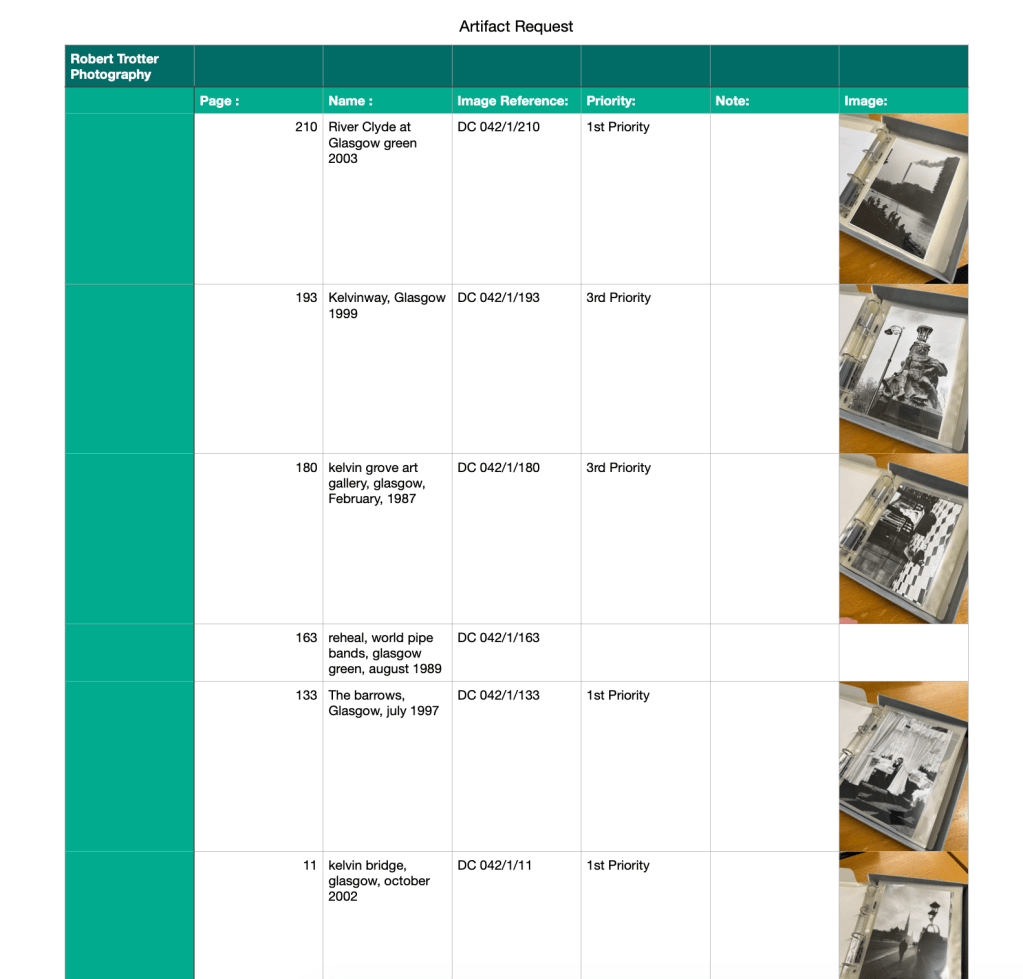
After my visit to the archives last week, most of this week has been spent emailing back and forth with the archives staff to let them know which pictures I wanted and to complete the necessary paperwork to have high-quality digital images transferred for use in the exhibition. I feel like this gives me insight into what an integral part of my job might be after GSA: either working with clients who already have the information and media for the display, or touching base with another studio to collect the media I need for a piece.
At this moment, I have been using low-res versions of Robert Trotter’s photography in the fourth-year studio, but now with the high-quality TIF images, I have a better Idea of what I’ll be working with when moving it into the Reid basement.
Developing the piece:
When I haven’t been emailing the archives, I’ve been working on the after-effects scenes for the piece. In all honesty, I was horrible at documenting the process for my After Effects. I was changing things so much, but only in small increments, that I would notice the change only after the fact.
During this process, I kept trying, developing, and running it by everyone in the studio for their input on timing, as I was worried that I had been looking at it for so long that I had made it too fast or too slow.
Keeping the Font:
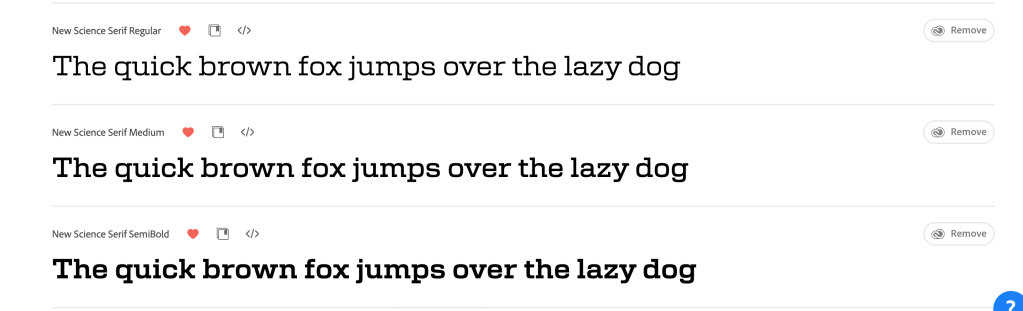
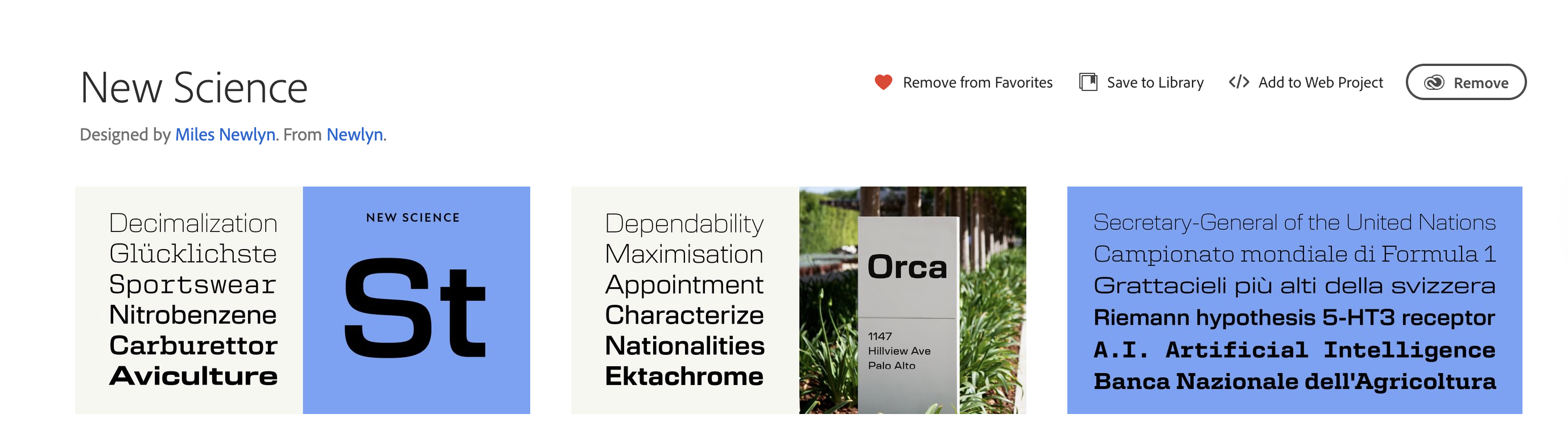
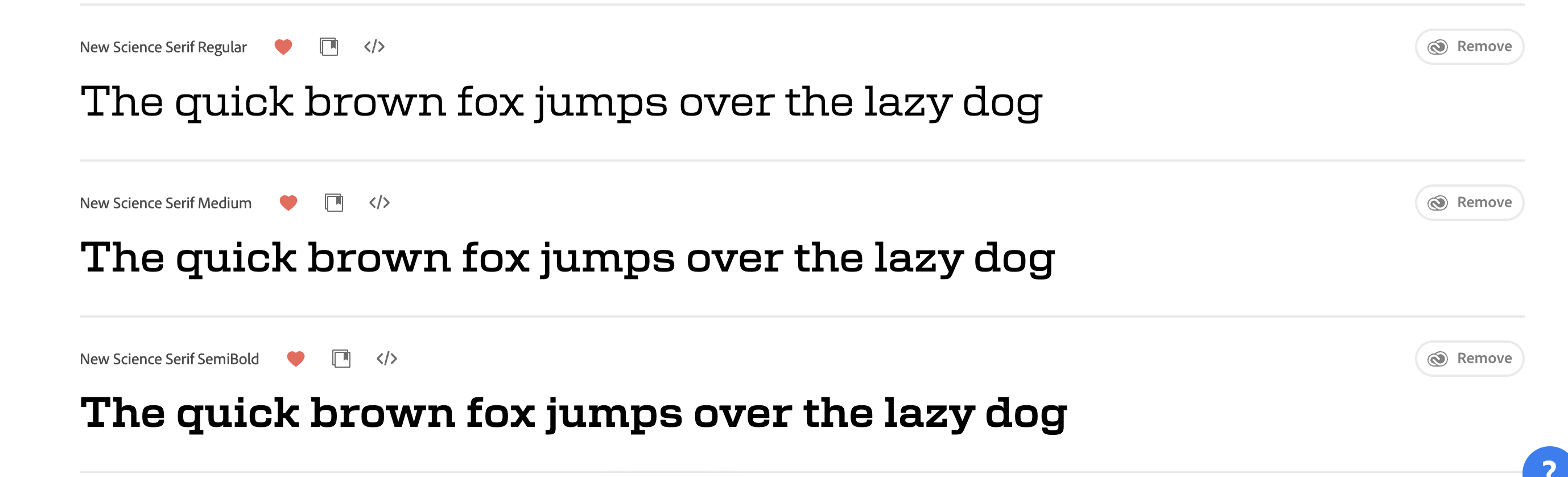
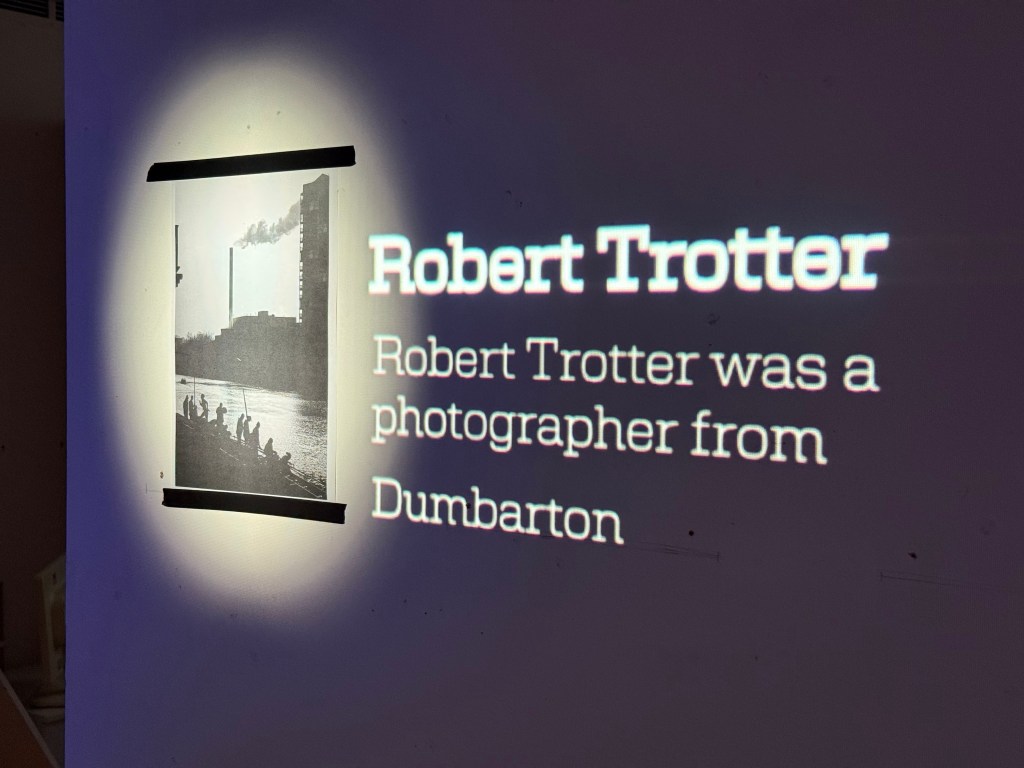
The font that I initially chose for the project, when I was focusing on Glasgow and Clydebank and its industry, as previously stated in New Science Serif, honestly, it wasn’t the most conscious decision to keep it, but as I was testing it out with the projector on the wall, it worked well, was clear enough, was clean enough and still had this strong, solid feeling to it that can work well with the photography of Robert Trotter in Glasgow.
Reflection – 8th May 2026:
Before handing in, I want to look back at the whole project and reflect on each step of the process now with the hindsight that I have at the hand in date:
Knowing myself and seeing how little documentation there was at this stage is because I was either stressing out about the project in general, and I now know that using that stress as motivation was detrimental to me and my project.
And when I wasn’t stressing out, I was deep in After Effects, trying to develop the scenes and perfect the timing of my projections, as well as sending a number of emails out to the archieves, trying to get clearance and access to the Robert Trotter photography in the archives. This was a time-consuming process, but an essential one for the project I wanted to make and for myself as a professional, teaching me perseverance.
What should I take away from formative assessment, and how will I realise it moving forward? That being said, I am conducting a deeper exploration of the research, establishing a clear direction for my project, maintaining good documentation, and finalising the pieces of work from the archives.
More Making:
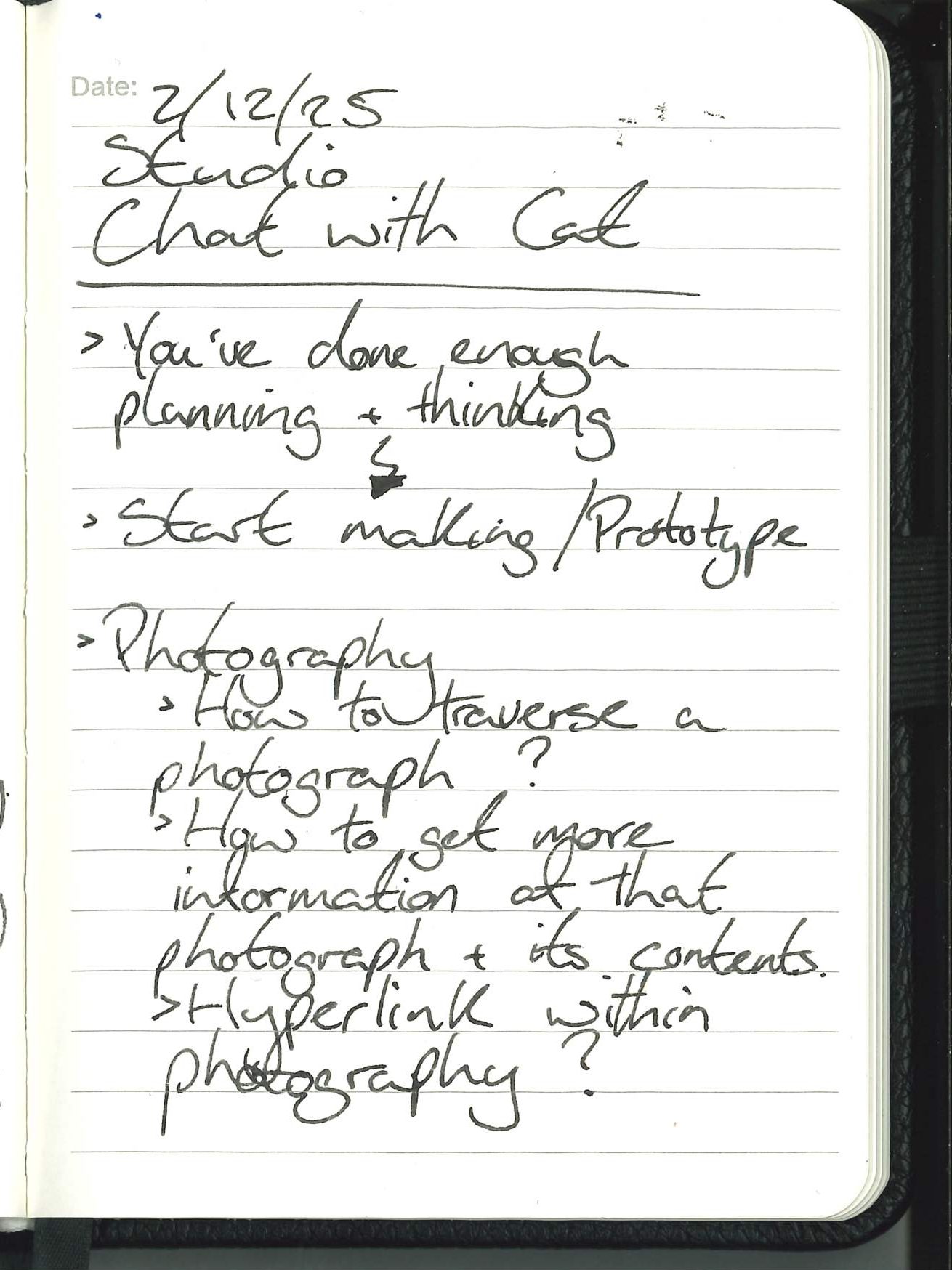
When it comes to the materials and physical construction, I have done enough research and planning for this project, and now I am ready to start. I have already completed both the metal and woodworking workshops, but if my plans are correct, I might also need the casting workshop to create the interactive objects for the table idea.
When considering the electrical work, I have a sense of what I’ll need, but I’ll allow for some trial and error as I build it, so I can fine-tune the pieces. As the final idea will seem simple, I want to focus on the minor details that will elevate the work, and those details can only be ironed out with prototyping.
With ‘The Wall’, the motion graphics will need to be fine-tuned, with particular attention to the speed and style of the information presented.
With ‘The Table’ again, motion graphics will be a big part of it, but I think the timing and speed of user interaction will be the main focus to achieve that professional polish.
Deeper Exploration:
With my ongoing research, whether through artefacts or trial and error, I aim to ‘show my workings’ because I have the habit of knowing what I mean and assuming everyone else does. So, moving forward, deeper exploration of not just my research but also each aspect of the process, writing about what worked and what didn’t.
Clear Direction:
A lot of semester one was spent trying to find my direction, what I want to make, and who I am as a practitioner. But after the winter break, I feel like I am coming back to this with a clear head and a clear direction. I am a designer and will produce an interactive exhibition that showcases the lives of industrial workers in West Dumbartonshire through archival photography, design elements, and documents, creating a moving and engaging collection.
I will also be rewriting a brief to keep my vision on track.
WIP Briefing:
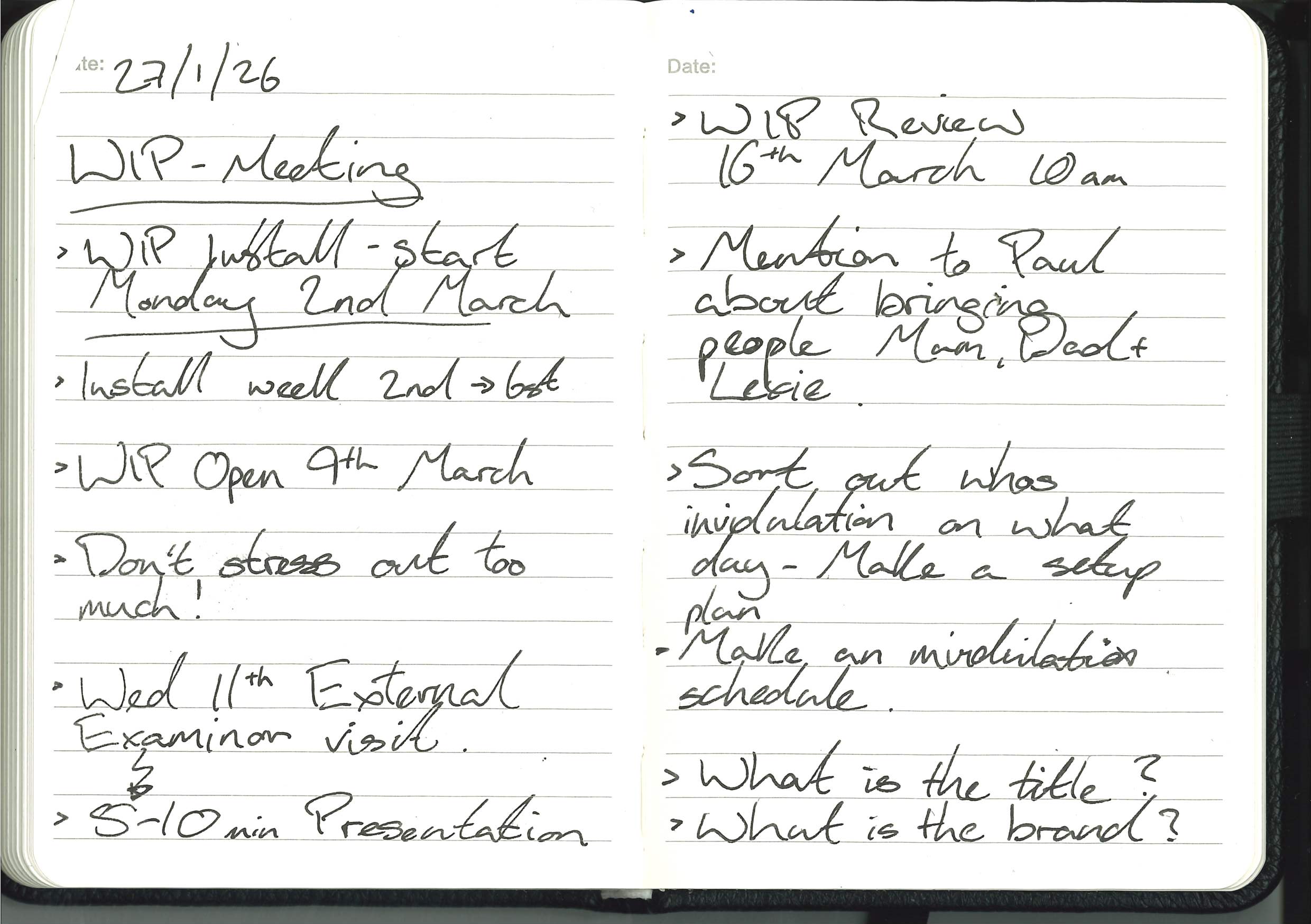
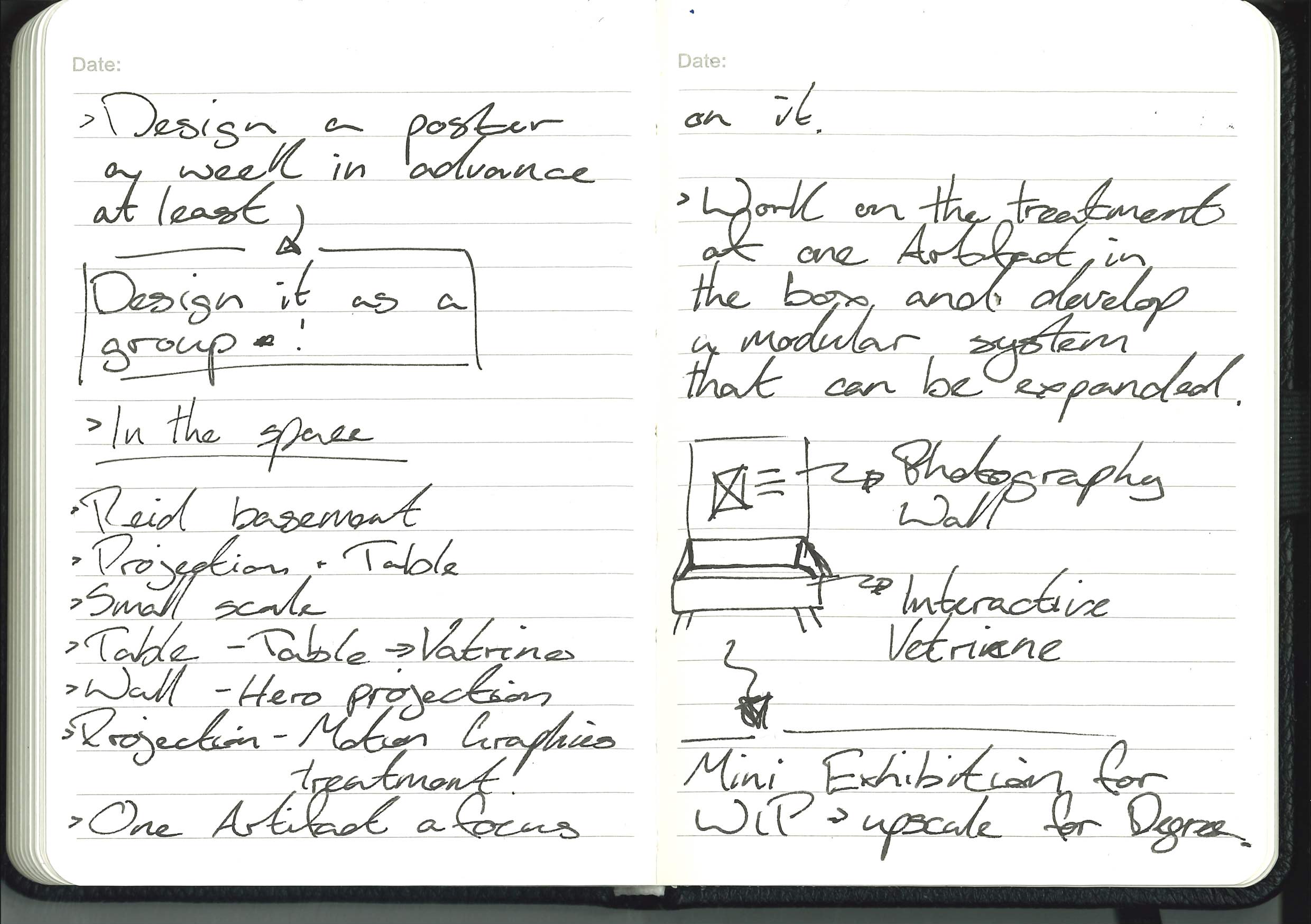
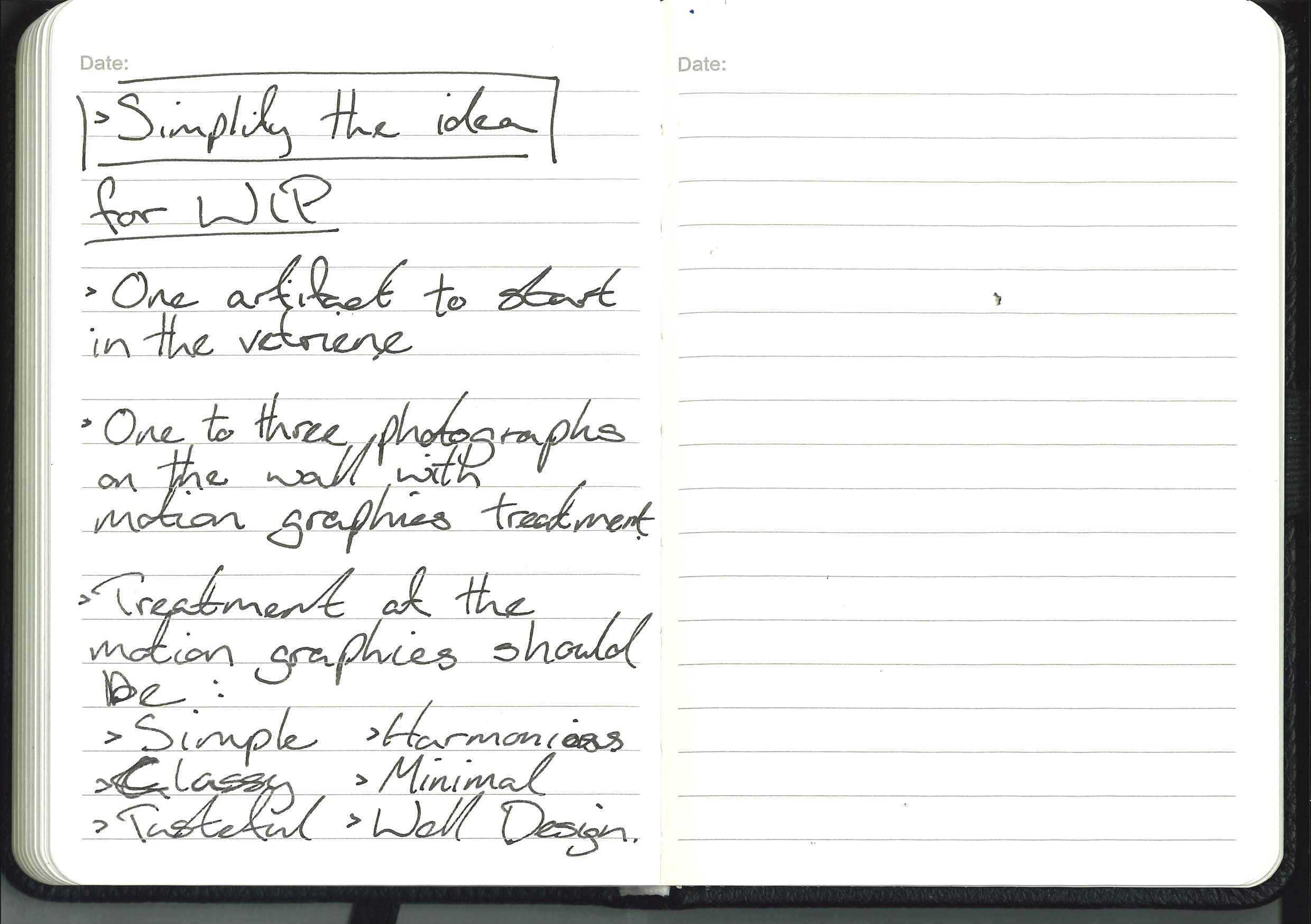
After the WIP briefing and the walk around the Reid basement, a few things differ from the initial plan. After discussing with Paul the idea of a wall projection, an interactive table, and a vitrine, it was deemed too much for now, and that, by developing a more modular system and finalising the look, feel, and initial piece, more could be added later.
The wall is staying as it is, and I’ll start prototyping it as soon as.
When discussing the table and the vitrine, there are two options:
Option One – The table and the vitrine are two separate pieces; the table is an interactive piece with large, accurate replicas of machinery used in shipbuilding, and when the table is moved, it will display more information.
Option Two – The table and the vitrine are combined into a single piece for the WIP, and, either through user interaction or by sensing when the user approaches the vitrine, the artefacts will be enhanced or ‘brought to life’ within the box.
Lighting :
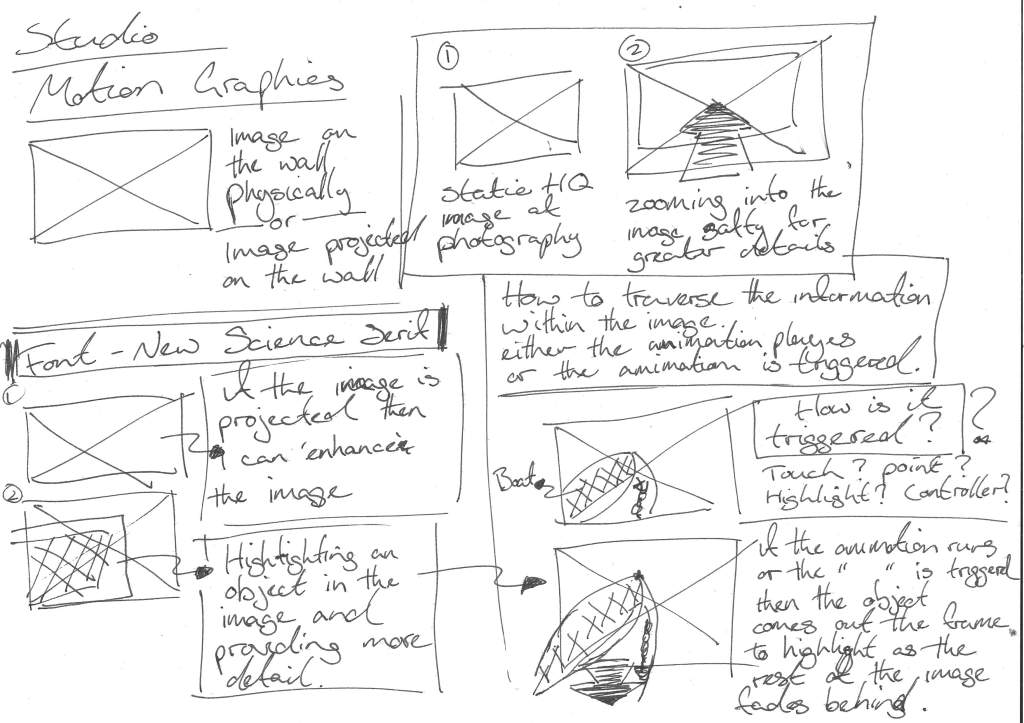
As with photography exhibitions, great consideration is always given to lighting, with spotlights used to highlight work and draw attention. But in normal exhibitions, the lighting is usually stationary spotlights. But since I am using a projector, I can replicate the look of those spotlights and have more control over the simulated lights.
Above is a test of the fake spotlight effect; the lights will be programmed so that when each photograph is being explored, it will have the “spotlight”.
Plan of Action:
I find myself getting stuck for no reason. I know what to do, I have an idea of how to do it, and I know that the most I’ll learn is through doing it, trial and error, but I find myself overthinking or overplanning things again. Scared to take the wrong step, I take no step.
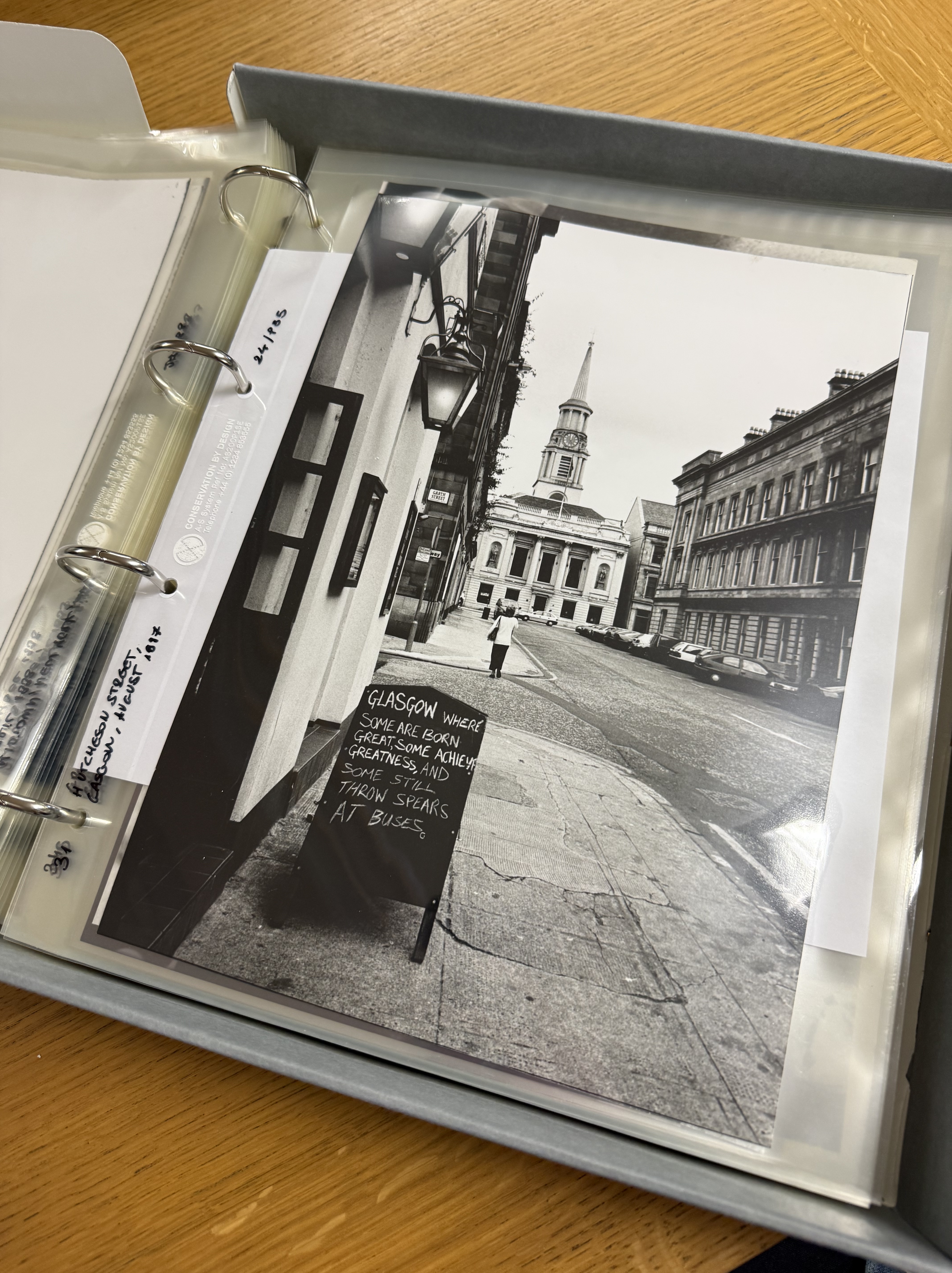
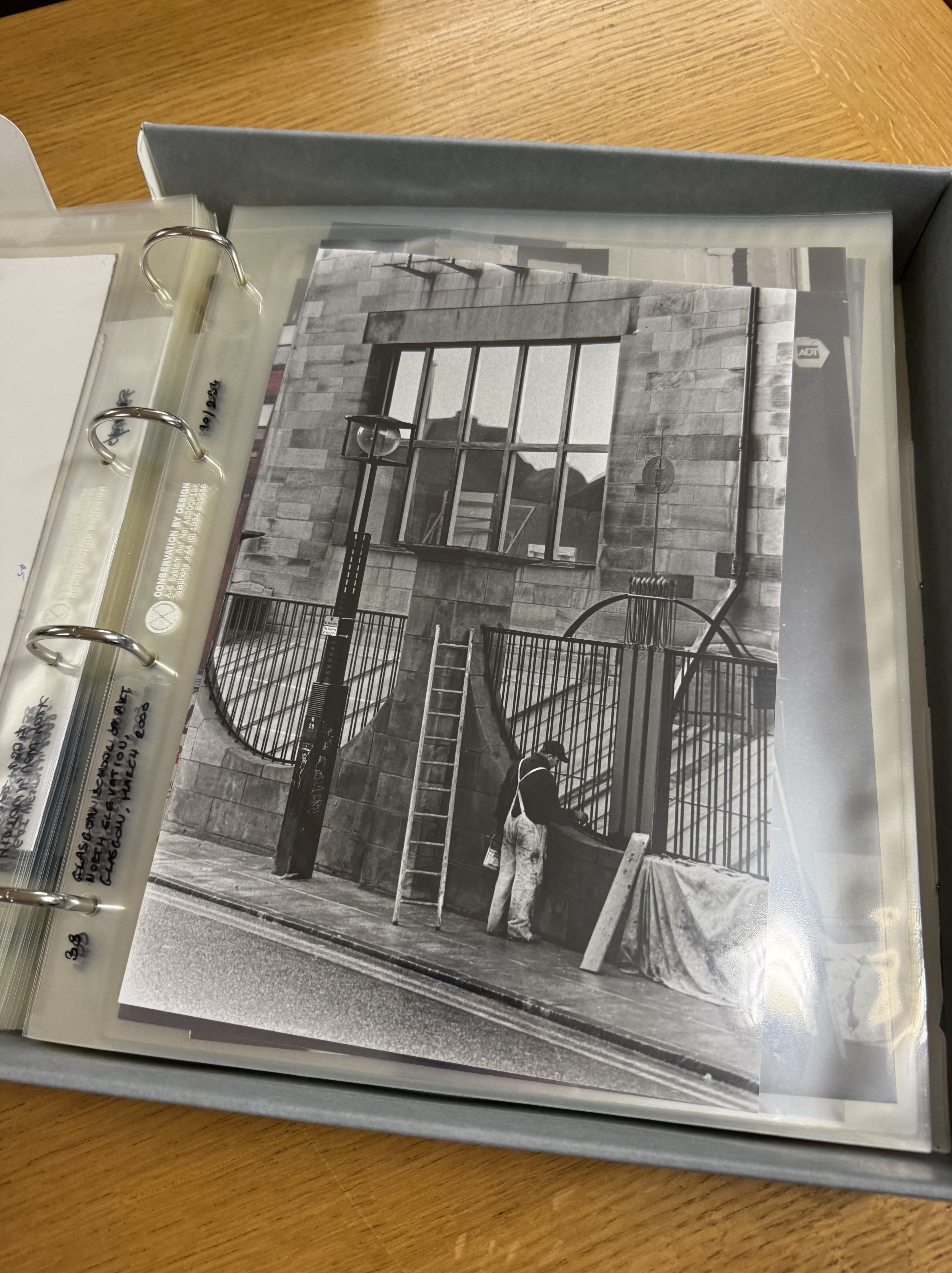
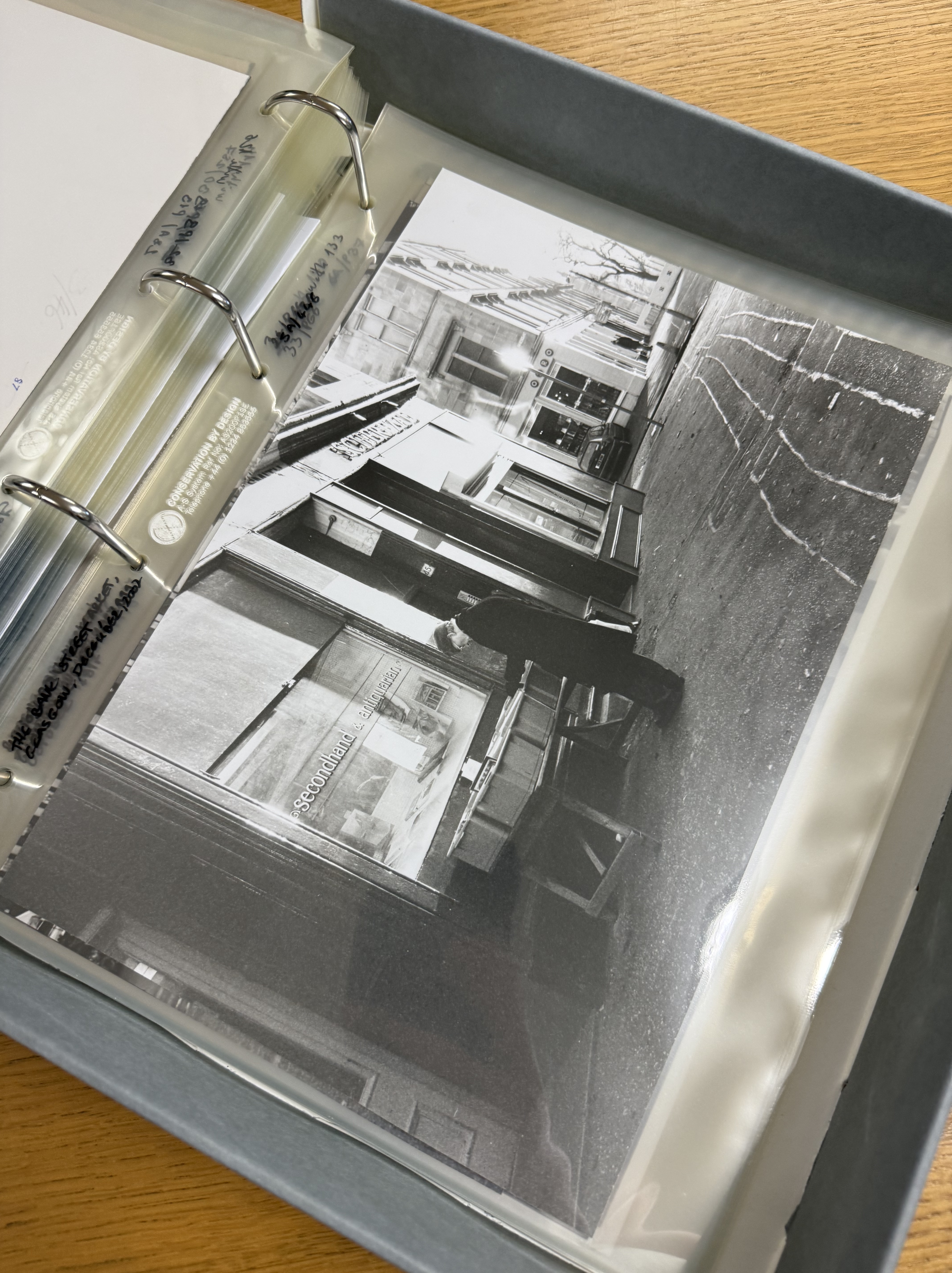
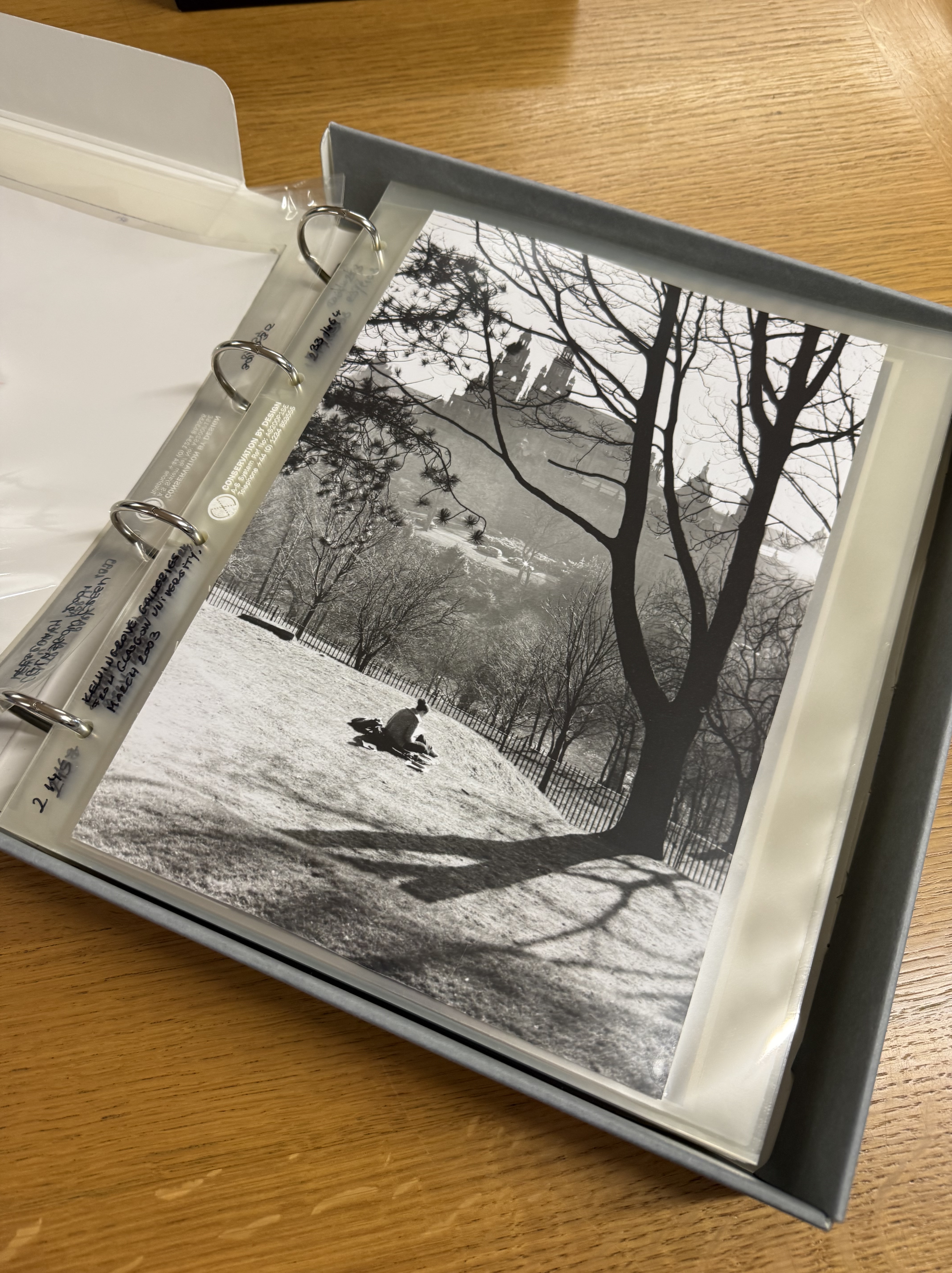
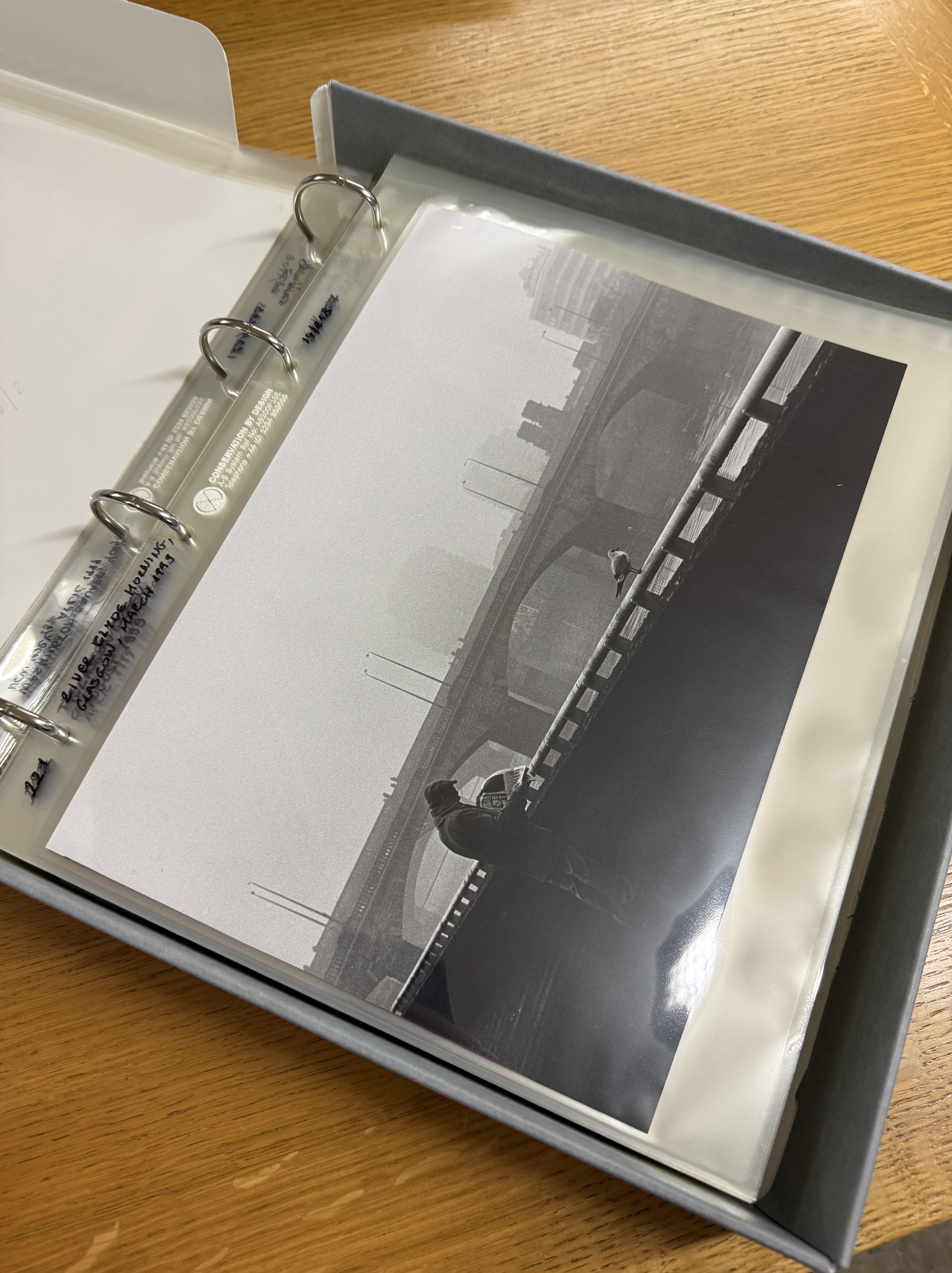
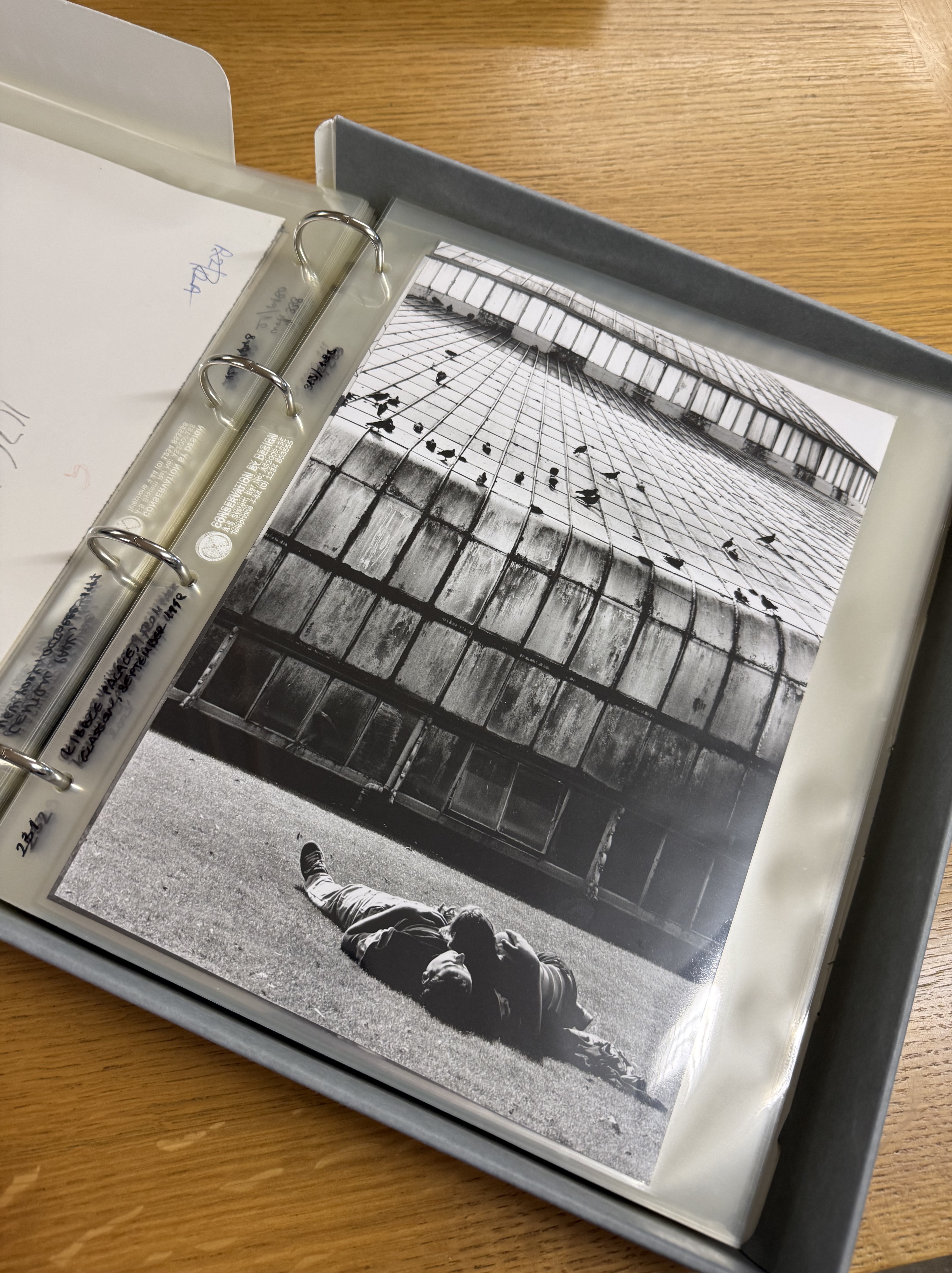
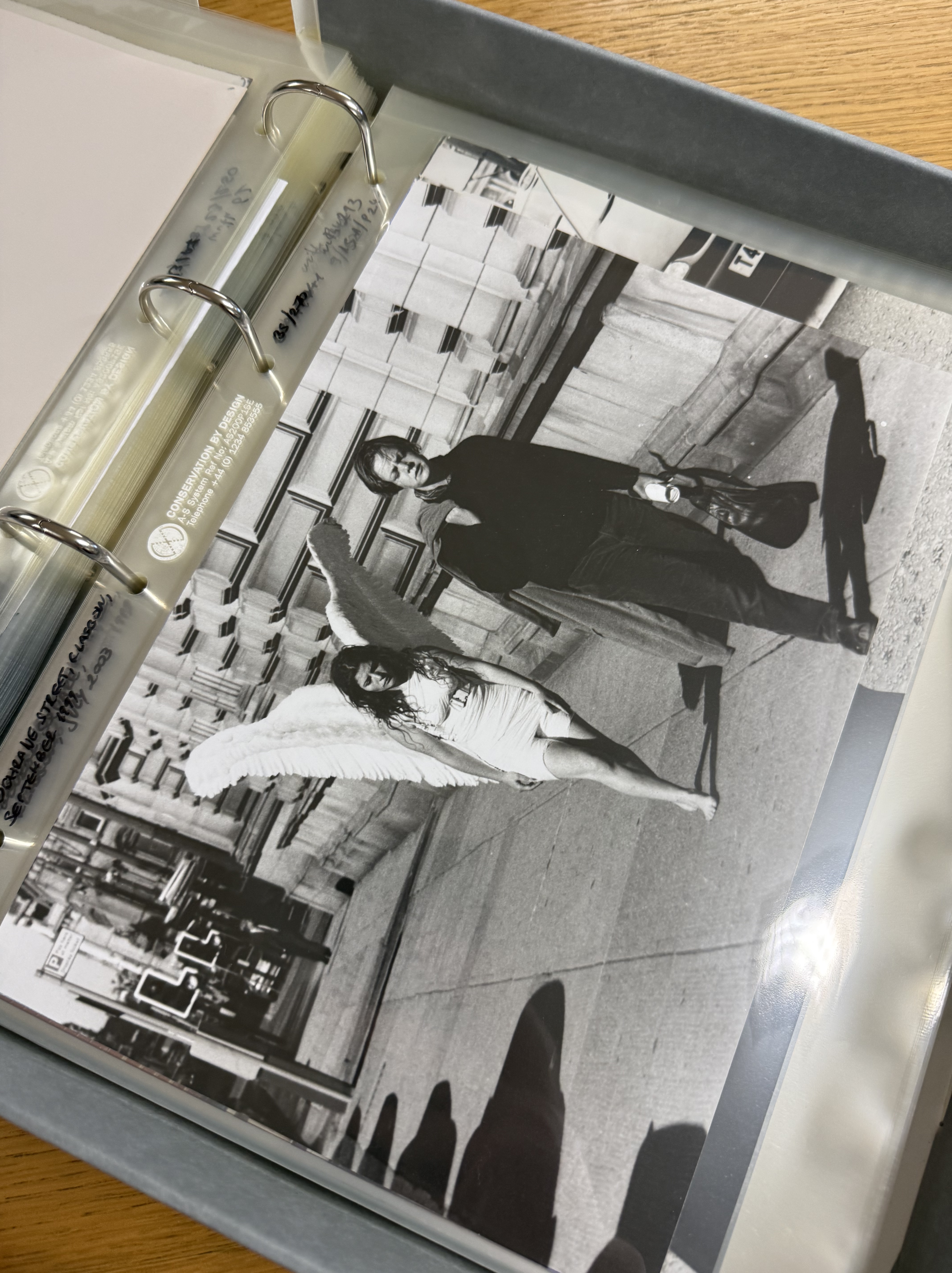
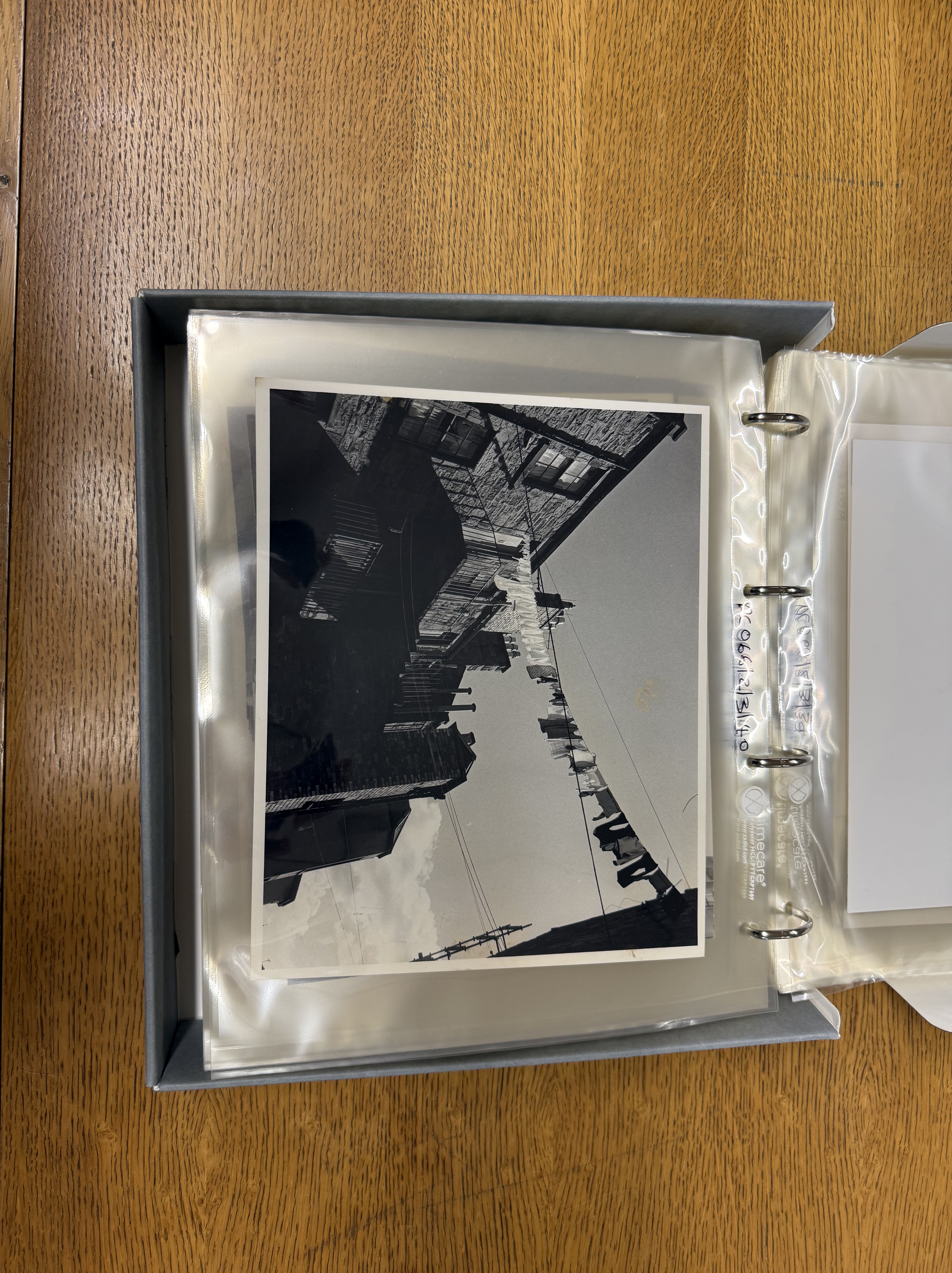
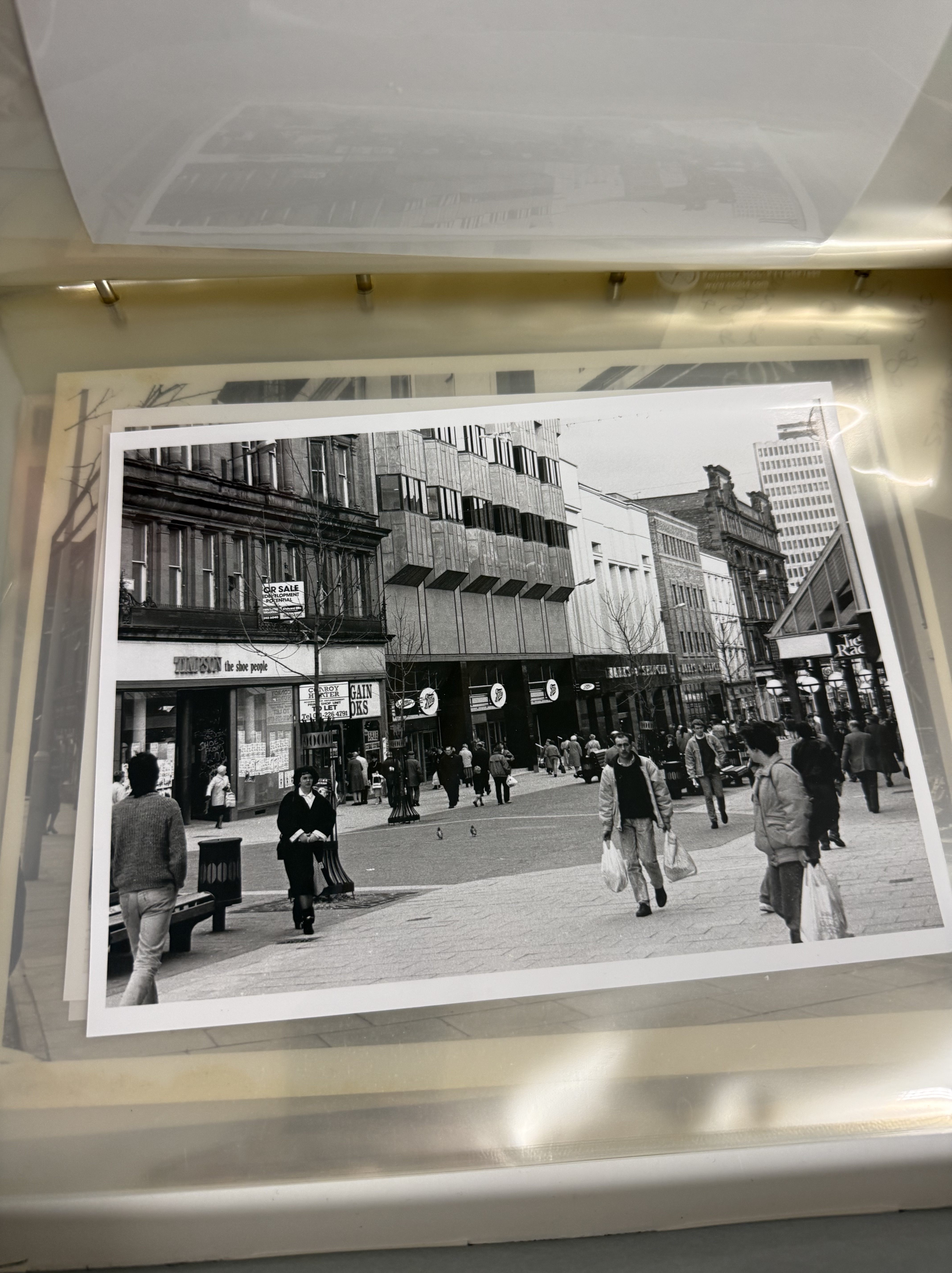
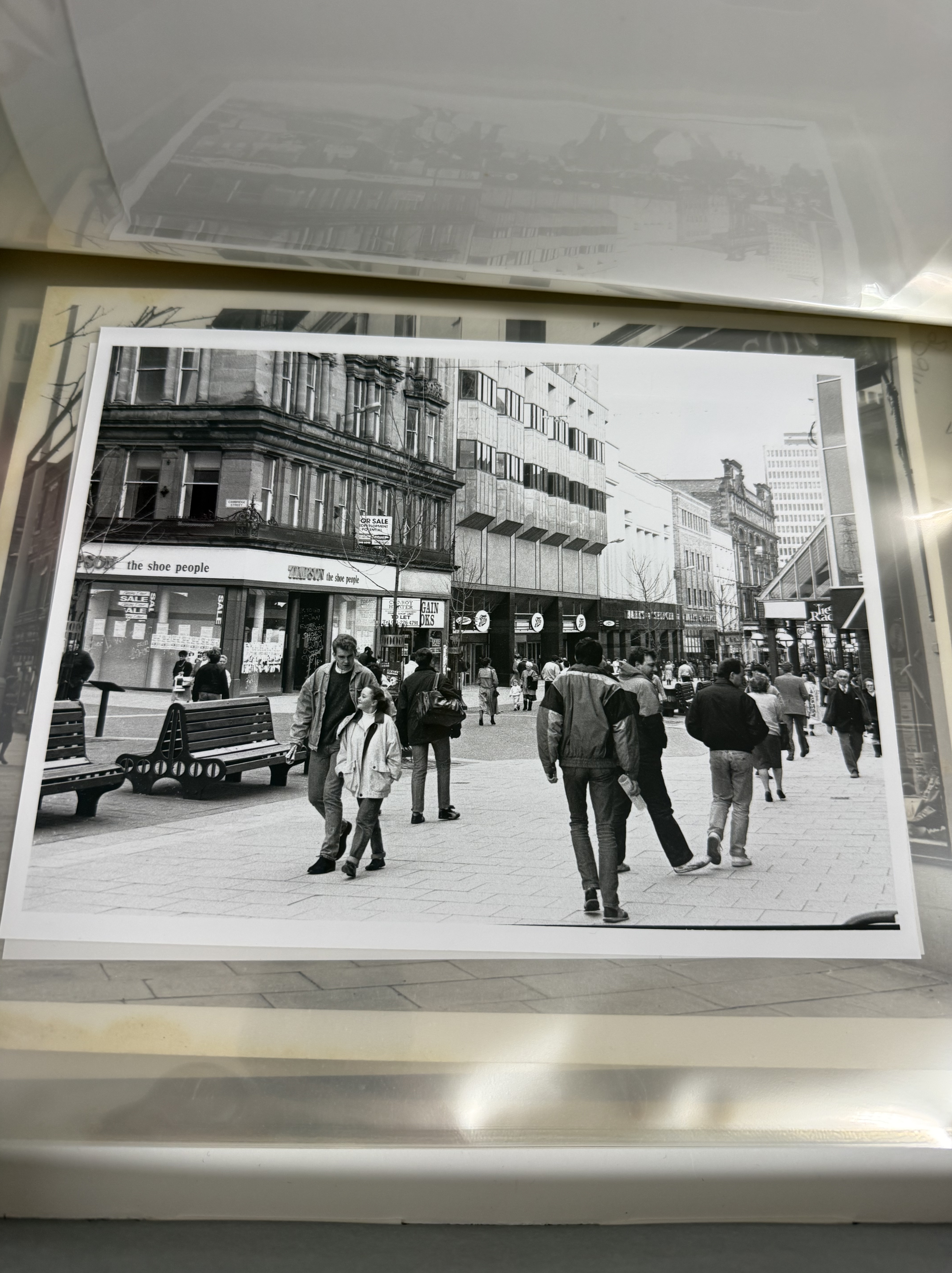
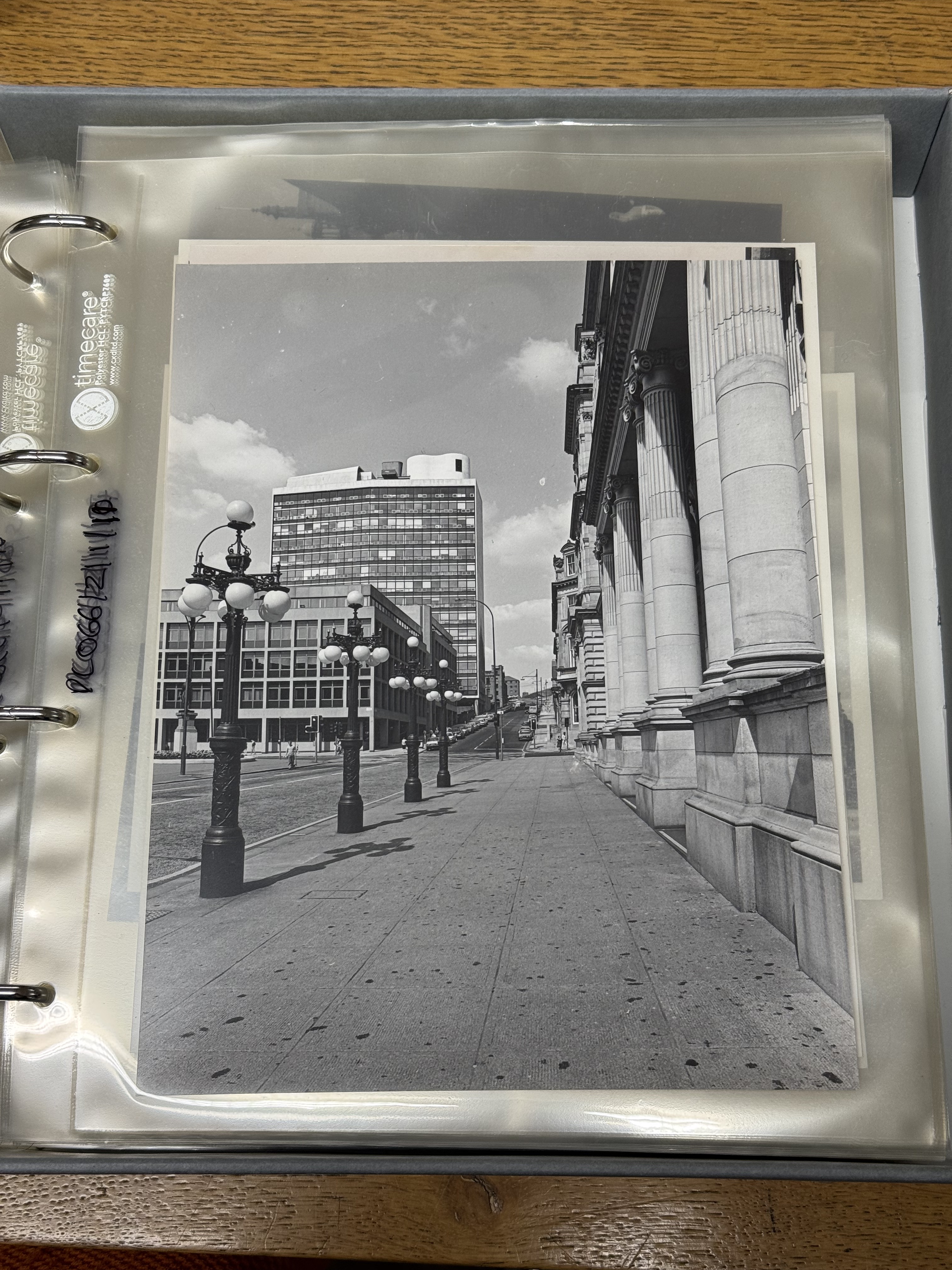
While in the archives, I had a chance to explore Robert Trotter’s work. The archives have the full collection of 300 pictures from his Sing the City collection, spanning Glasgow and New York. I focused mainly on the photography from Glasgow for the piece, and I will be in Glasgow at the Glasgow School of Art. Maybe if I do a version about New York, I can include his New York photography.
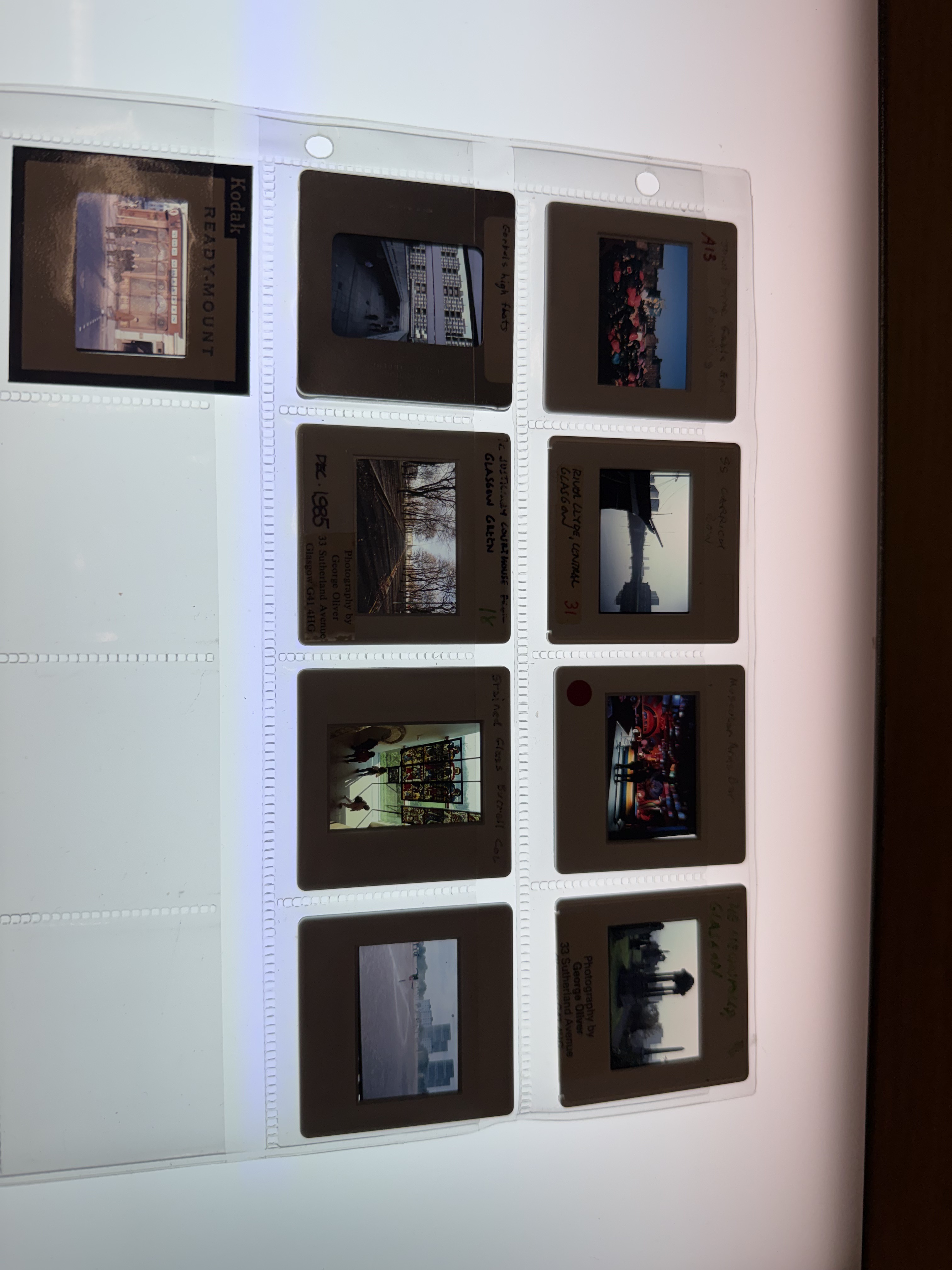
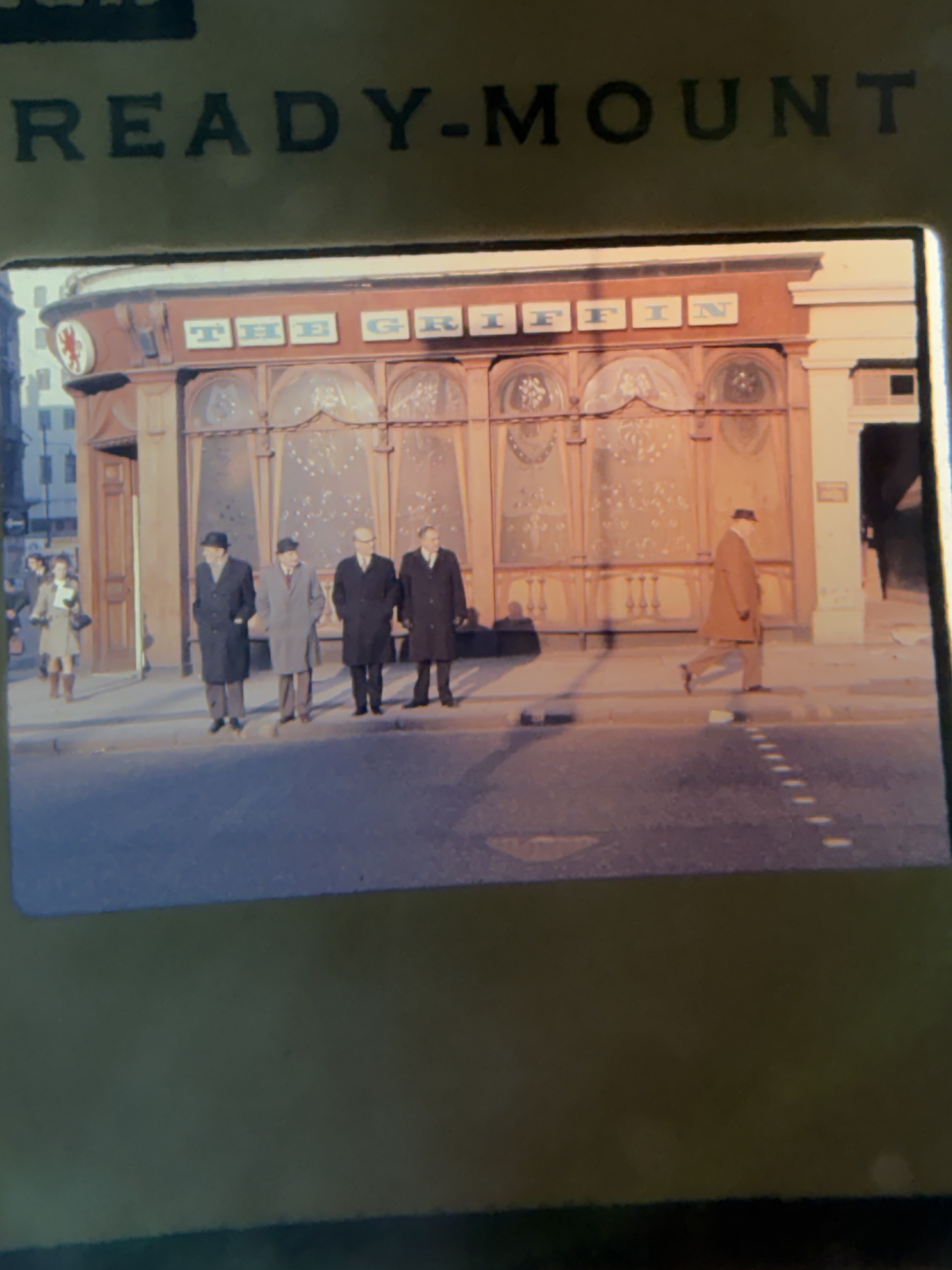
George Oliver Slides:
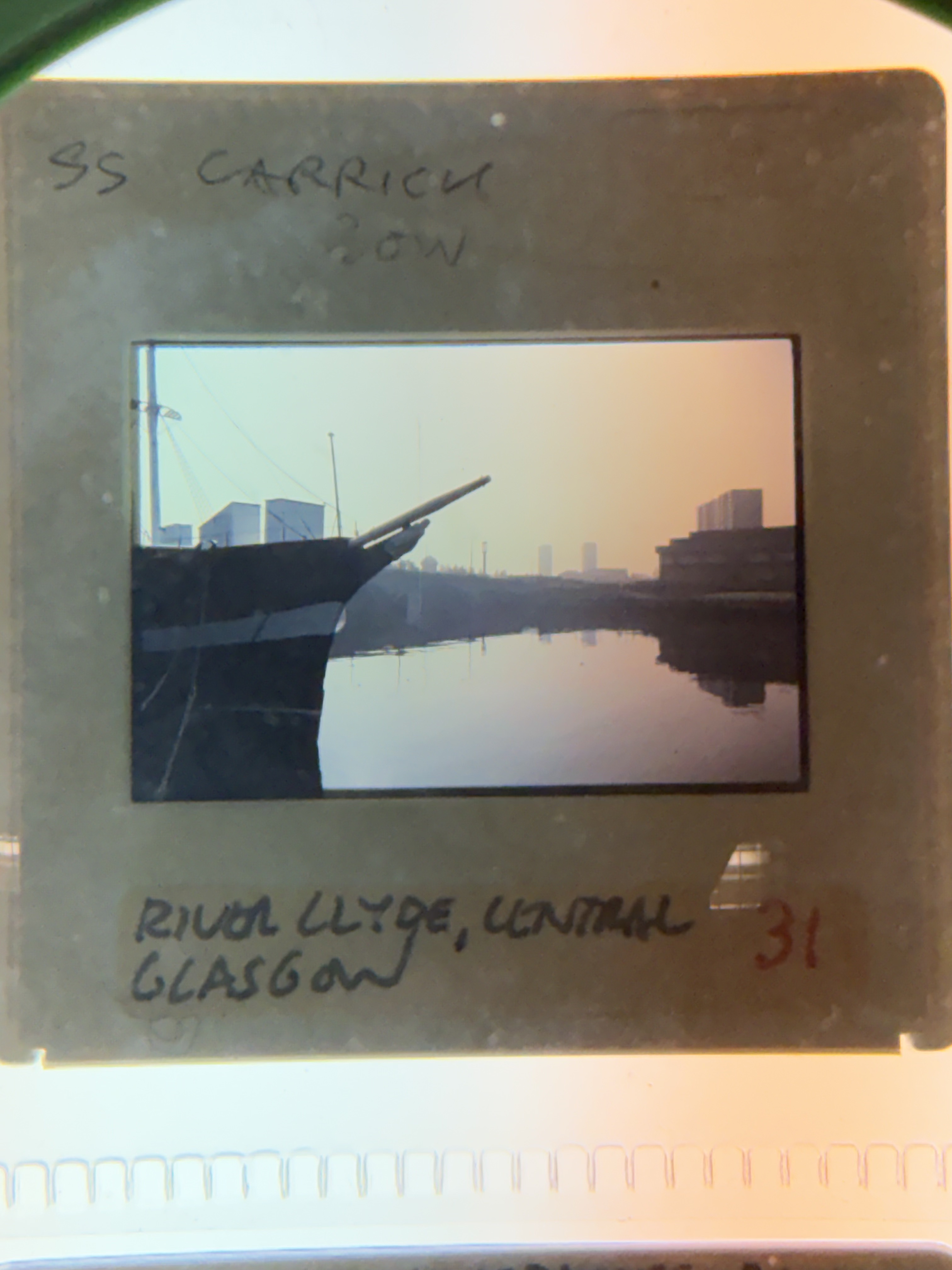
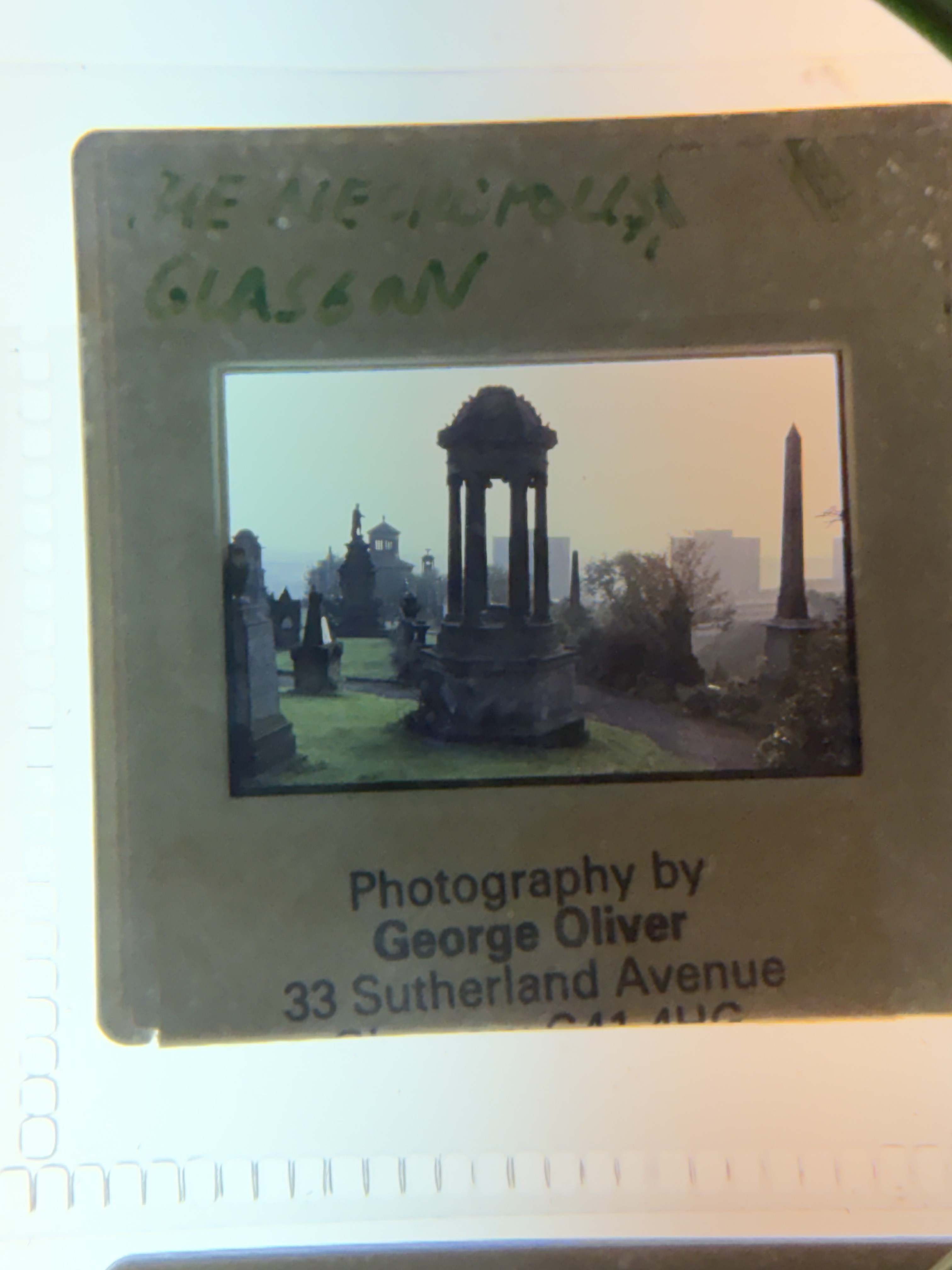
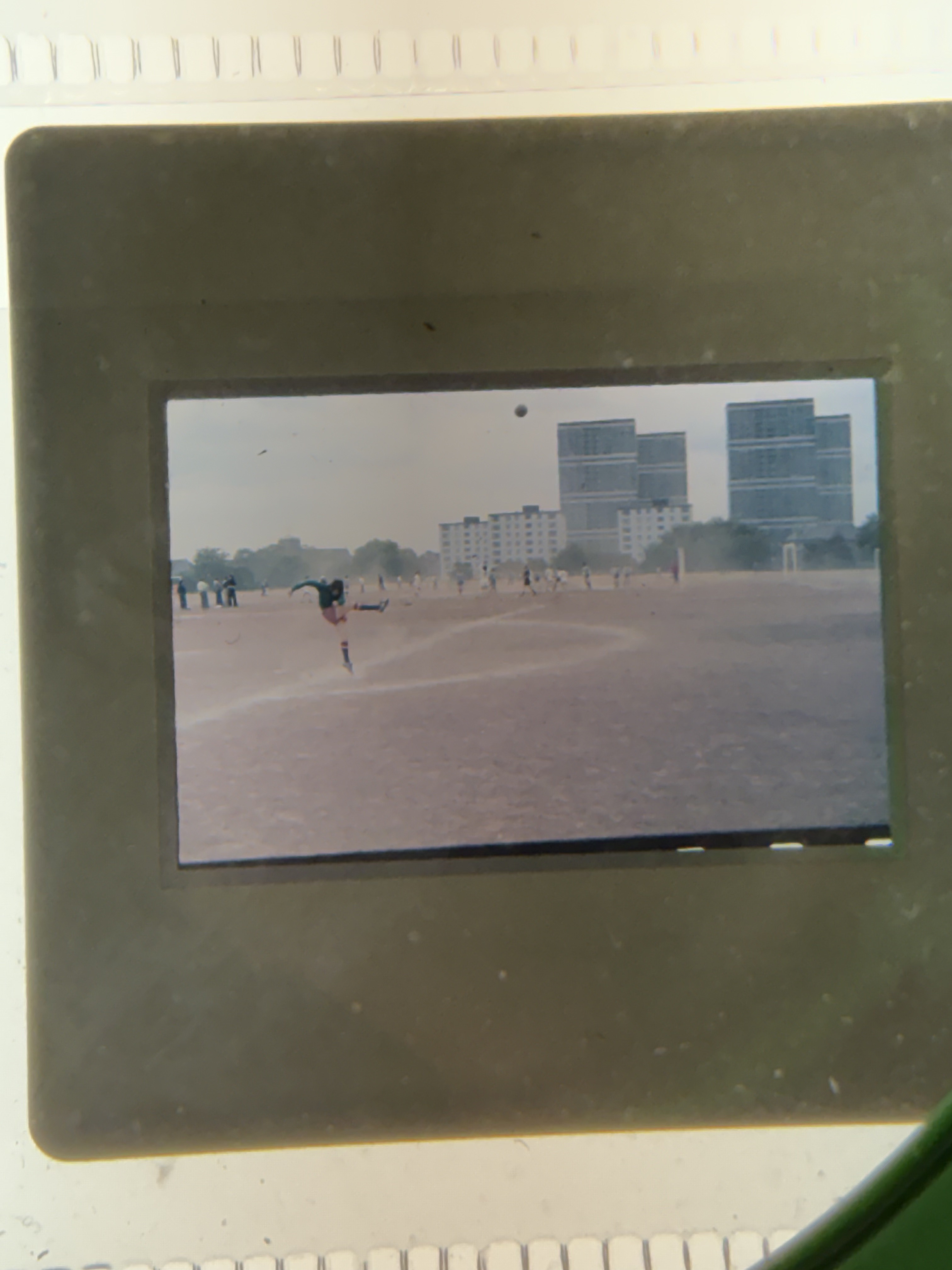
Oliver’s slides were so clean and detailed, and honestly felt like I was stepping back in time, but compared to Trotter’s, I missed that charm of Glasgow.
Shifting Focus:
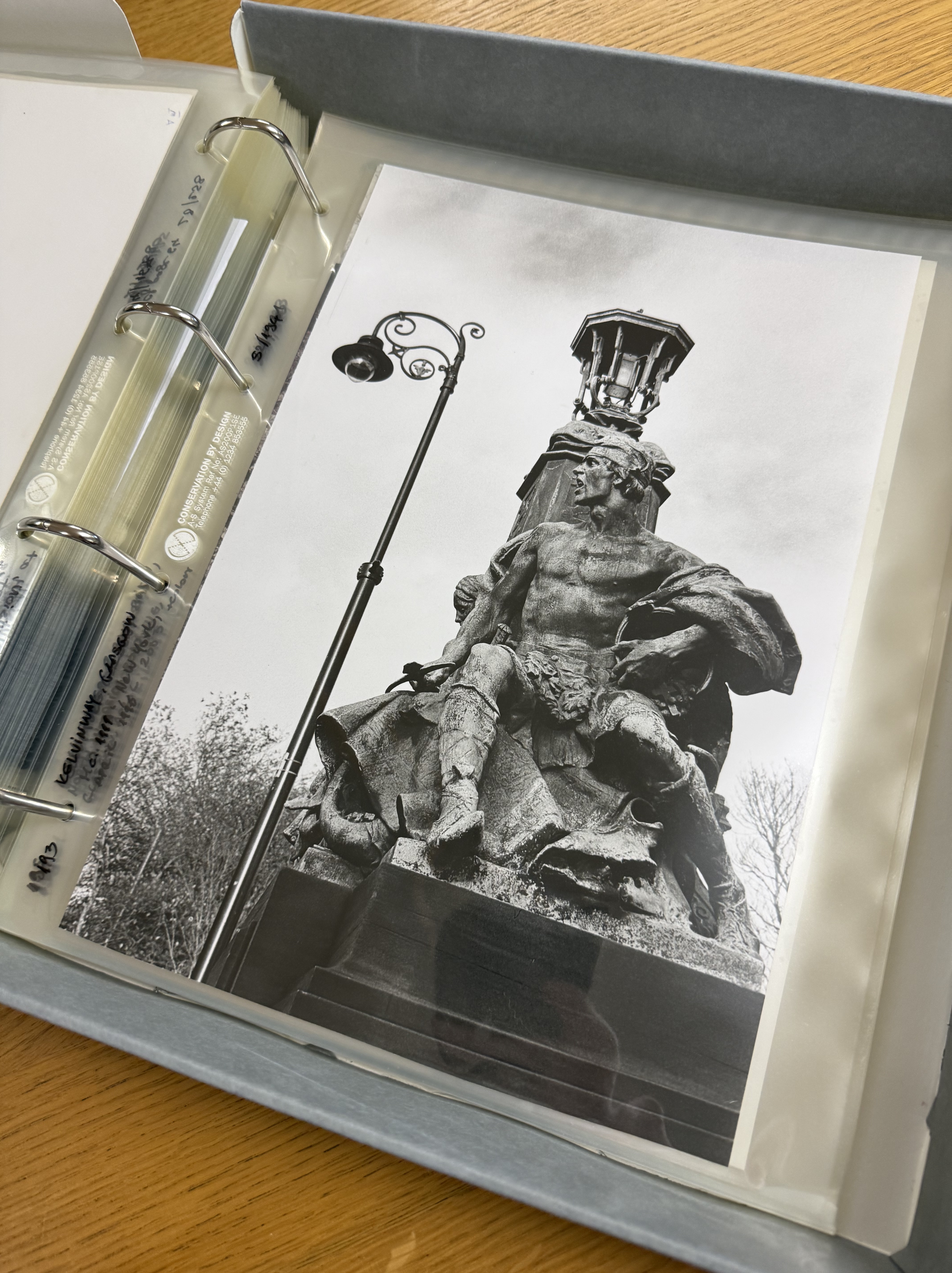
After diving deep into Robbert Trotter’s work, I fell in love with his street photography, which focuses on the people of Glasgow, and I want to shift the focus of my project to his work and highlight the characters of Glasgow.
Going back to the feedback I received during my formative assessment, I think this shift in project focus is also taking a step towards my strengths as a designer. I will design the piece around Robert Trotter’s Glasgow street photography at its core and use my strengths as a designer to bring Trotter’s work to life, elevating a normal photography exhibition.
Still inspired by the projection display in SEEP and the dynamic spotlight explorations I’ve done before, I want to take this further.
Reflection – 8th May 2026:
Before handing in, I want to look back at the whole project and reflect on each step of the process now with the hindsight that I have at the hand in date:
I can see the real turning point in the project at this stage, with the visit to the Reid basement making the WIP a real event in my mind and lighting a fire to get some solid work done and make definitive decisions.
Also, my visit to the Archives and my first time looking through Robert Trotter’s work really solidified that I wanted to focus on his work and shift the project’s existing decisions and framework around his photography.
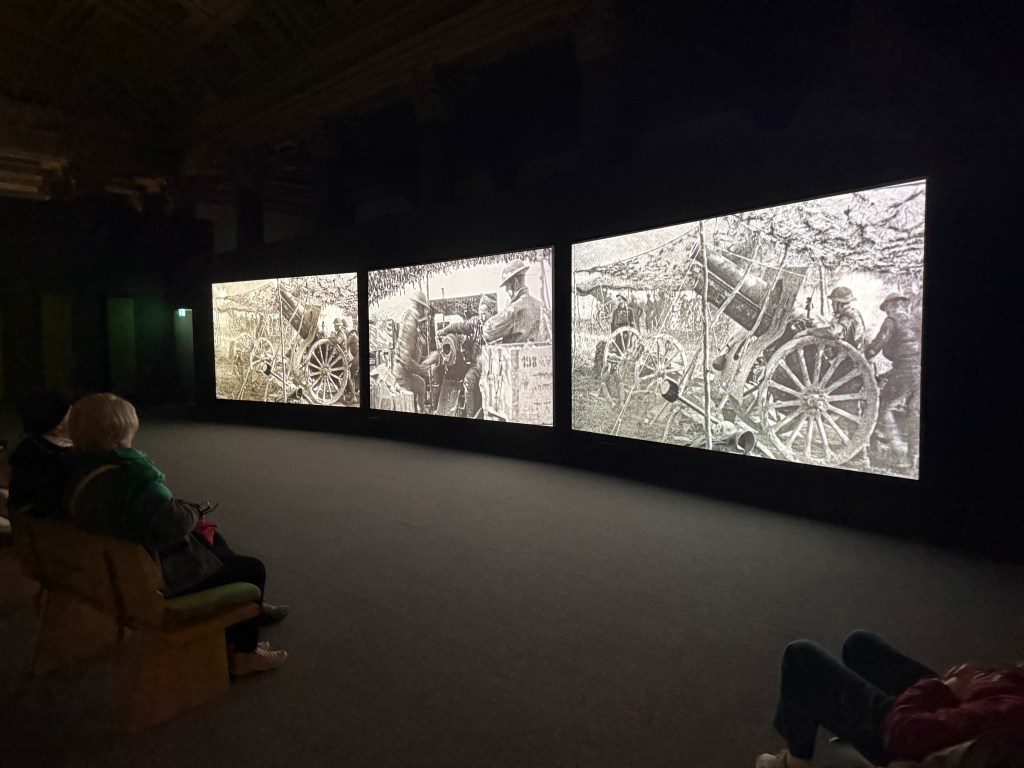
I didn’t get the pleasure of watching all of ‘Mimesis- African Soldier’ due to time constraints. Still, my IxD hat was one, and what I couldn’t stop thinking about was the use of three large projectors, each playing a different film that intertwined to make something bigger. Screen 1 would be referring to footage on screen 3, as screen 2 provides more context or shows an abstract recreation of a young African soldier walking through the jungle.
The dance of the 3 different screens that sometimes had Q&A, other times they followed one another or sometimes visually harmonised, I’d love the opportunity to bring some of this into my own work.
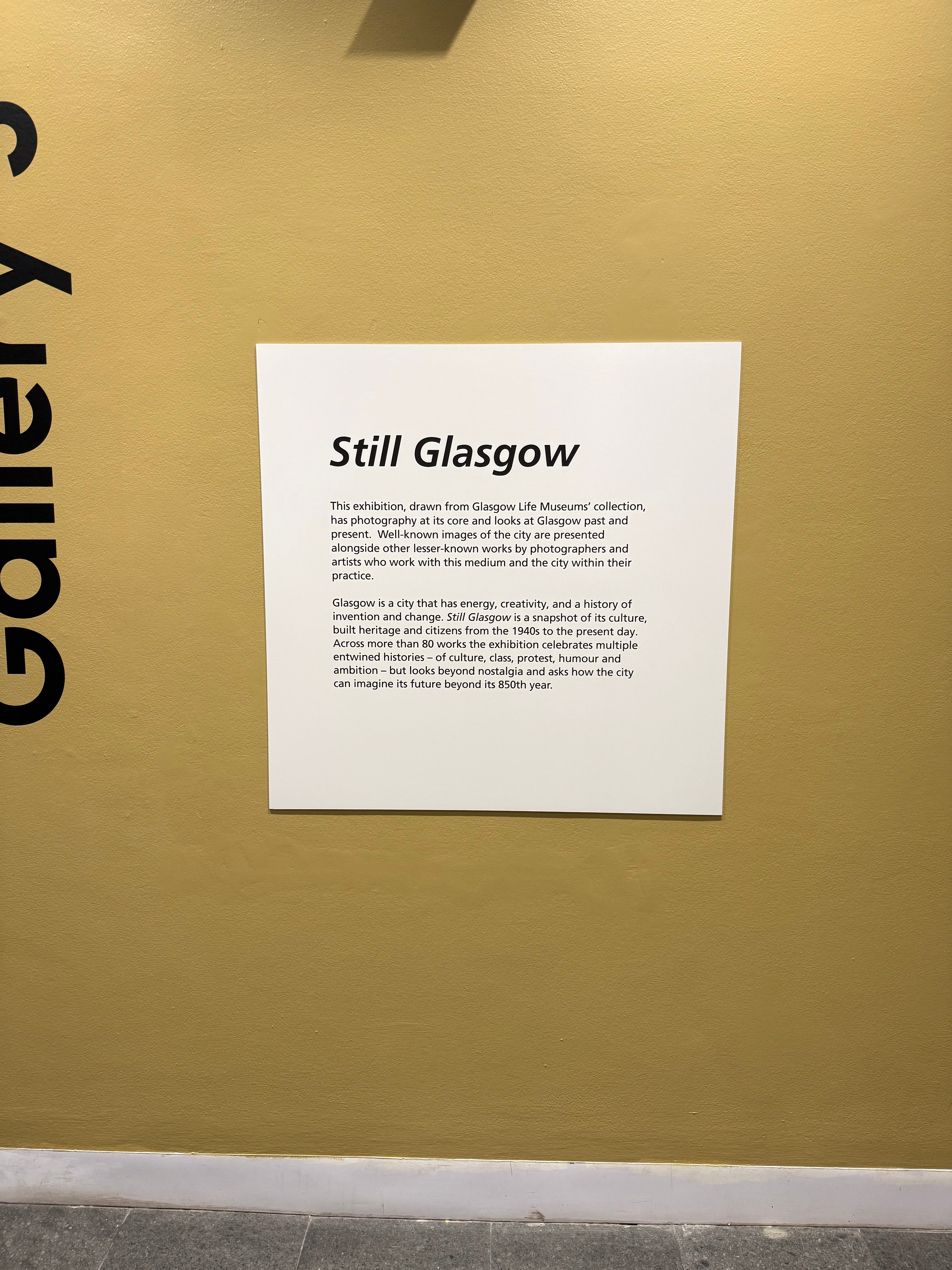
Still Glasgow:
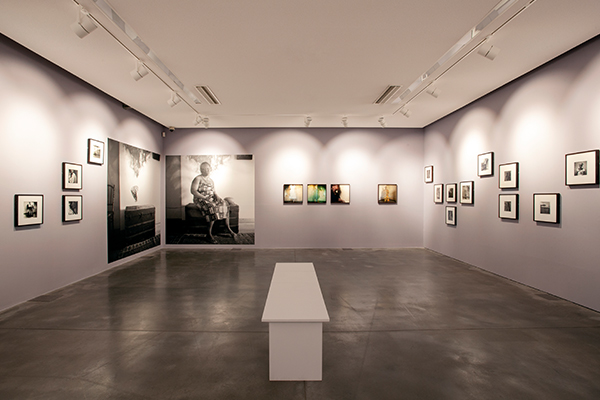
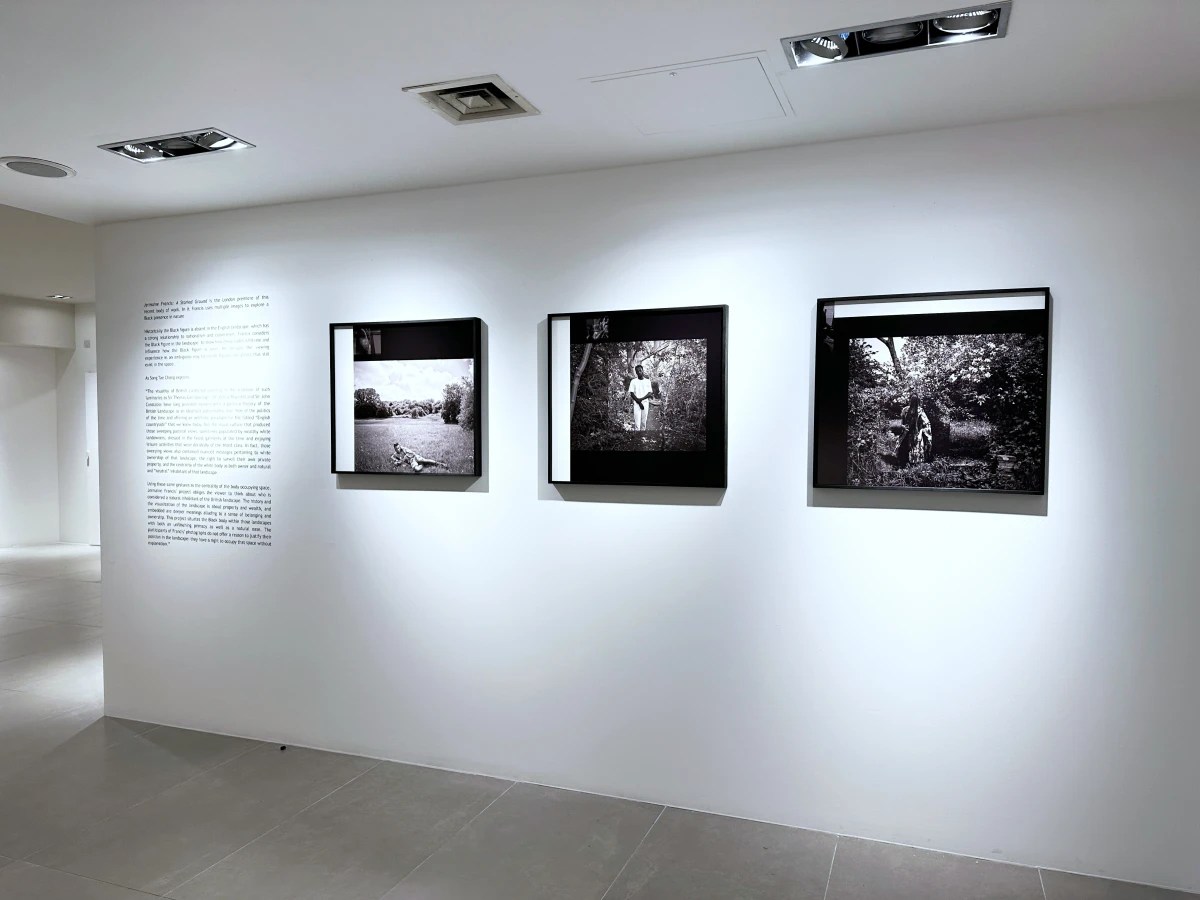
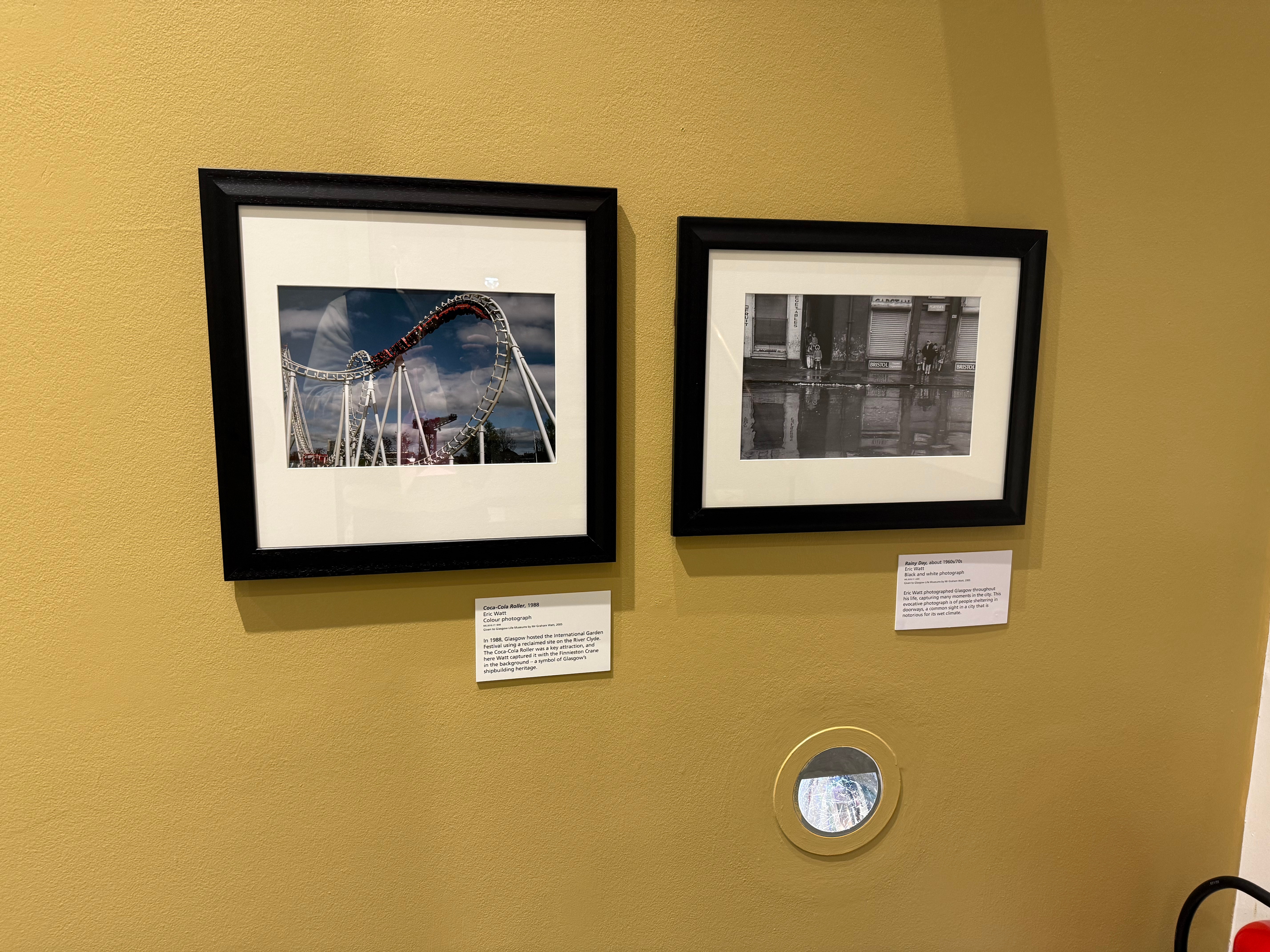
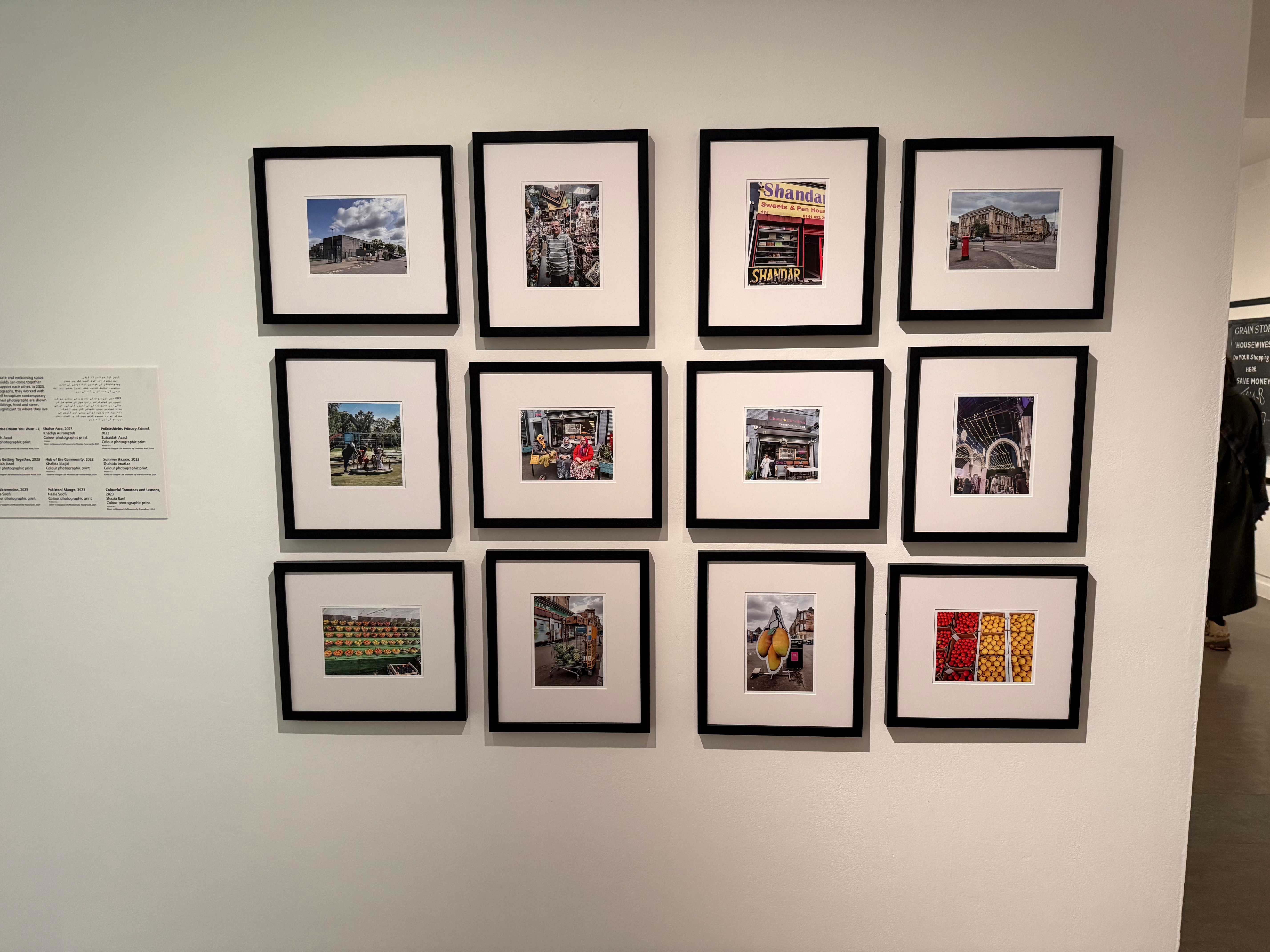
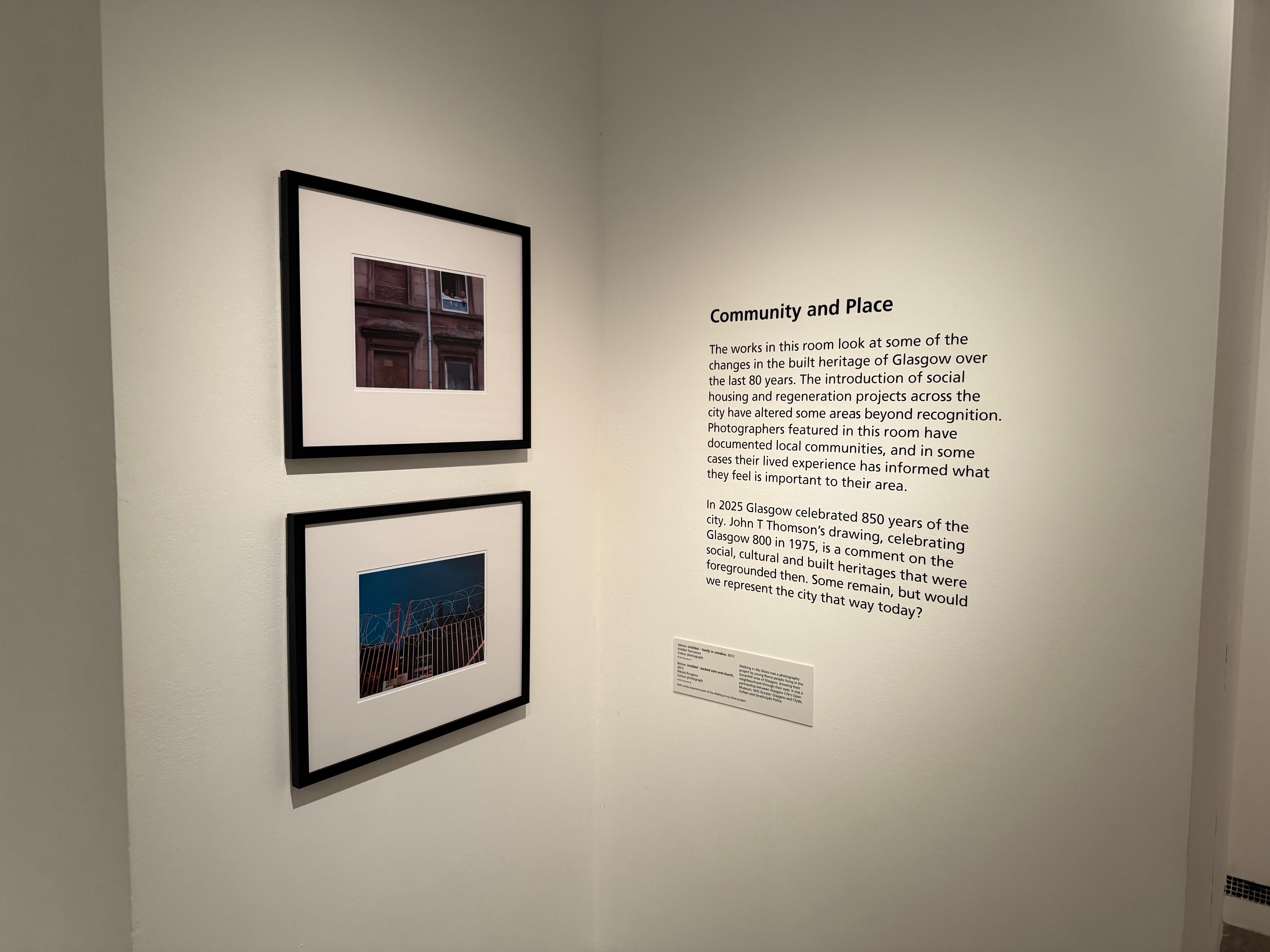
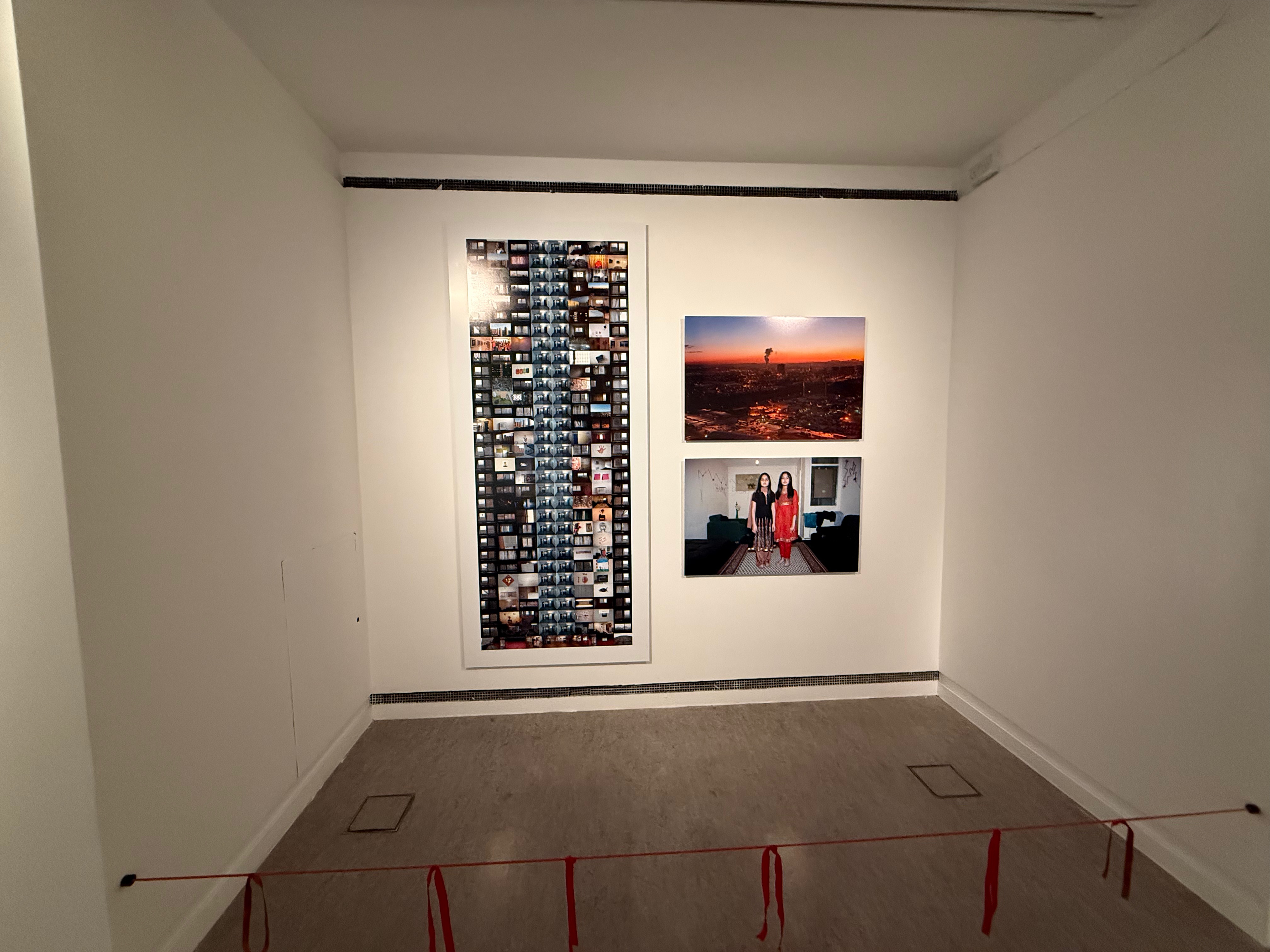
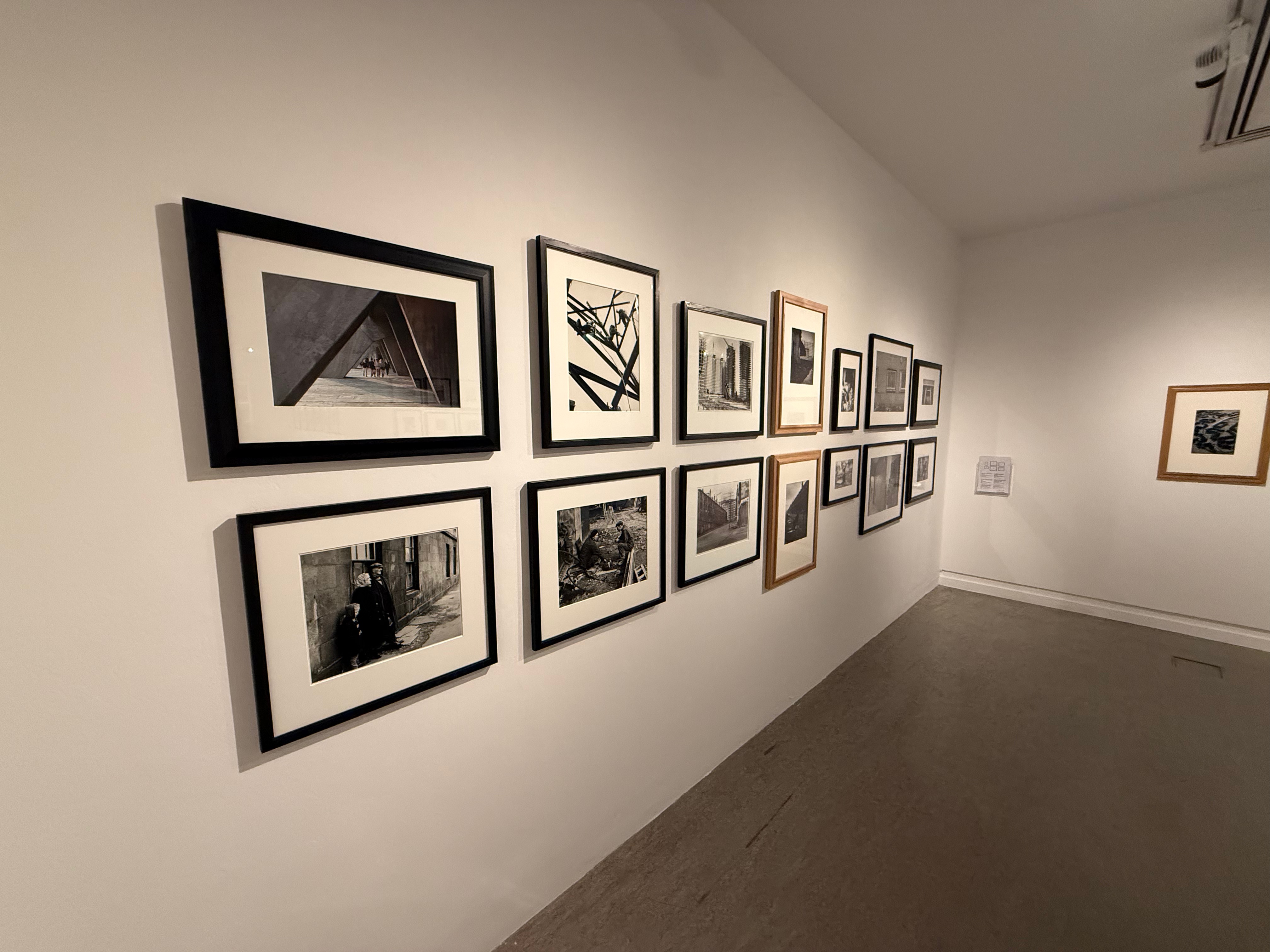
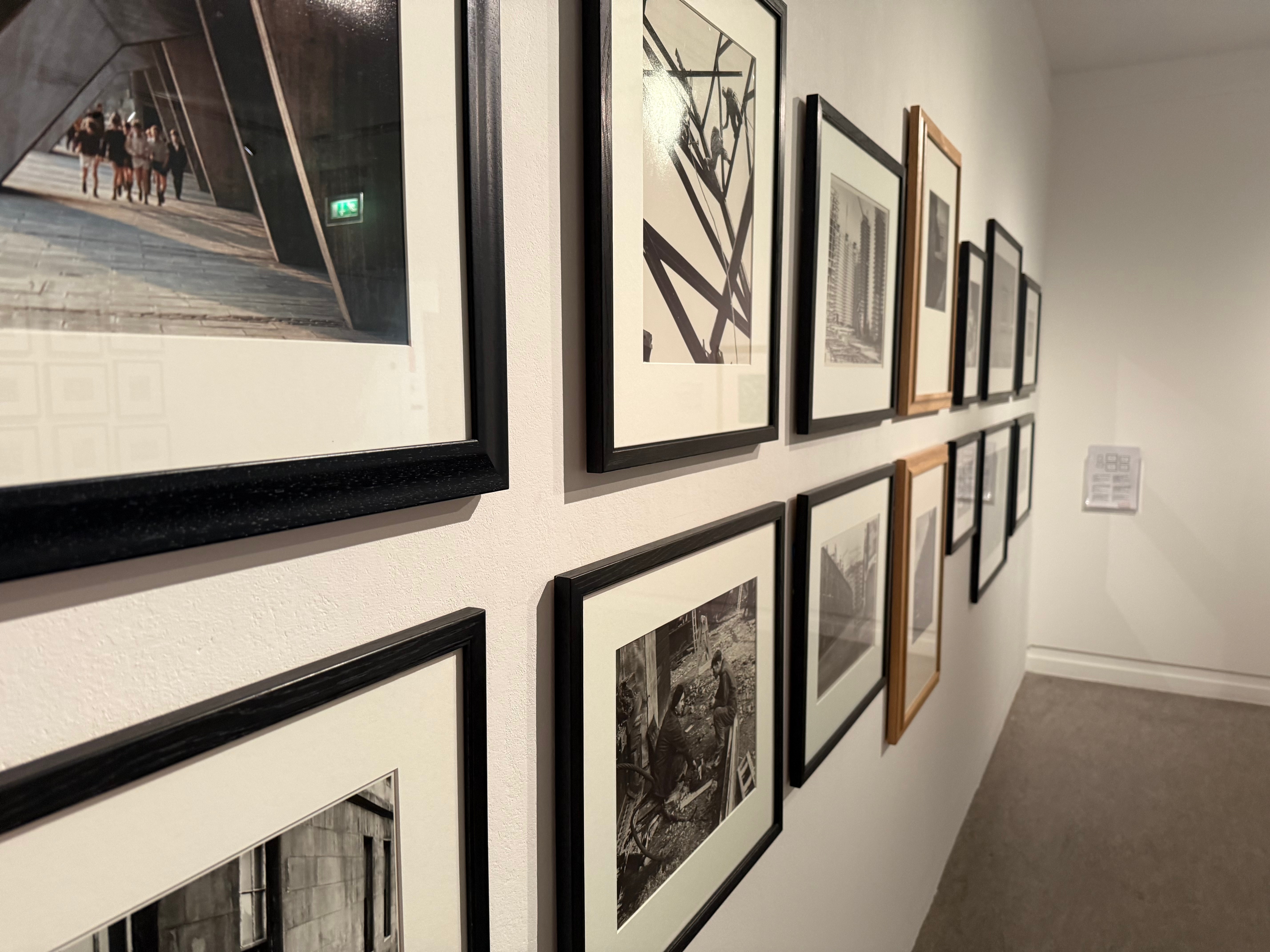
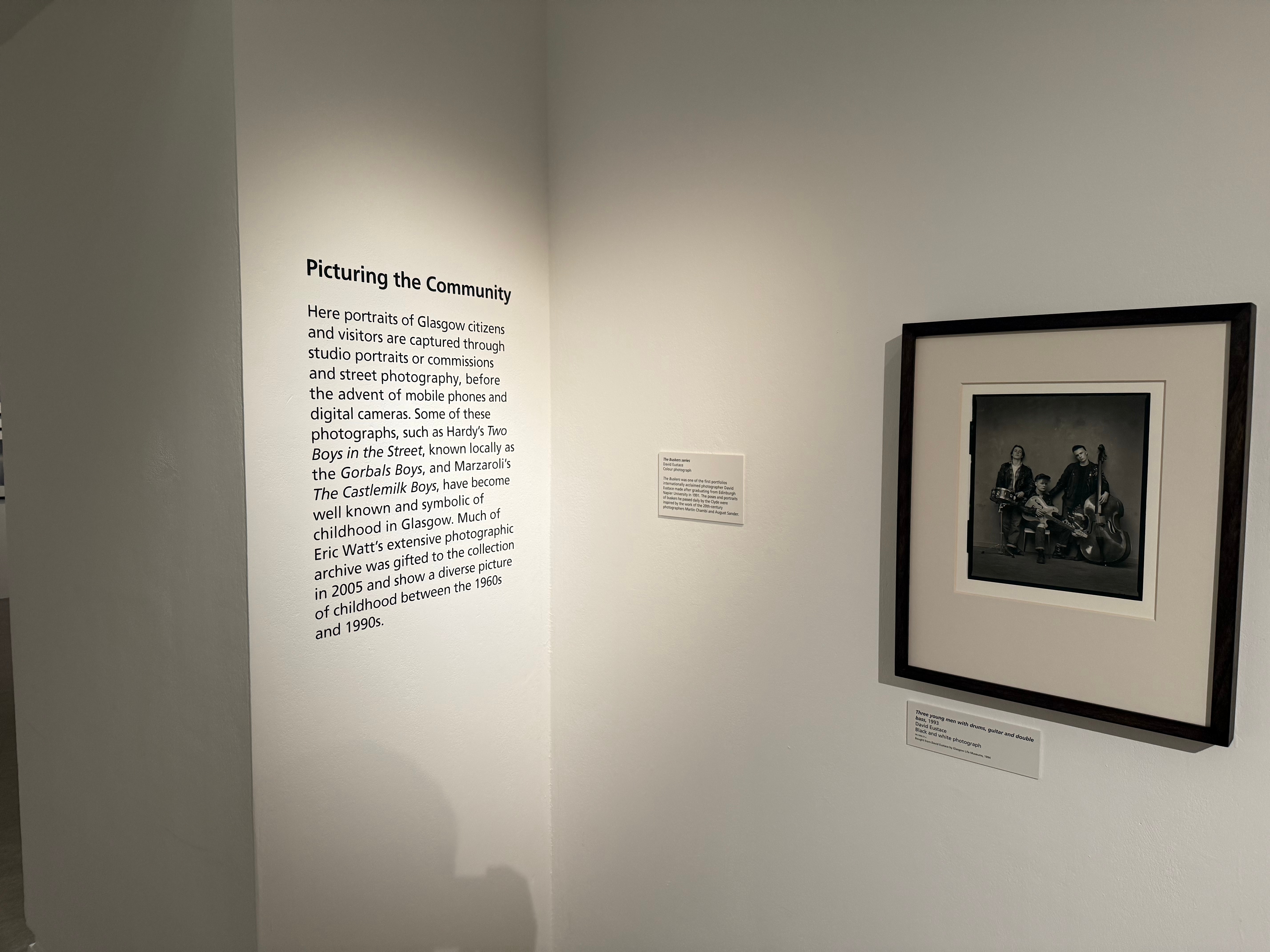
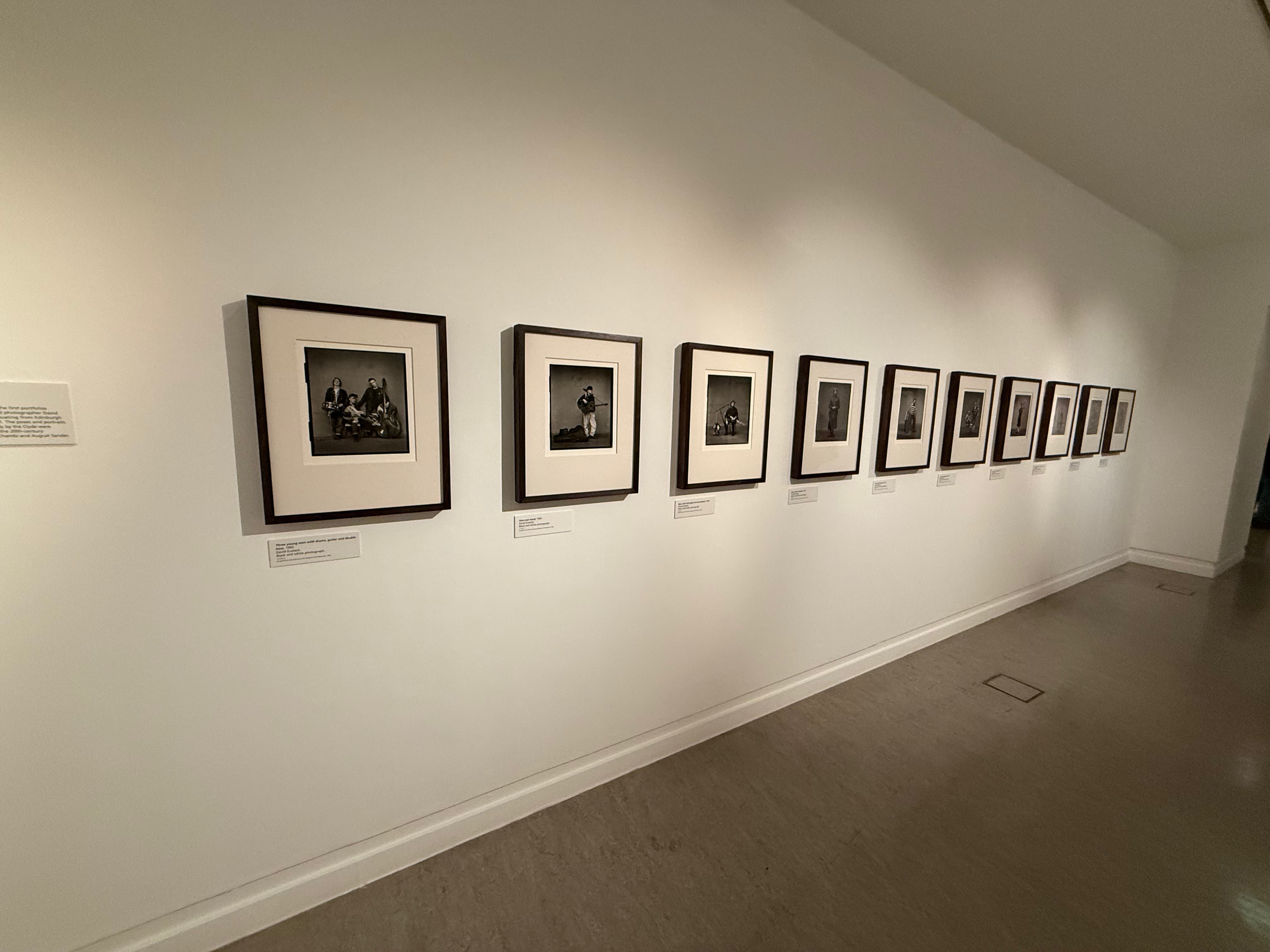
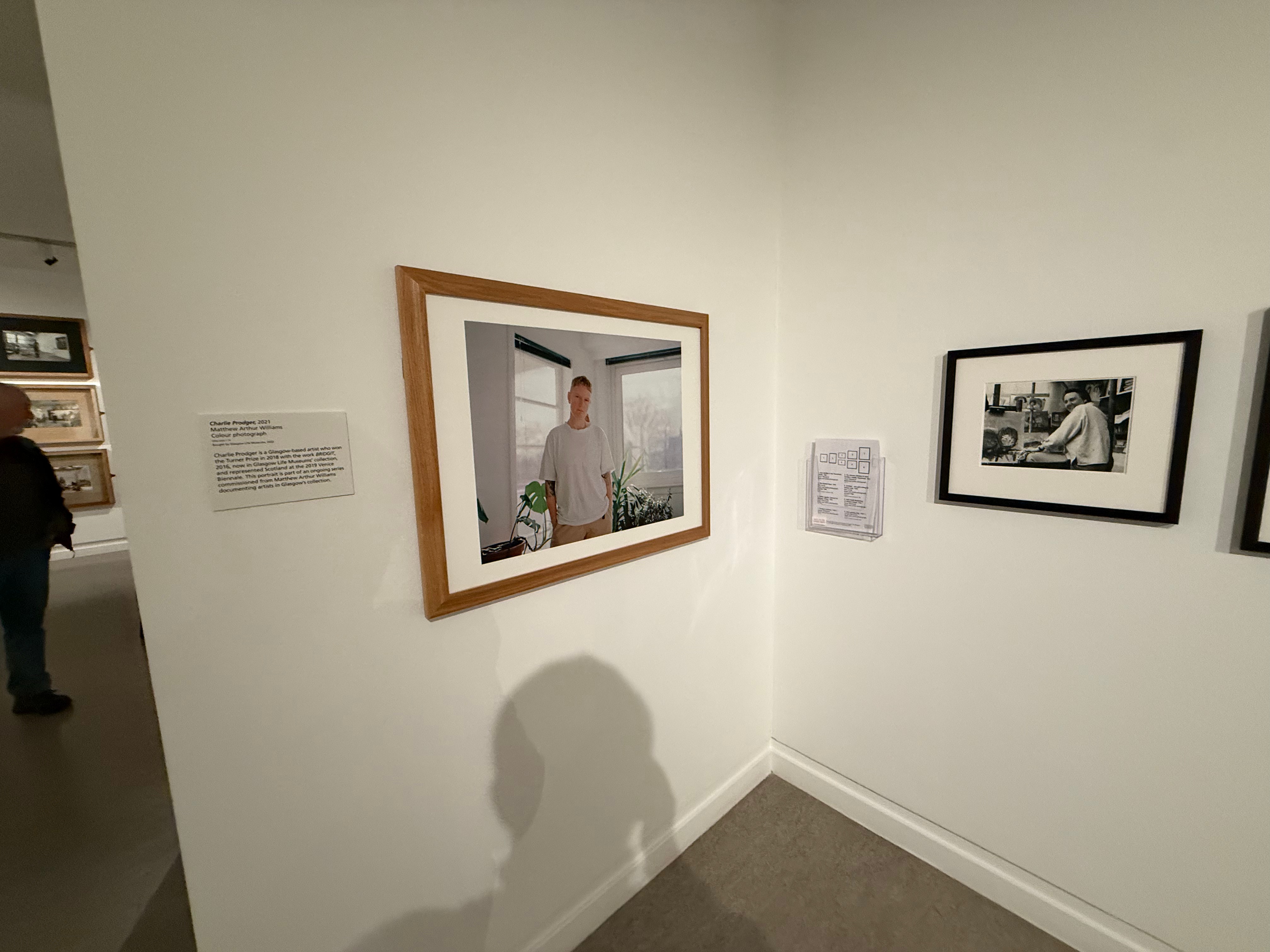
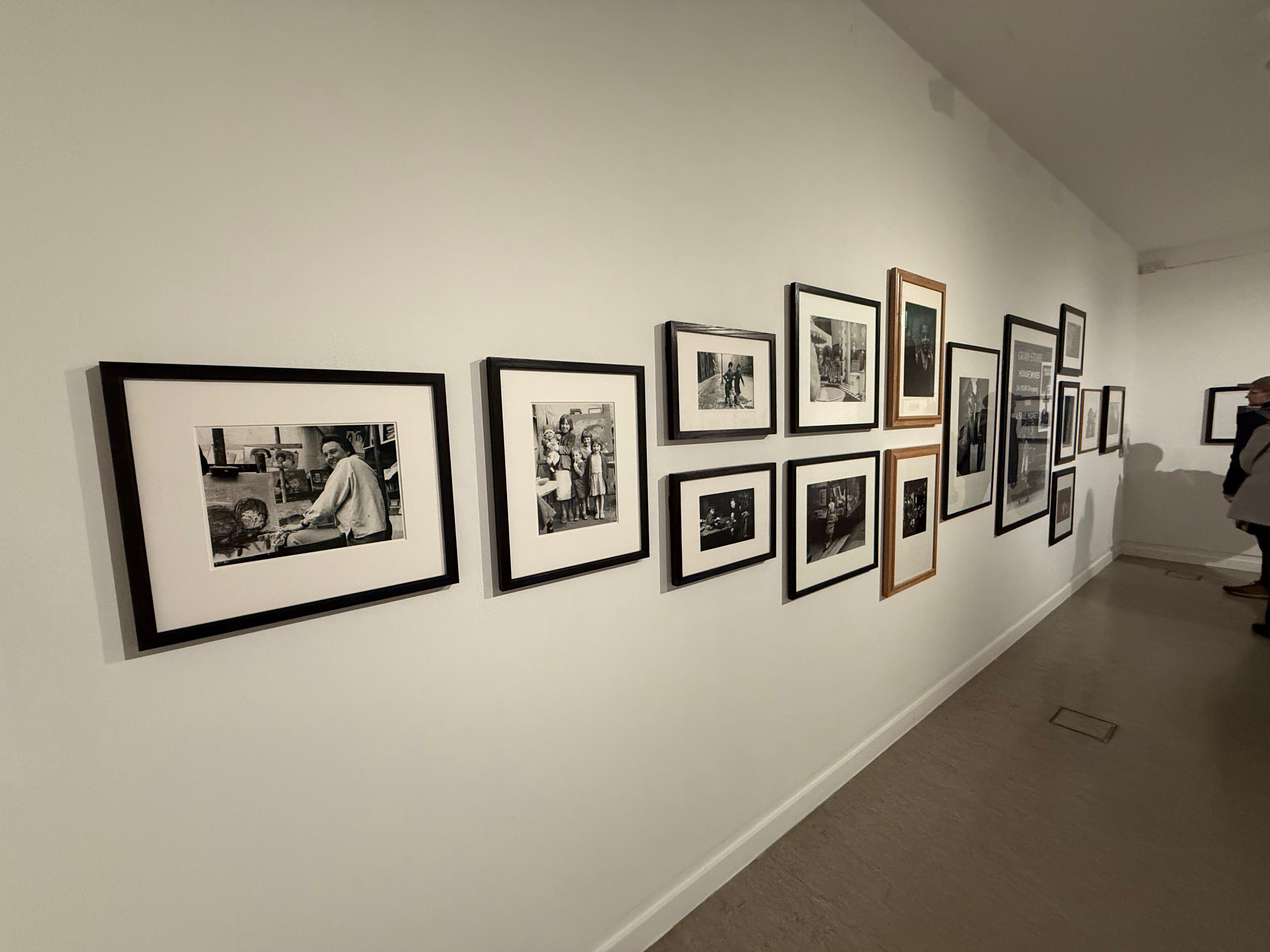
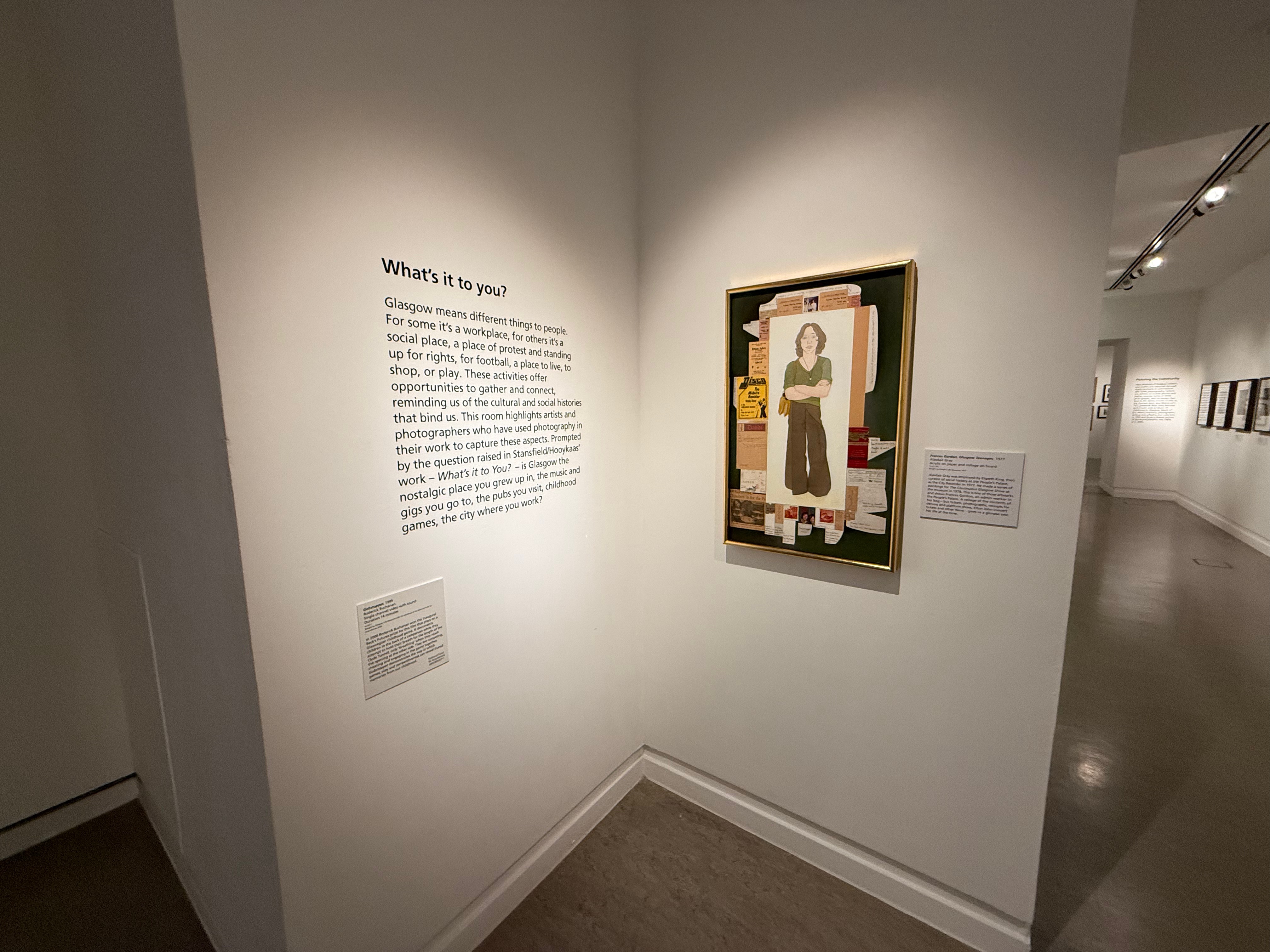
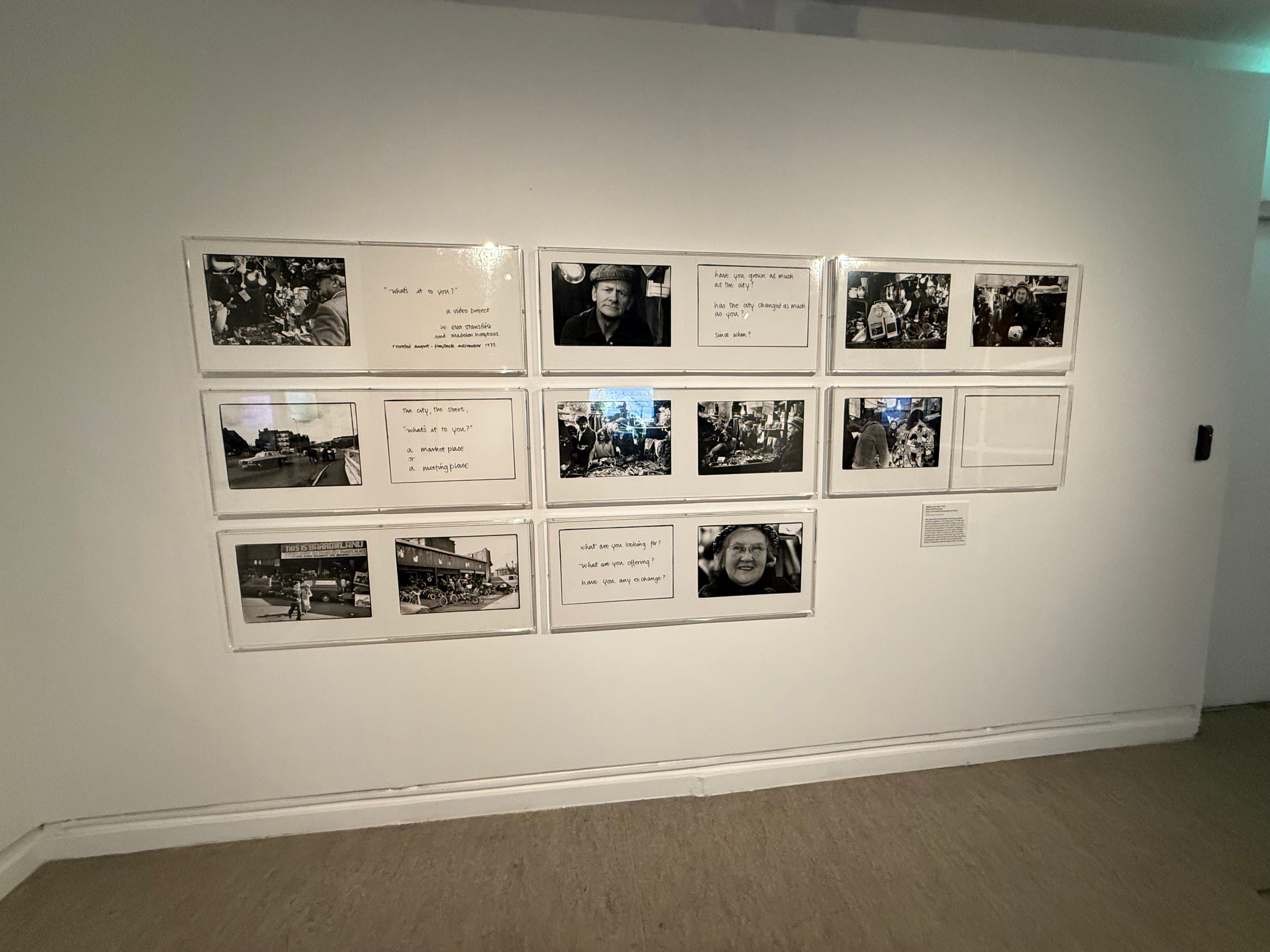
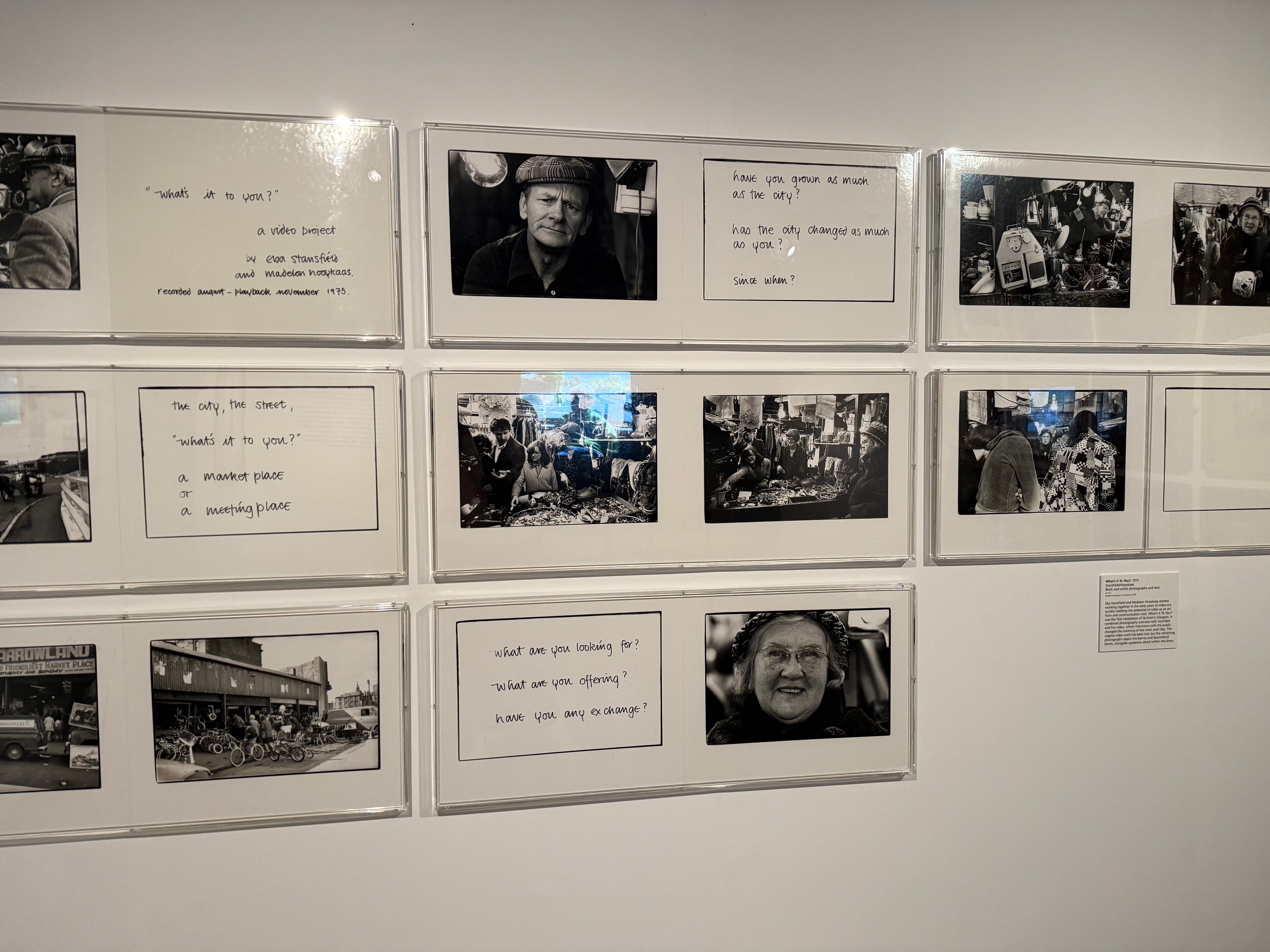
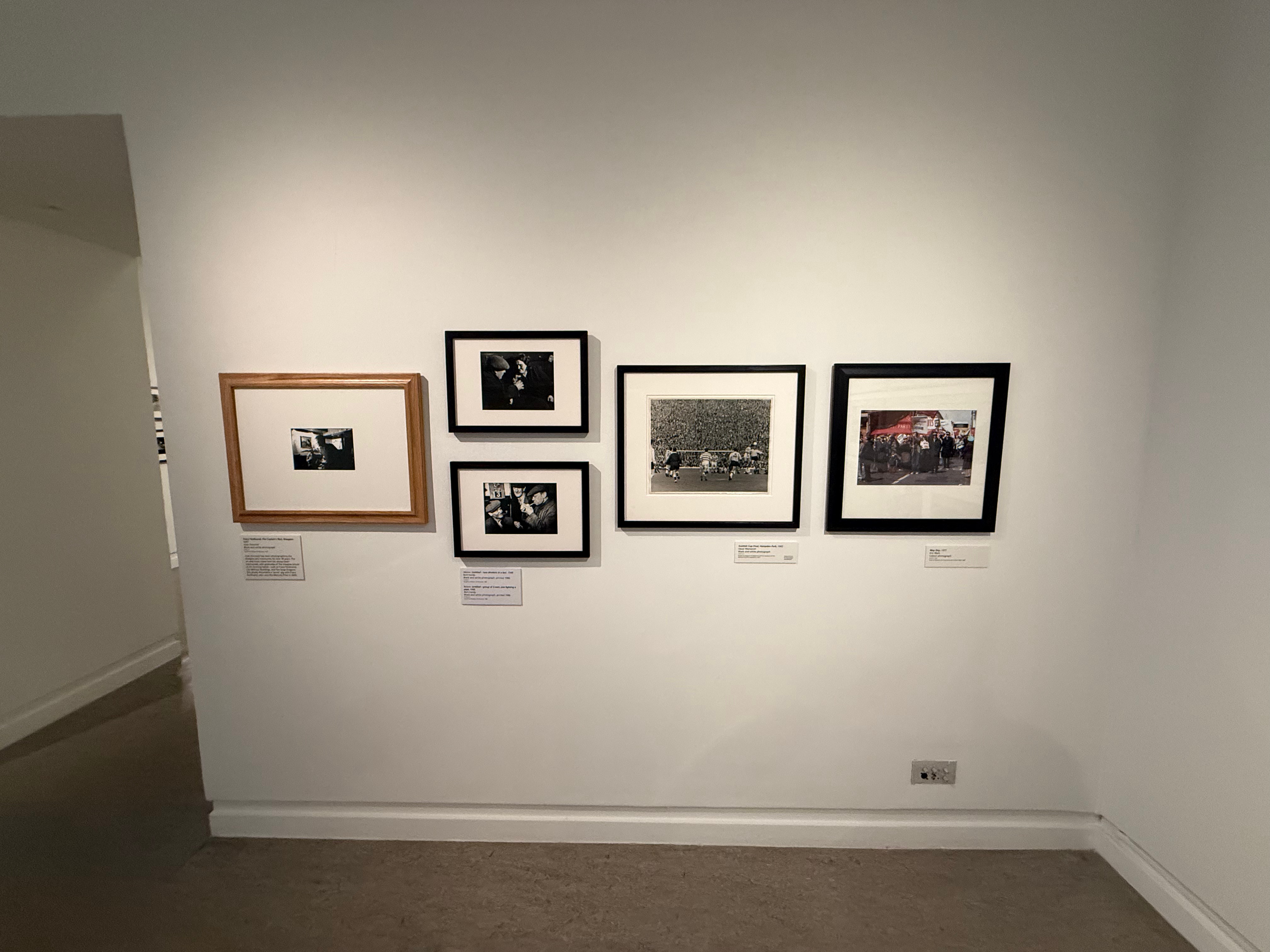
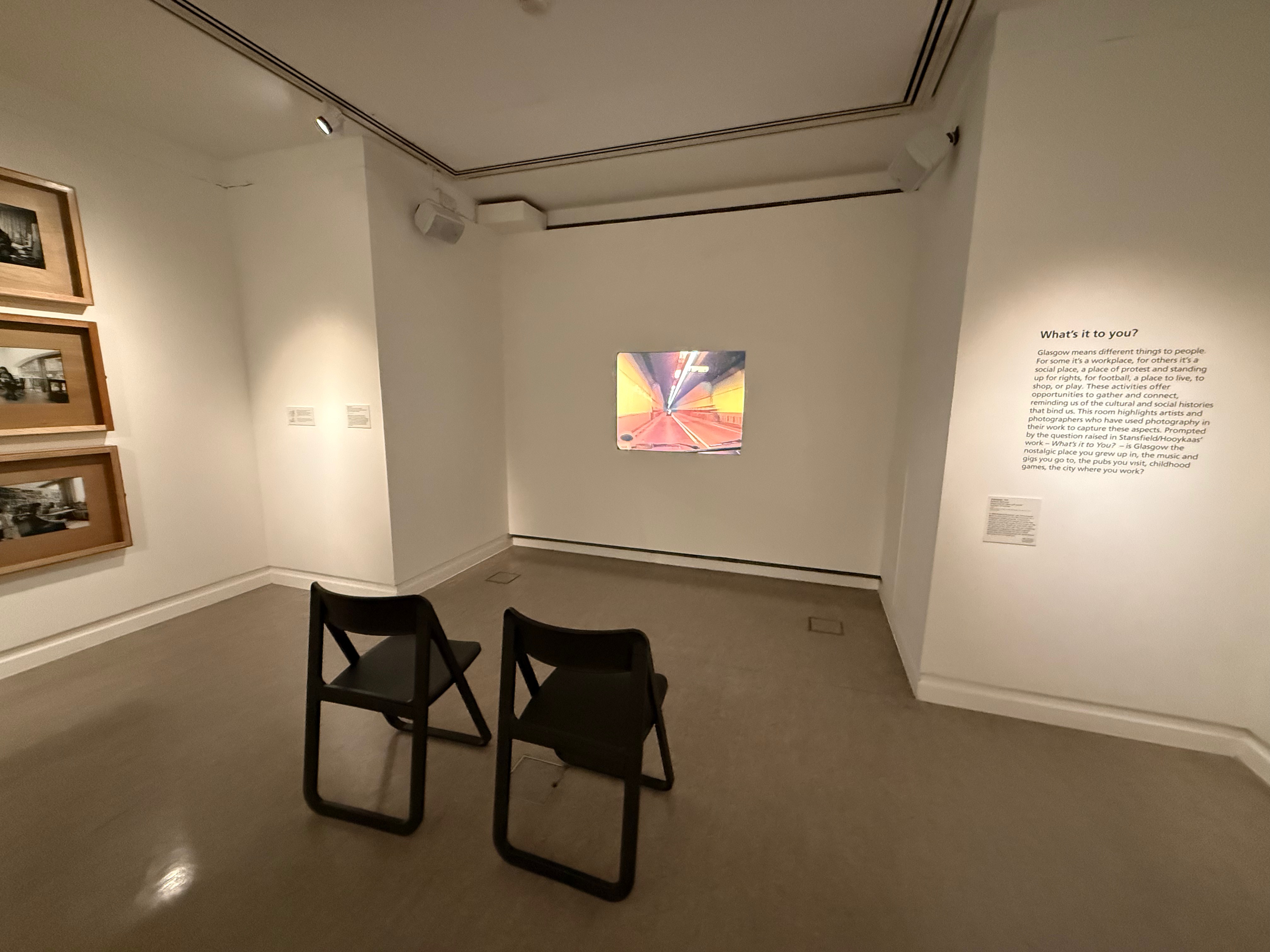
The photography exhibition Still Glasgow featured works by several artists from different time periods in Glasgow’s modern history. I mainly wanted to see this exhibition to understand how a traditional photography exhibition is presented to the general public.
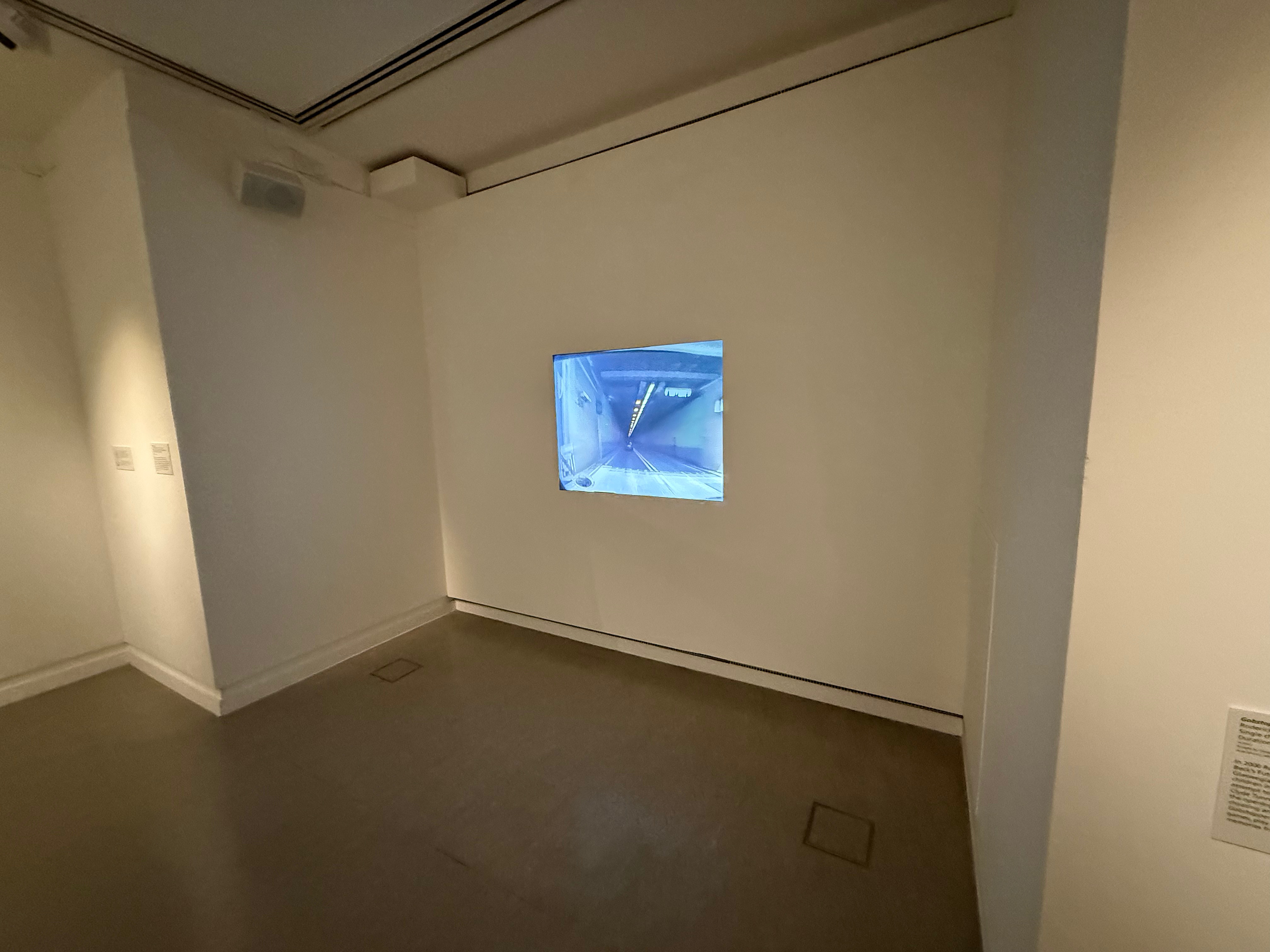
My personal takeaway from this exhibition was that it was a collection of photographs, but there was not enough space for each to ‘speak’. The one piece I did feel connected to was the video of children holding their breath going through the Clyde tunnel, which was given space and focus, a fake wall presenting the screen flush like the rest of the photography, but given an indent in the room to stand alone.
I thought I also had this, and while observing others, I considered the distance from the viewer and the art on the walls; some seemed to keep their distance, while others wanted to interrogate the details of others’. I’ll need to keep this in mind when considering how people will view my work.
Also, something I didn’t consider was the framing of the photography. If I plan to use projectors, the frames will need to be considered, along with the glass within those frames and the reflections… I might not use frames or frames with no glass.
Glasgow Kiss- 25 Years of Art:
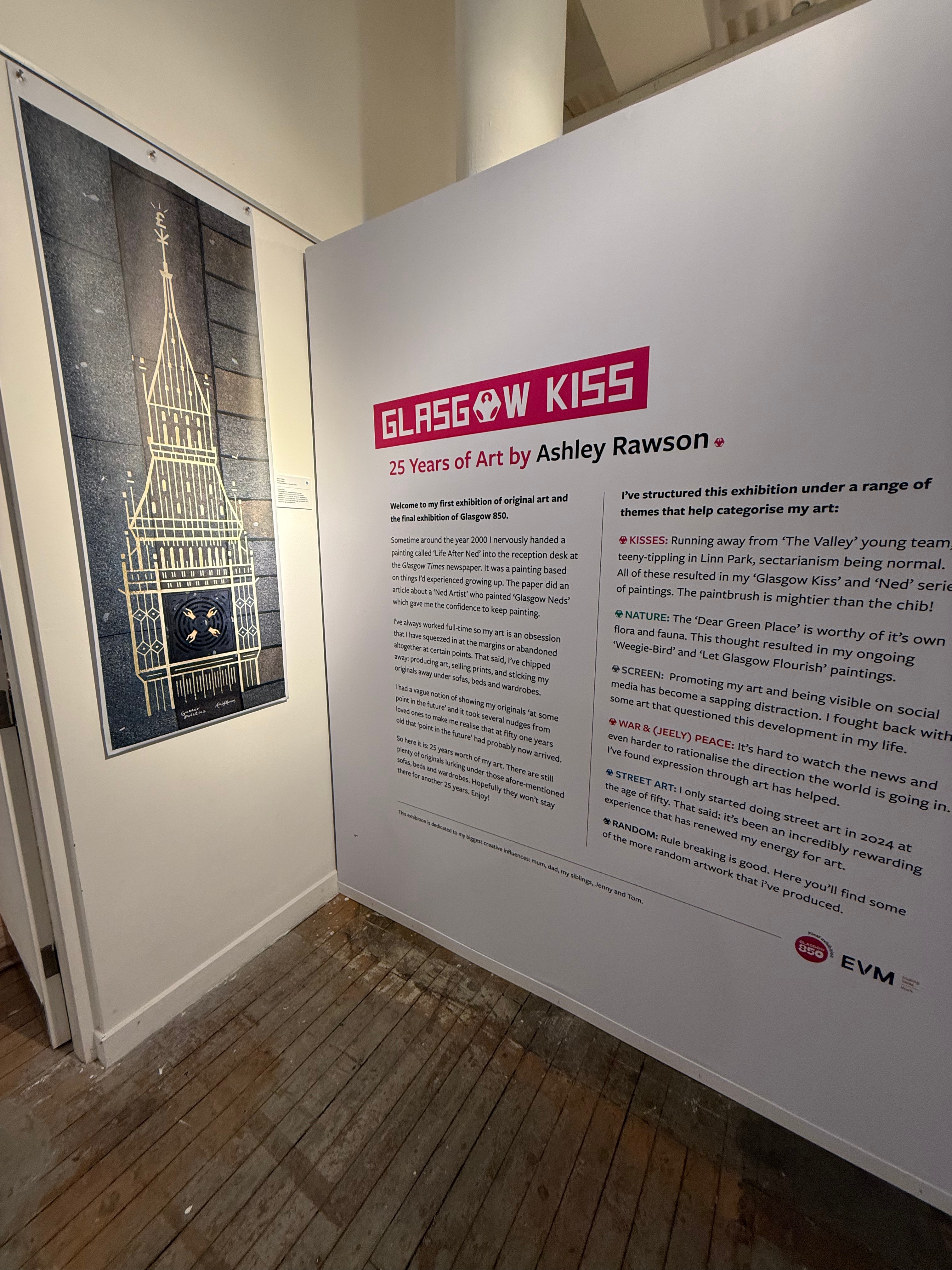
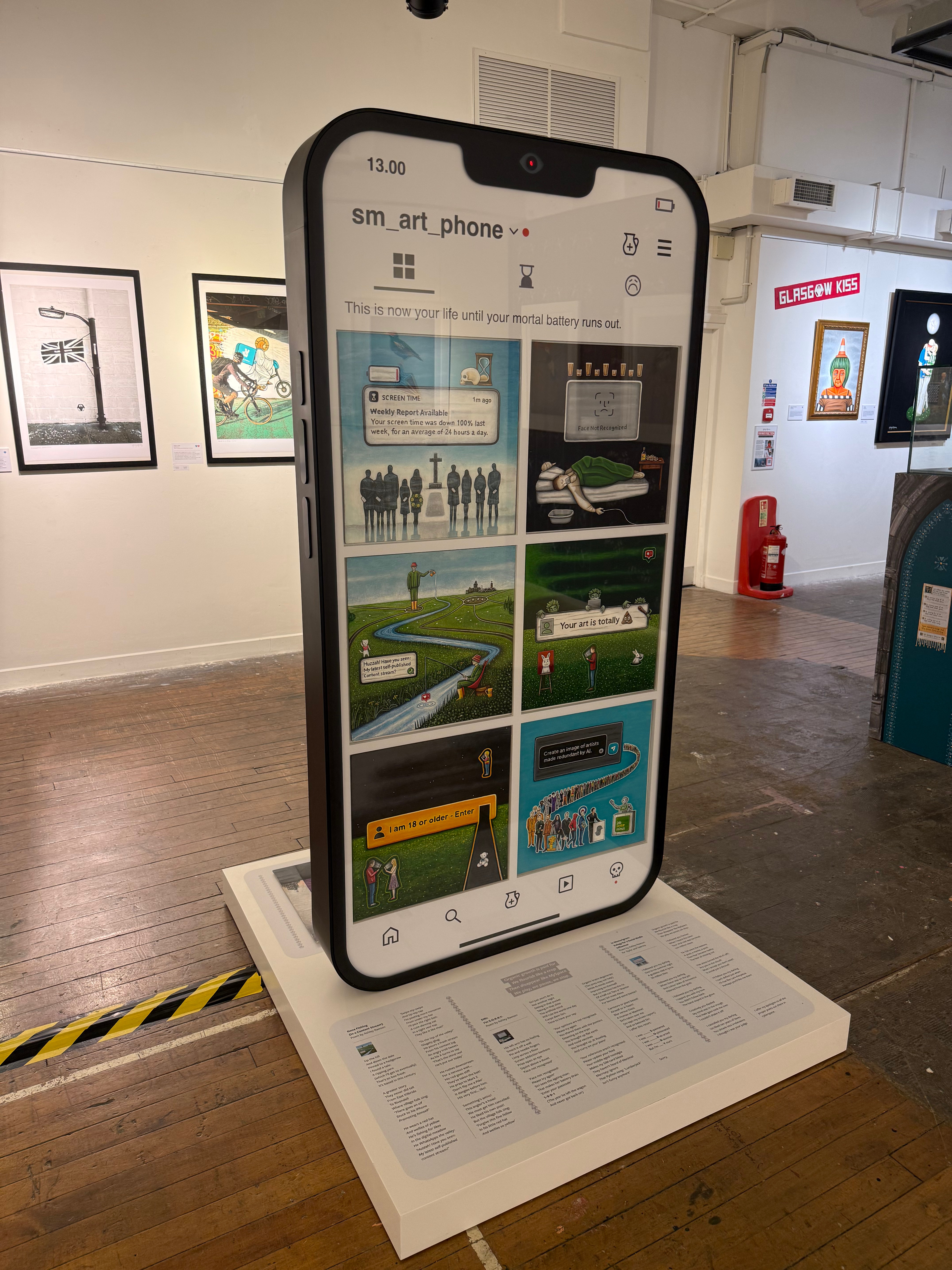
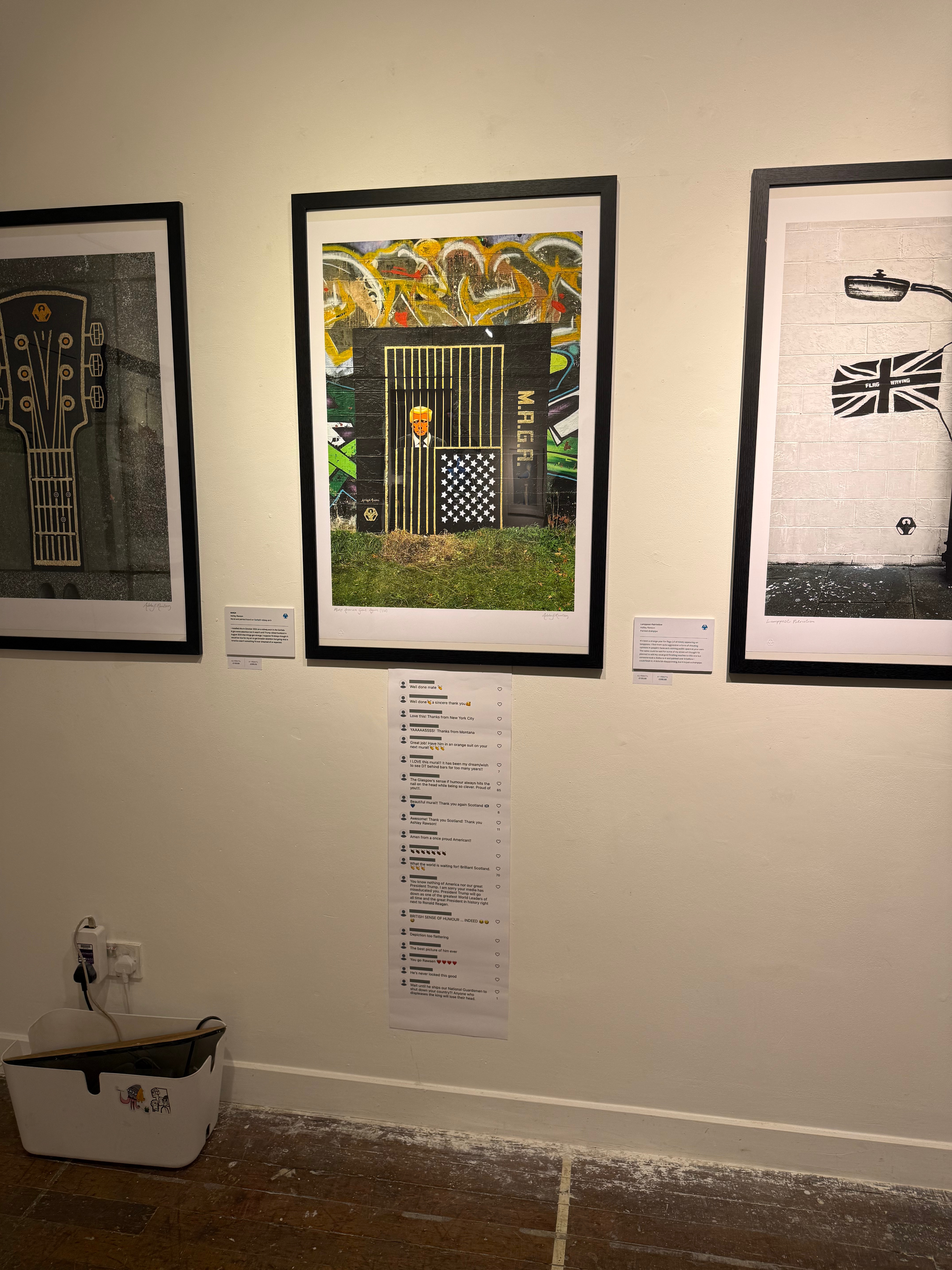
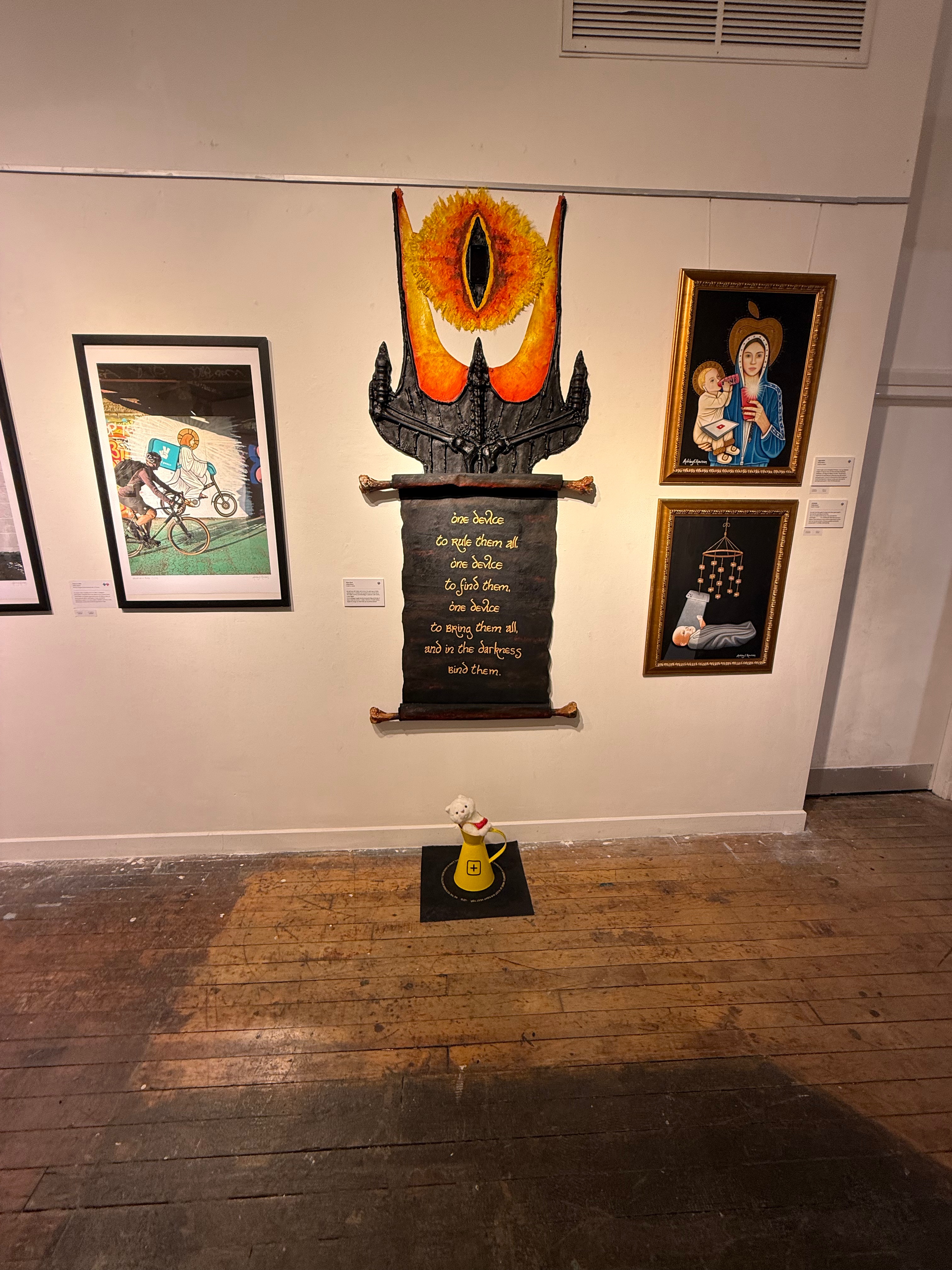
I didn’t plan on seeing Glasgow Kiss, but while I was Christmas shopping, I happened across it. I loved the humour, the attitude, how game it is.
How this exhibition informs my own is that it’s not trapped within the frames that it uses for some of the work; some of the work wouldn’t fit in a frame, or maybe doesn’t need one. My own piece won’t be similar to this, but I want to bring a small sense of its fun and adventure into my own.
By finding the line between ‘Still Glasgow’ and ‘Glasgow Kiss’, using technology and my own vision, it might hit the target I’m aiming for: sparking something within people and asking them to really look at the work.
Reflection – 8th May 2026:
Before handing in, I want to look back at the whole project and reflect on each step of the process now with the hindsight that I have at the hand in date:
Looking at other exhibitions and the pieces within them gave me a better idea of how I would elevate my work to gallery-standard, professional quality.
With hindsight and knowing where I ended up, I should have spent the time looking more into museum exhibitions and interactive displays. I did this throughout the project, but I like to think that it might have been more beneficial earlier on in the process.
At the end of last week, I spent some time working on the design aspects of the project within my new framing: more abstract, less like a real exhibition in a museum, and trying to do everything myself, whereas usually it would be a team of people for each section.
Sadly, the quest for finding unknown stories of Clydebank and Glasgow might have been too much of an ask, so, along with being less literal with the outcome, I’ll be less laser-focused on one aspect when considering my focus for the exhibition, which I think might allow me to be more artistically open than before.
At this moment, I want to select a couple of objects from the GSA archives. Katie at the archives has suggested a few great works to include, some not digitised yet, but I would love to have digital, physical, or even the originals displayed in my collection. Katie has also put me in contact with one of her colleagues, Jennifer, who works at the West Dunbartonshire archives, so that might provide me with even more material.
GSA Archives:
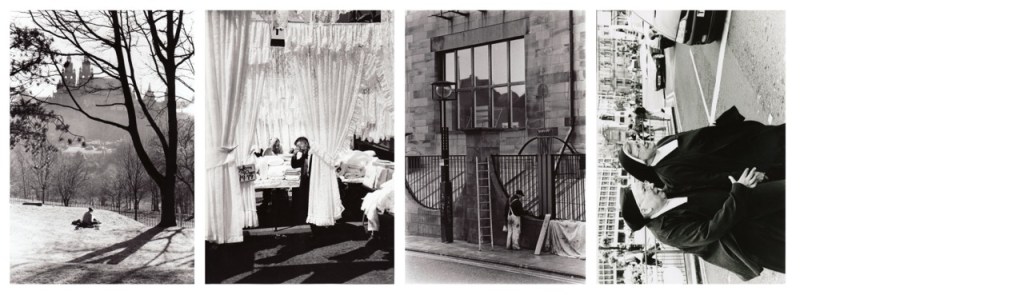
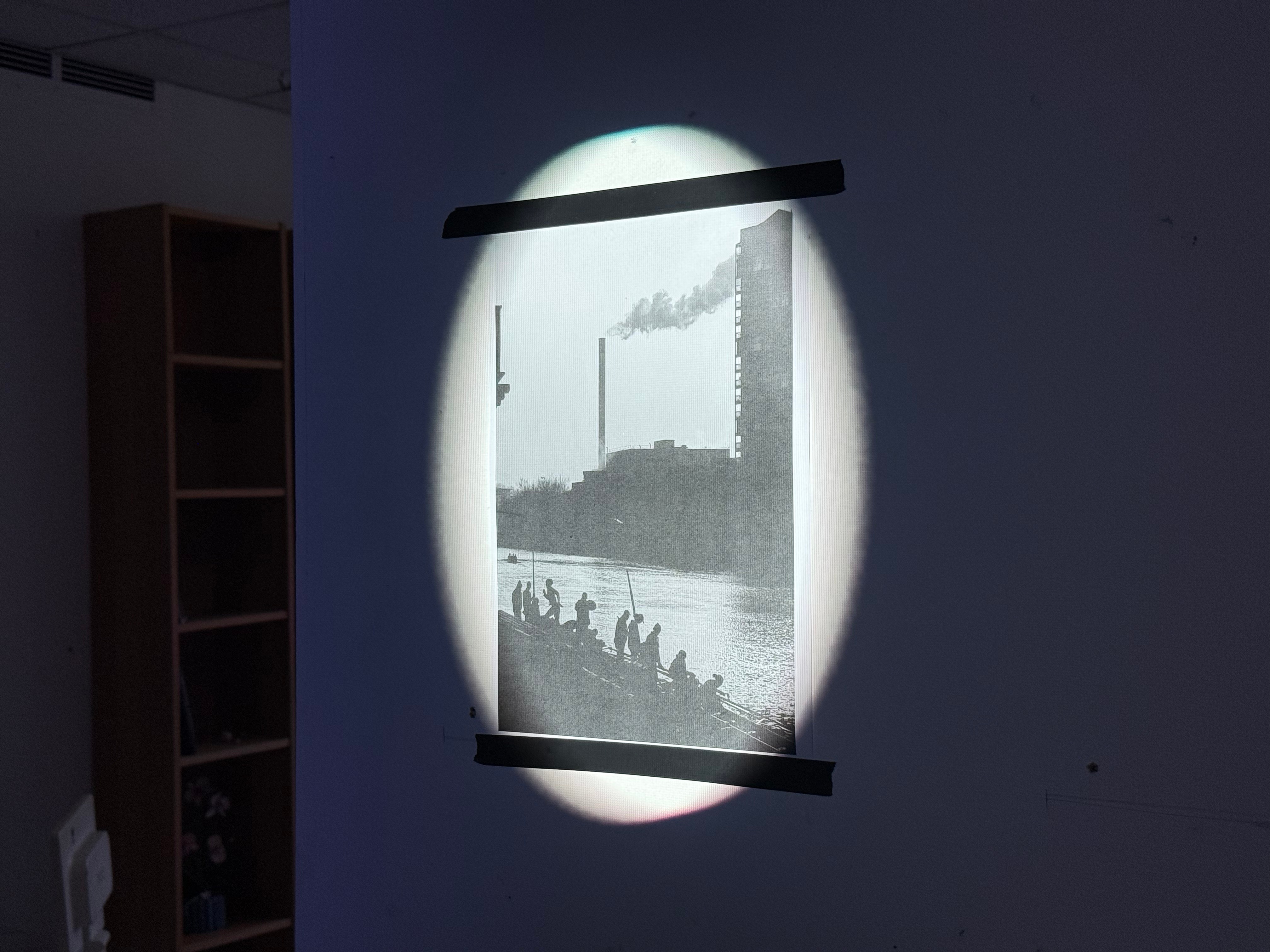
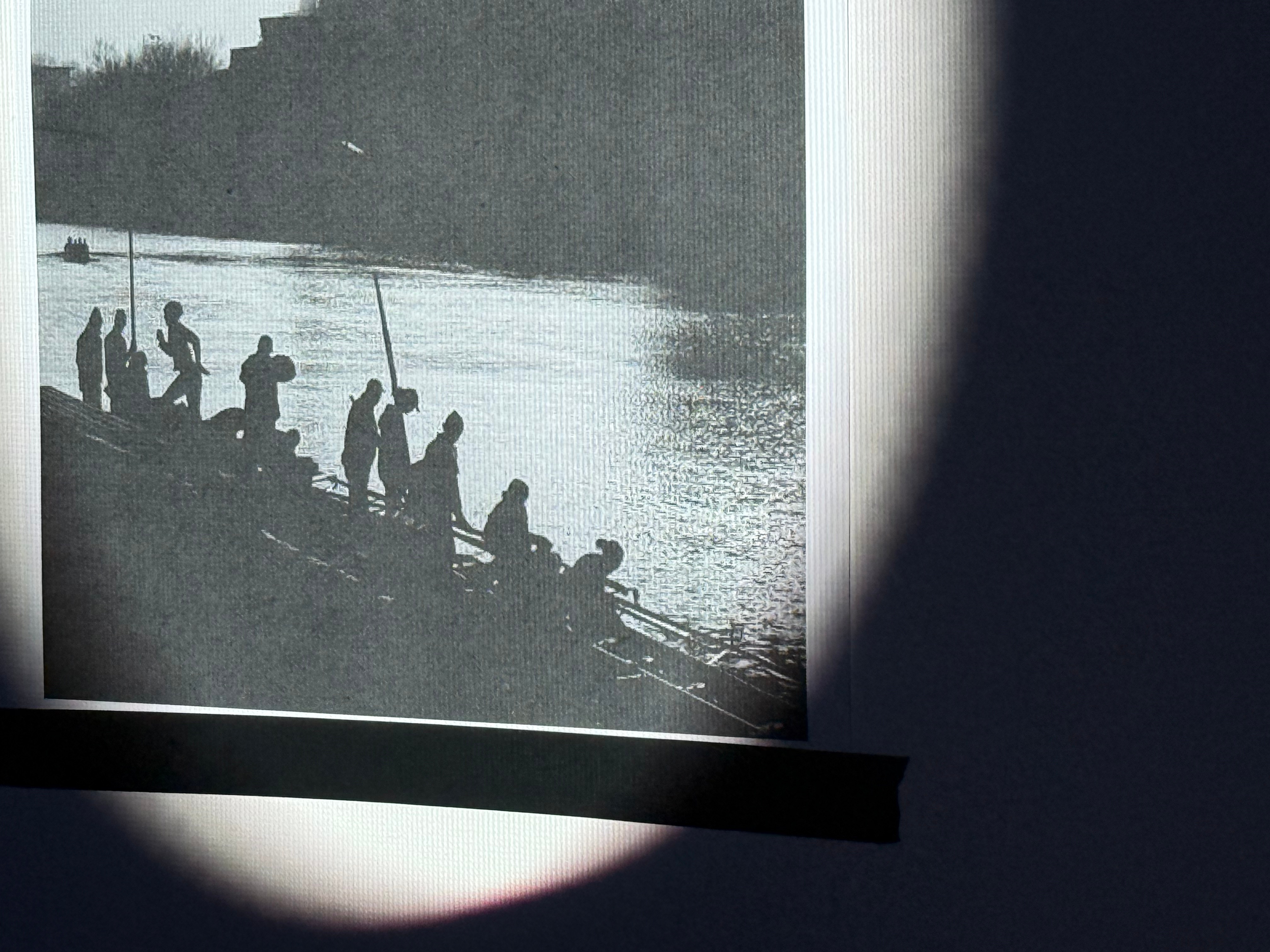
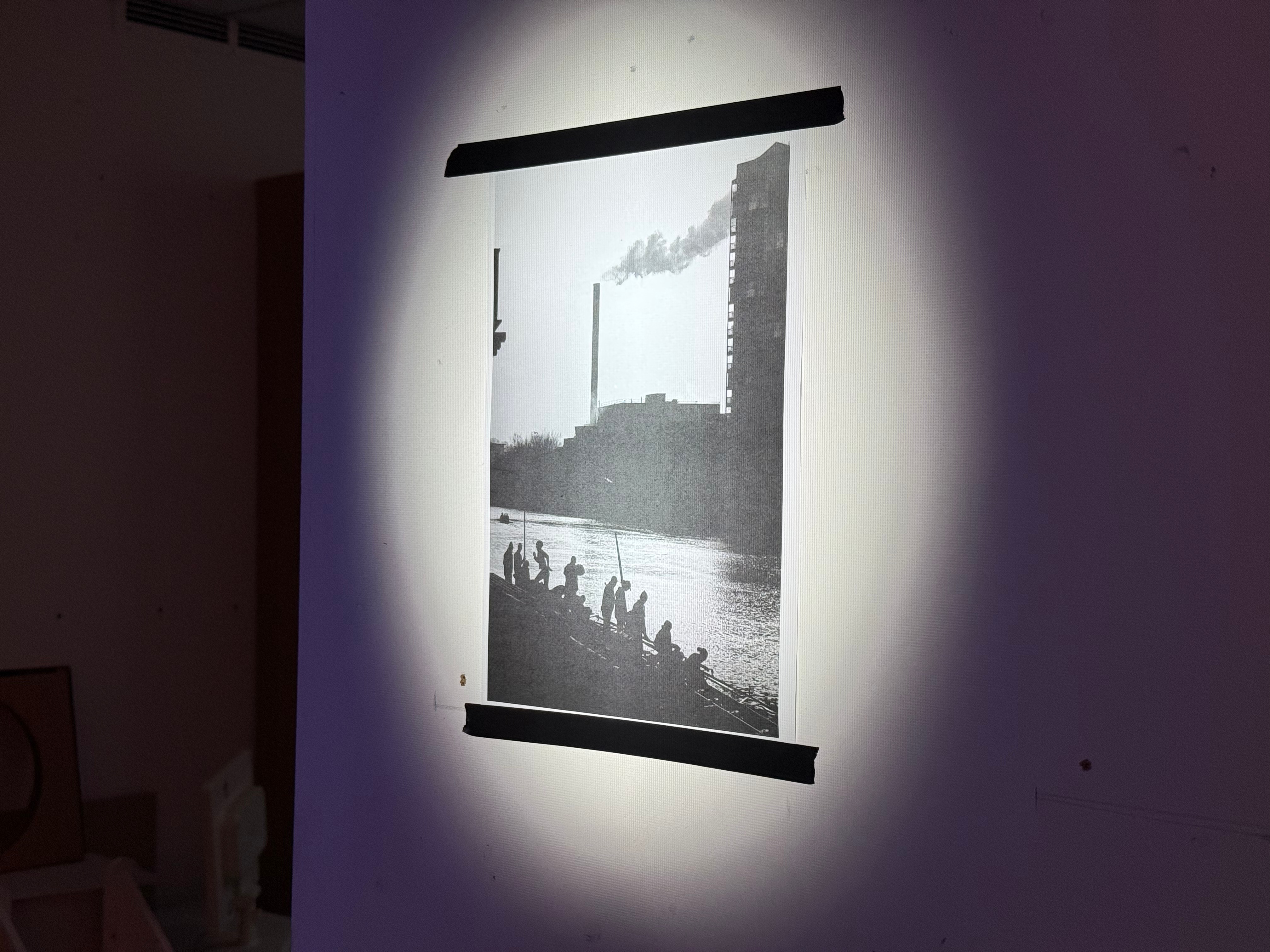
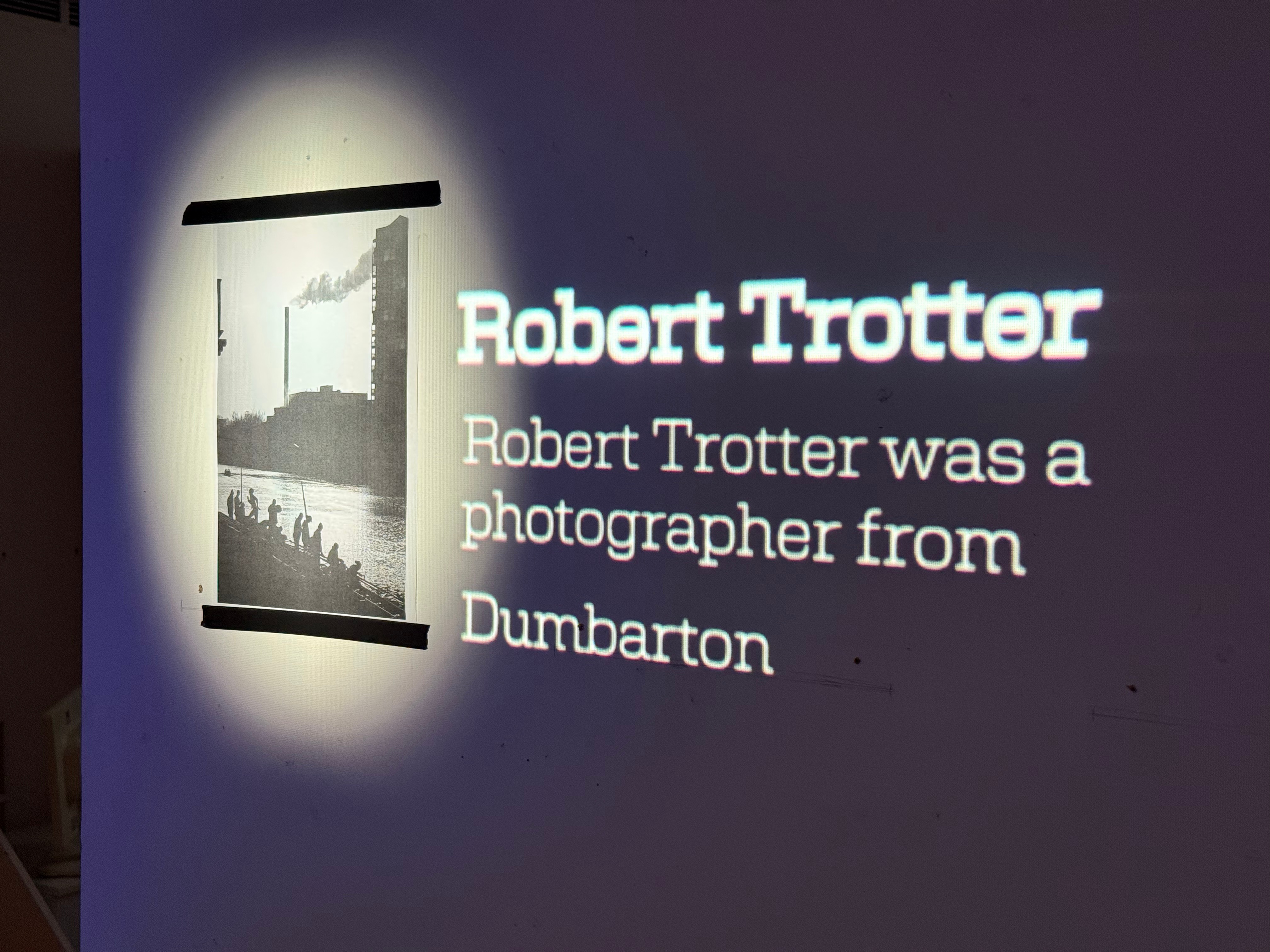
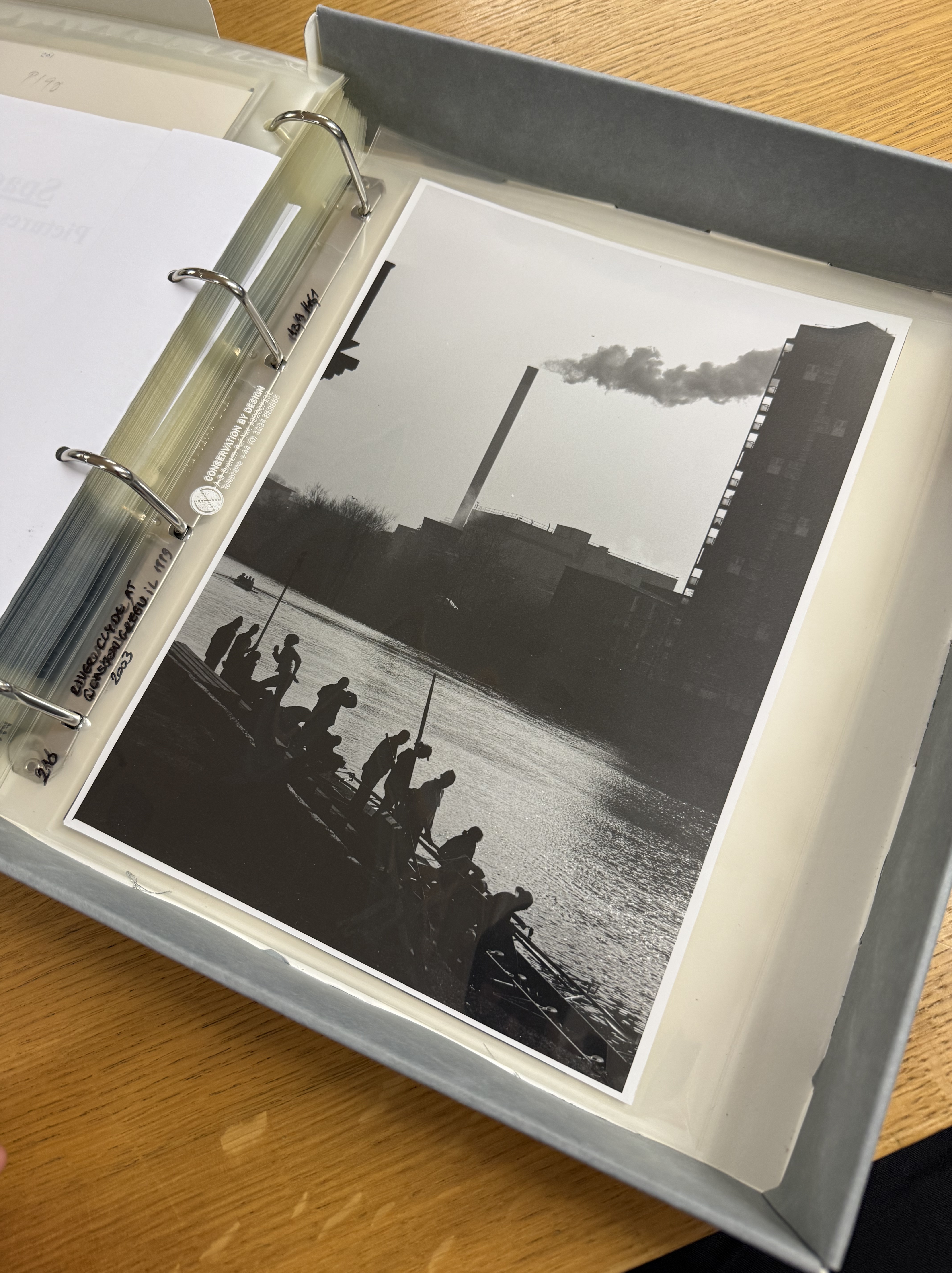
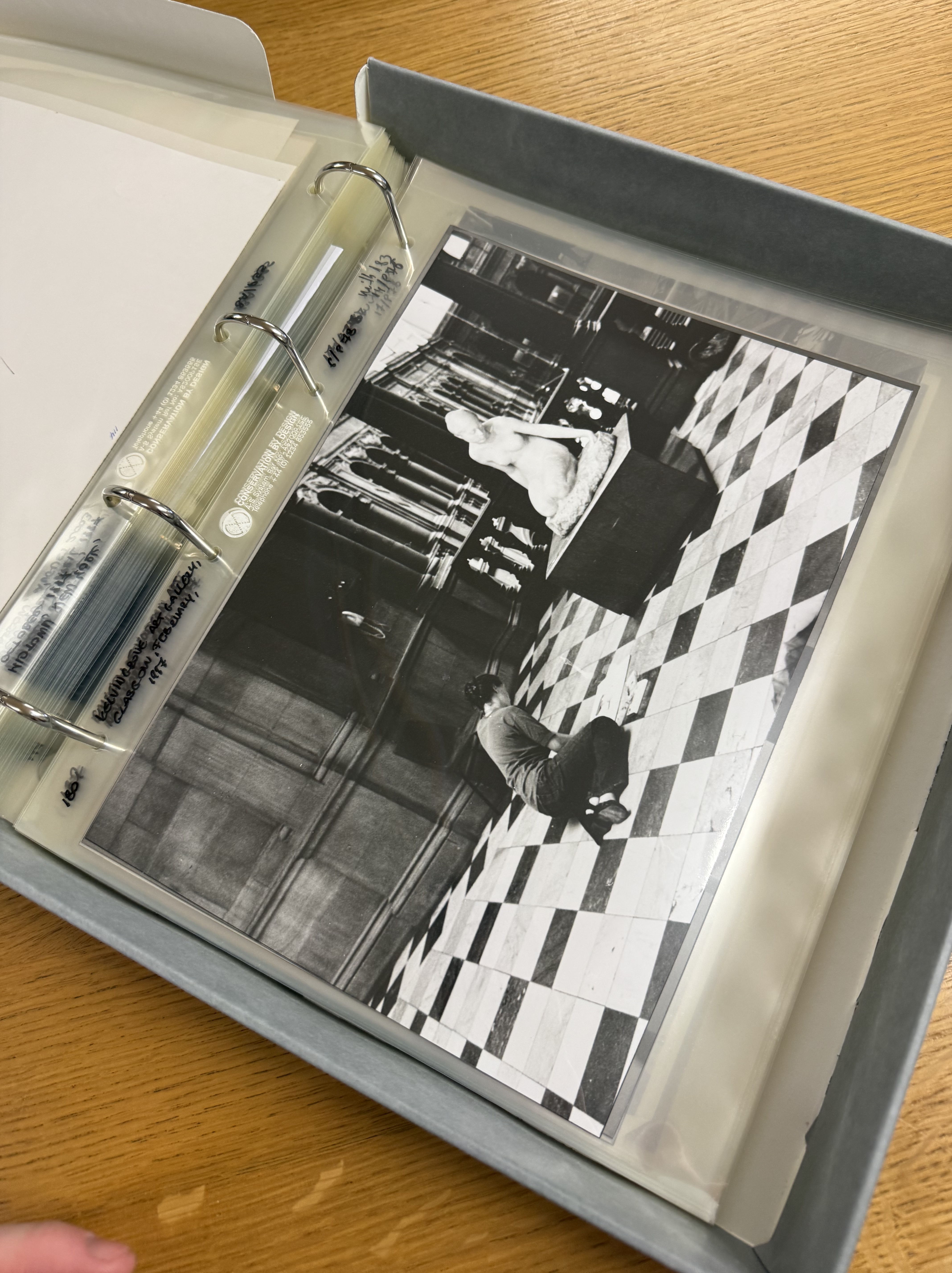
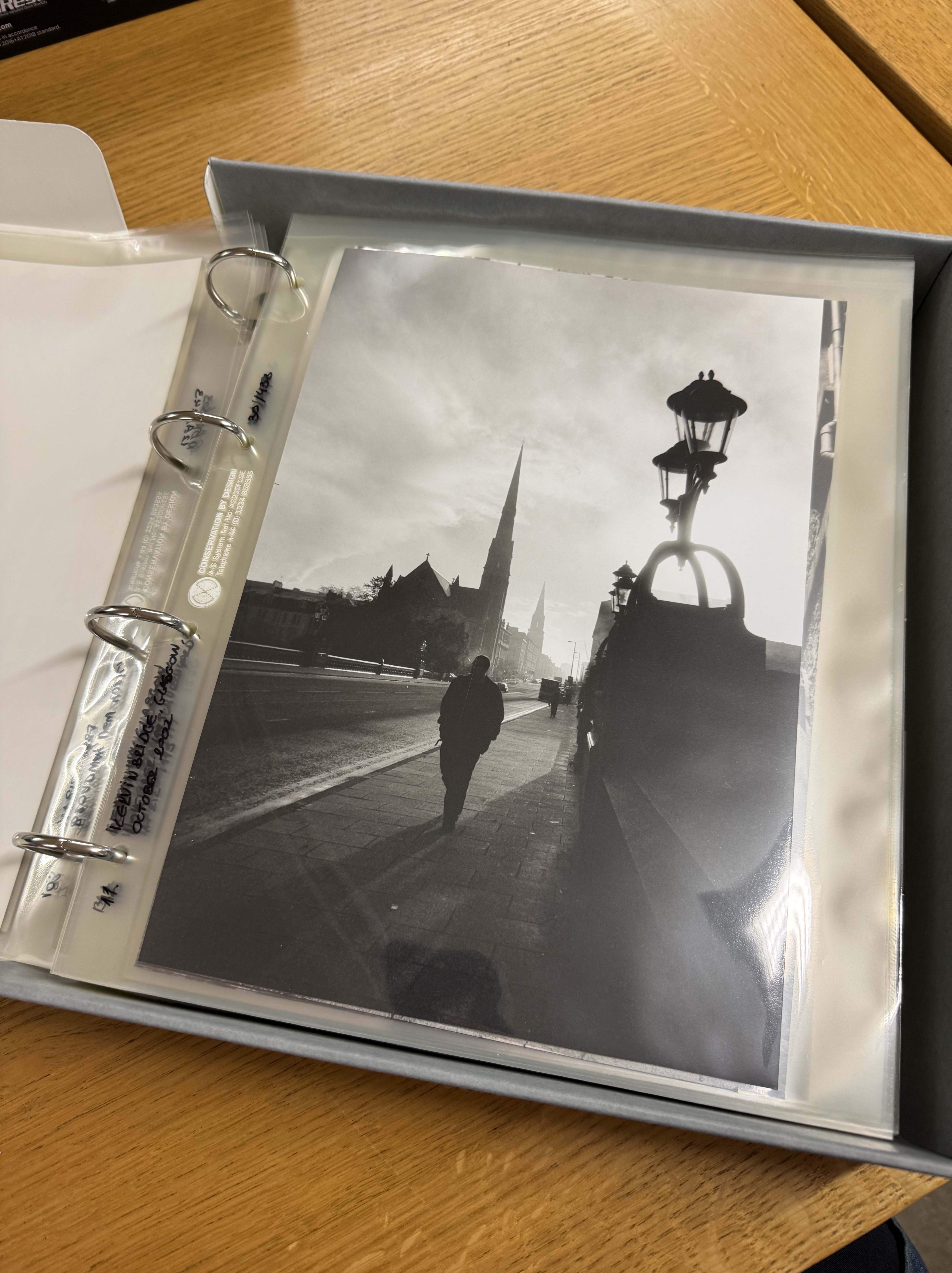
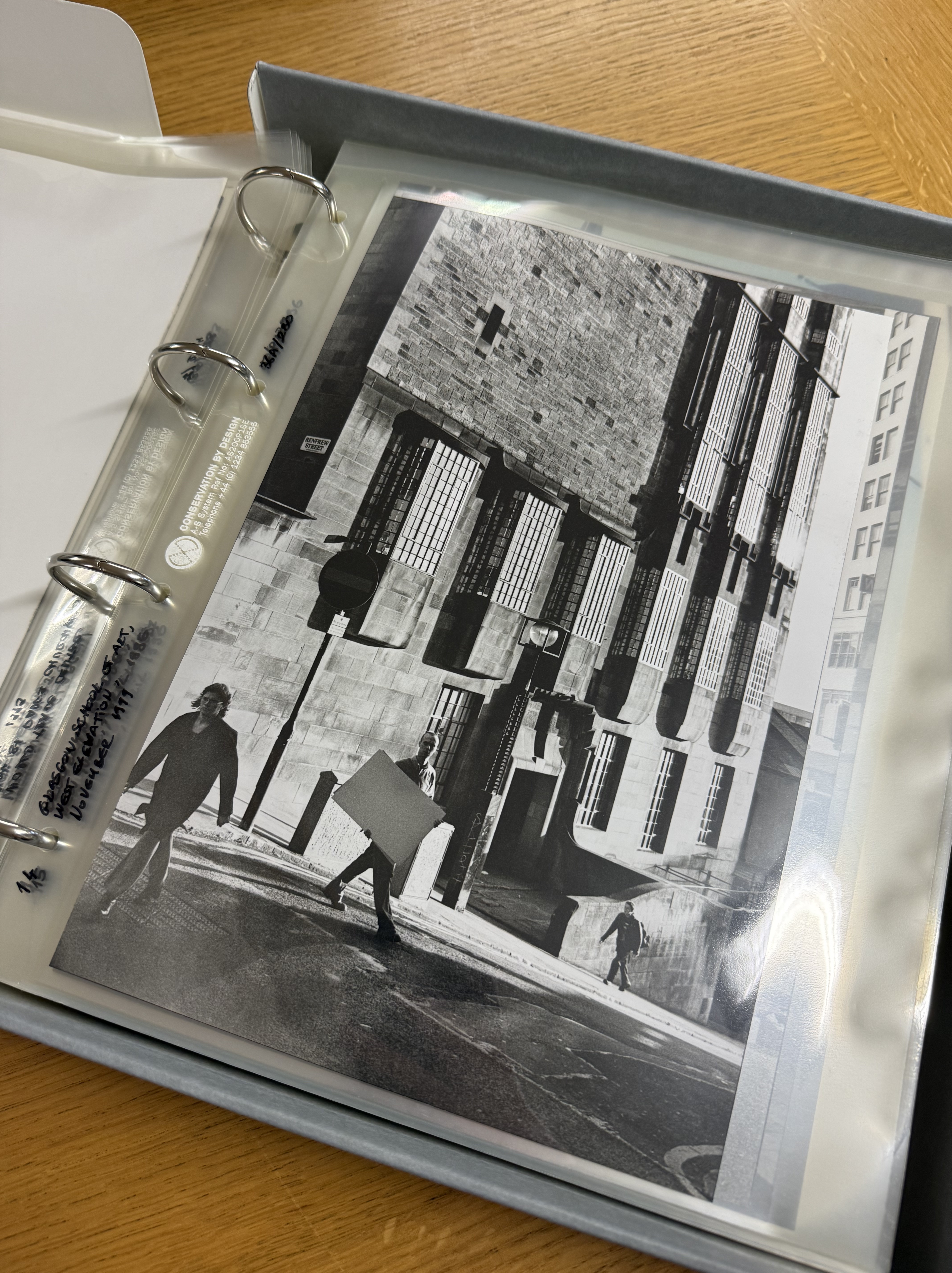
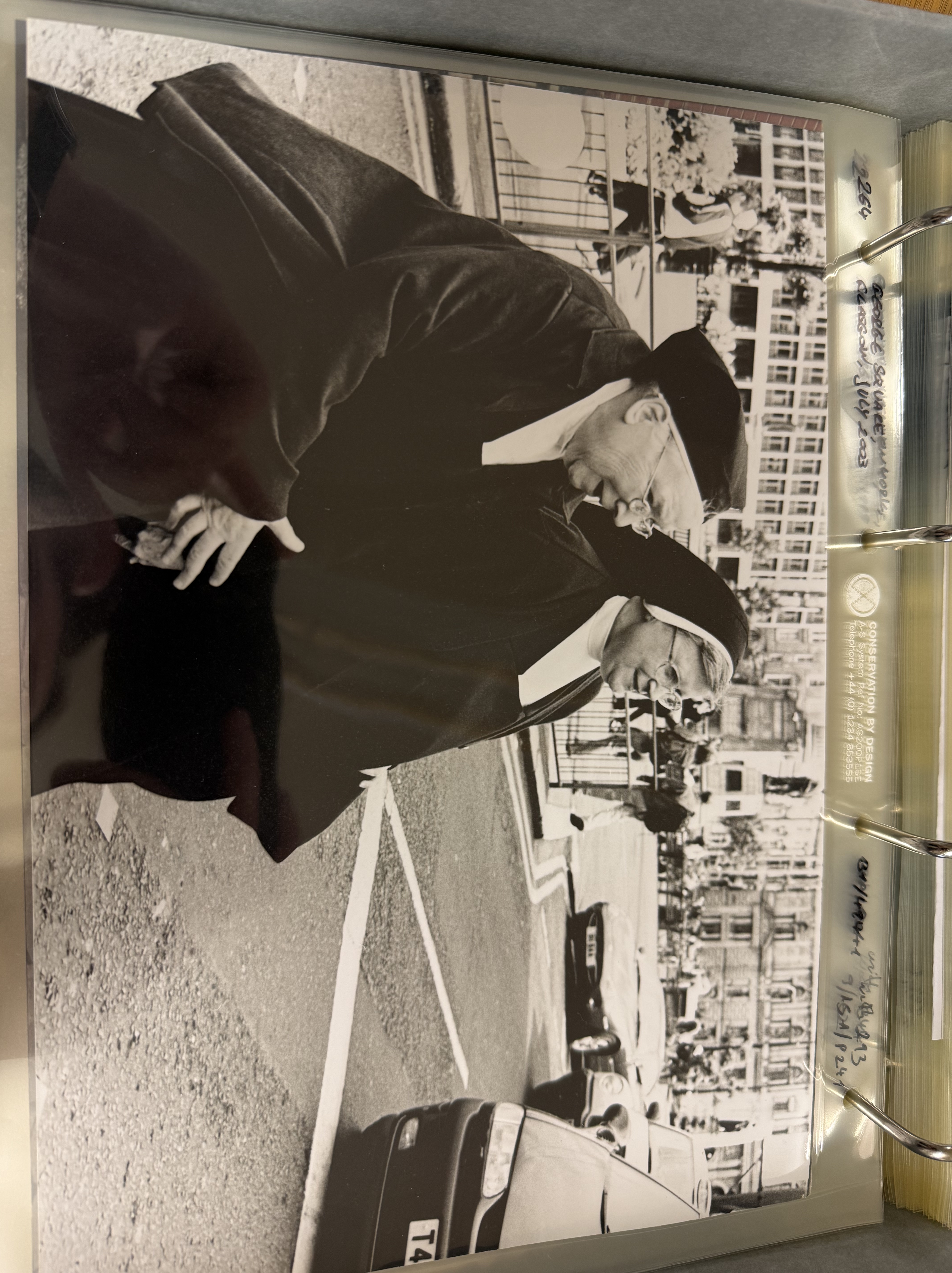
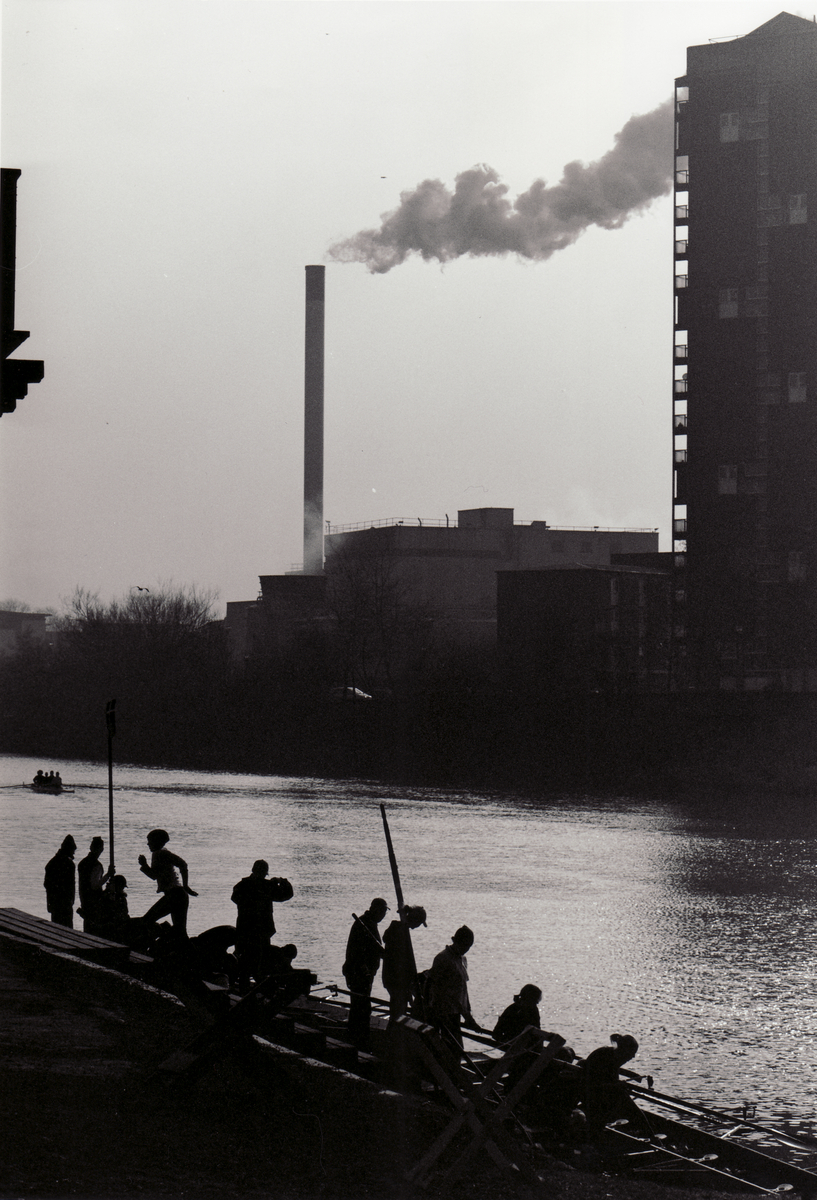
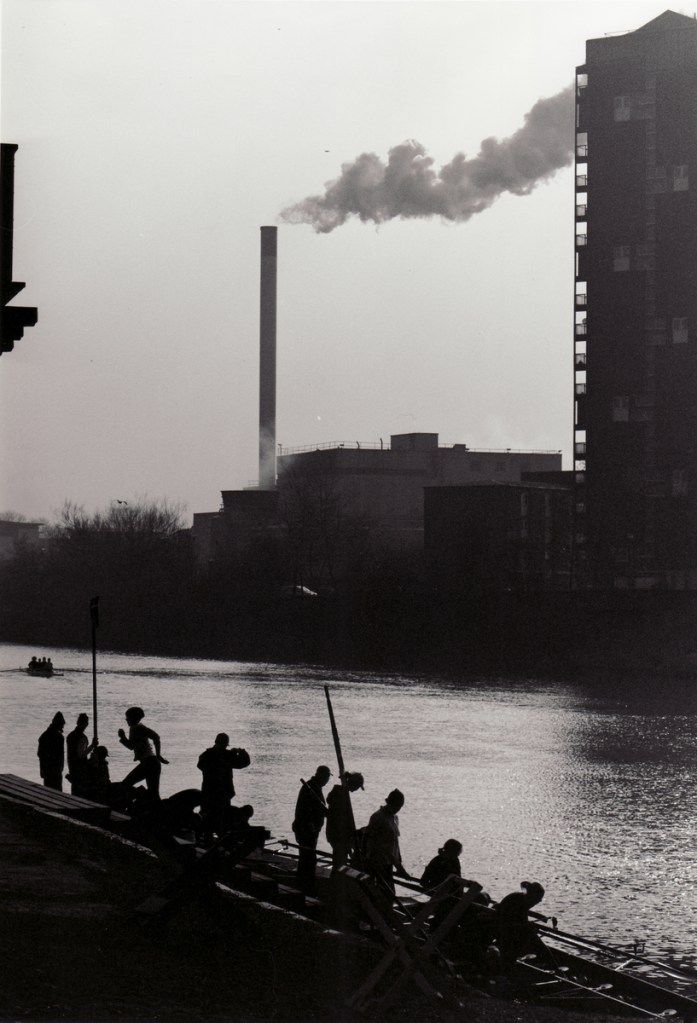
Katie in the archives has already suggested the photography work of Robert Trotter, who was a street photographer from Dumbarton (which I have also spent most of my life, as my mother’s family is from there), who has one digitised work (seen below) and a collection in the archives that I’d like to see properly and integrate into my project.
Robert Trotter, a piece from his ‘At Work’ collection.
My thoughts at the point:
At this point in the project, as my focus shifts and the project shifts, so do my feelings towards it. I was feeling stressed and under a lot of pressure to produce meaningful work or do something that had never been done before. But as the shift focuses more on artistic curation and displaying and engaging in work as well as helping others engage with it, I can’t stop thinking about the C.S. Lewis quote :
“Even in literature and art, no man who bothers about originality will ever be original: whereas if you simply try to tell the truth (without caring twopence how often it has been told before) you will, nine times out of ten, become original without ever having noticed it”
I also think the meaning of this exhibition has shifted, and not just in a literal sense as the outcome will be different as I imagined it, but for myself, I’m not really sure I even know what it was before but now its a subtle celebration of where I grew up, Clydebank, Dumbarton and Glasgow, after trying to distance myself for so long, those who shaped me, my family and my friends who would encourage my creative spirit as I would try and see myself as a one man army doing it all myself and my creative interests and endeavours that have been with me from a young age, encouraged by those around me and what I aim to continue into my life.
More Media:
As well as photography displayed from the GSA archives, I’d also like to get some archival footage of Glasgow, Clydebank and Dumbarton, so I’ve had a look at the National Library of Scotlands video archives and would either like to stabilise some footage and have it playing through to add to the overall theme and aid in the story of the project or to use them for a piece of my own work that I can display alongside the archival work.
During my appointment at the Mitchell Library, I was told, first, that any pictures I took had to be documented and that anything from their archive was not allowed for exhibition or display of any kind, so anything I found or found interesting could only be shown here in my research.
That being said, even though it’s not for my exhibition, this was still eye-opening and moving to see real stories of the people of Glasgow, and it really put into perspective that, if I am using these photographs from the past, I know it might seem obvious, but they are real people.
Reflection – 8th May 2026:
Before handing in, I want to look back at the whole project and reflect on each step of the process now with the hindsight that I have at the hand in date:
Considering what I saw in the previous post and this one, I can see my direction taking greater stability in this post, while still being open to new avenues and inspirations, after being quite closed off earlier in the process.











 Nicholas McLaughlin Blog